India is set to make a major step into sustainable transportation as Prime Minister Narendra Modi is expected to open the country’s first hydrogen-powered train today in a major step in the modernization and decarbonization of Indian Railways. The launch is a continuation of the government’s focus on clean energy, green mobility, and technological innovation, in line with India’s ongoing commitment to reducing carbon pollution and making it more eco-friendly public transport.
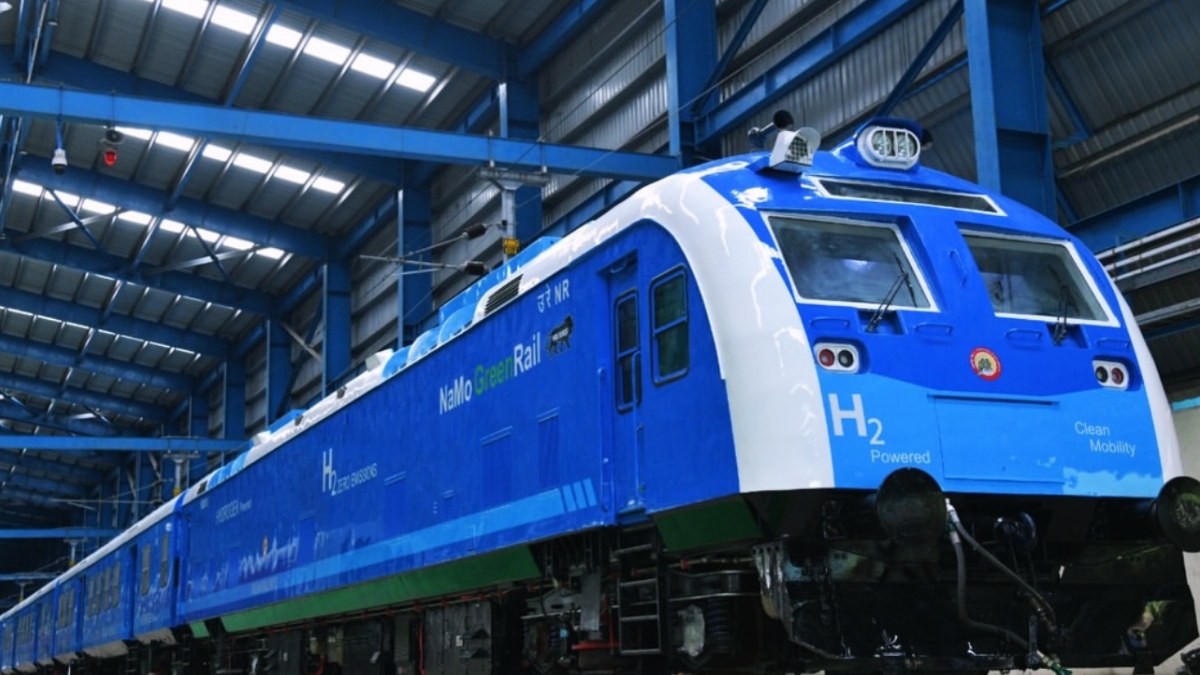
The hydrogen-powered train will run on hydrogen fuel cell technology that creates electricity through a chemical reaction between hydrogen and oxygen. Unlike diesel locomotives, hydrogen-based trains only produce water vapour and heat and hence are one of the cleanest forms of rail transport today. The technology has attracted international attention in recent years as a sustainable alternative to fossil fuels in transportation.
The hydrogen train is one more step in Indian Railways’ effort to modernize its network and achieve its environmental objectives. In the last few years, the national transporter has electrified railroads, invested in renewable energy, launched energy-efficient technologies, and experimented with alternative fuels to reduce diesel-based locomotives.
The hydrogen train project will help India show in public transportation that it can adopt new technology and help it to meet its climate goals for the long term. It fits in with the Government of India’s National Green Hydrogen Mission to be the world’s center for green hydrogen production, use, and export.
Hydrogen fuel cell technology has several advantages over conventional fossil fuel-powered transportation. Since electricity is generated onboard through electrochemical reactions, trains operate with significantly lower noise levels and virtually no direct carbon emissions. This makes them particularly suitable for routes where full railway electrification may not yet be economically viable or technically feasible.

Railway experts say hydrogen-powered trains can work well in non-electrified parts of the railway network and reduce diesel usage and, in fact, help to meet India’s environmental goals. With growing hydrogen production capacity, the technology could be increasingly vital in the country’s move toward cleaner transportation systems.
The hydrogen train project is also an opportunity for India to further develop indigenous engineering and manufacturing capabilities. Both its production units and research institutions like Indian Railways are working on the development of advanced propulsion systems, safety systems, and operational infrastructure (such as trains that run on hydrogen) for hydrogen-based trains. And so the initiative could inspire the development of further research and development in clean energy technologies in all the other sectors.
Besides environmental benefits, hydrogen-powered trains will also create new economic opportunities in hydrogen production, storage, transportation, and related industrial supply chains. With more demand for green hydrogen, the demand is anticipated to grow, and new jobs are likely to come in engineering, manufacturing, maintenance, renewable energy supply chain development, and infrastructure development.
Germany, France, China, Japan, the UK, and many others have begun to use hydrogen-powered trains to reduce greenhouse gas emissions from transportation. India’s entry into this field is a sign that India wants to be at the vanguard of the global movement and mobility policy for sustainable transportation.
Safety in hydrogen-powered transport remains a top priority. The railway has carried out extensive testing and has been made safe for hydrogen storage, fuel management, leak detection, fire prevention, and emergency response for hydrogen trains. International codes on hydrogen fuel systems have also influenced the design and operation of hydrogen trains.
The flag-off ceremony is likely to receive widespread attention from policymakers, railway officials, engineers, environmental experts, and industry leaders. It is not only a technological achievement but also a manifestation of India's global innovation-led development and cleaner infrastructure.
Environmental experts have been quick to endorse the initiative because transportation is still one of the largest contributors to greenhouse gas emissions globally. Low-emission technologies such as hydrogen fuel cells will help achieve climate targets, clean the air, and reduce reliance on imported fossil fuels.
India's first green hydrogen-powered train will be flagged off by Prime Minister Narendra Modi on July 17, 2026, from Jind, Haryana. pic.twitter.com/aZgg4YrHQ8
— IANS (@ians_india) July 15, 2026
As Indian Railways is evolving into one of the world's largest green transportation networks, the launch of the country's first hydrogen-powered train represents another landmark achievement in its modernization journey. The initiative is an example of India’s push to marry innovation with environmental responsibility, paving the way for a cleaner, more sustainable future in public transportation.