Manohar Lal, the Union Minister, launched the PRAGATI-50 initiative in New Delhi, a new approach to developing 50 model cities for cleanliness, waste management and sustainable Swachhata practices. This initiative is part of a bigger plan towards improving urban cleanliness and technology-driven solutions, innovation and behavioural change in the cities.
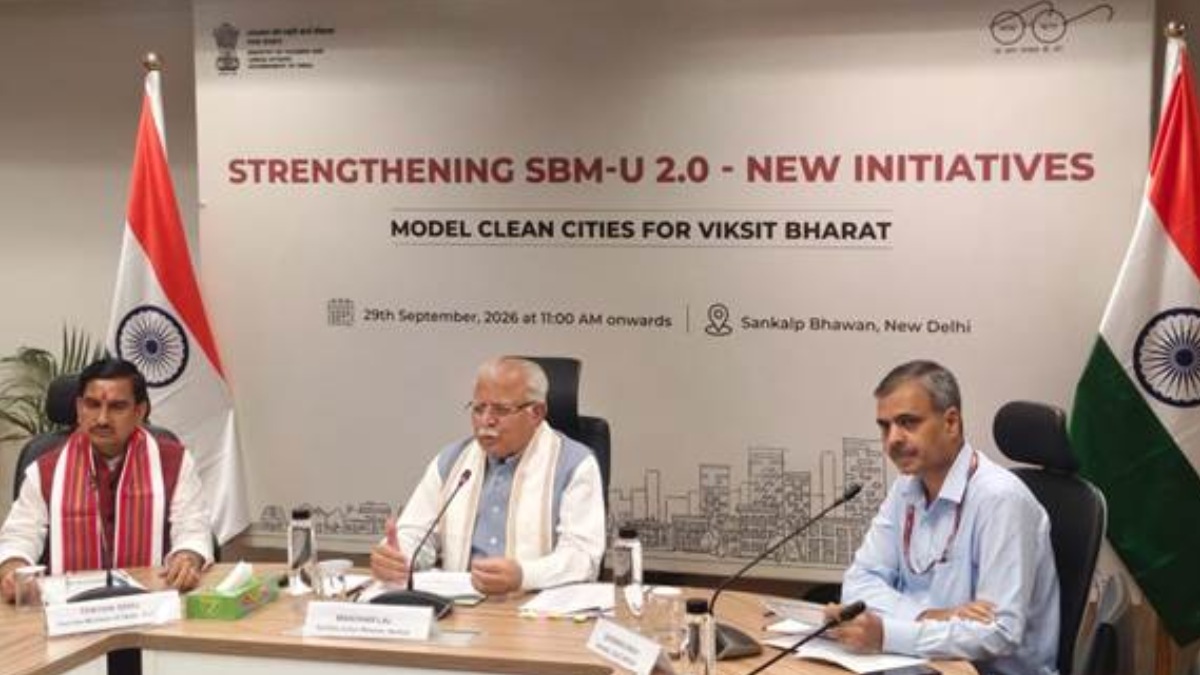
The launch brings together several initiatives on various aspects of sanitation and waste management. These include the Swachh Bharat Test Bed developed by CSIR-CMERI, the onboarding of the third cohort of Swachhata Startups in collaboration with IIT Kanpur, the inauguration of a Reduce, Reuse and Recycle (RRR) Centre at Sankalp Bhawan in New Delhi and the launch of a Swachchata Behaviour Change Digital Kosh.
The PRAGATI-50 initiative is aimed at establishing 50 cities as model centres for Swachhata. The focus on model cities demonstrates the increasing role of municipalities, technology and citizen involvement in improving cleanliness. And as modern sanitation campaigns are not only about cleaning, we are seeing more waste segregation, recycling, resource recovery, behavioural change and adoption of new technology.
The launch also comes at a time of Swachhata Hi Seva 2026 for cleanliness, the national cleanliness campaign in place for the country. The Ministry of Housing and Urban Affairs informs us that the campaign will be held from September 17 to October 17, 2026, with the theme of “Swachhata Mein Sahbhag, Swachh Bharat, Viksit Bharat.” It calls for citizen participation and the cleanliness transformation of difficult places, youth involvement, sanitation-worker welfare, and circular economy.
The Swachh Bharat Test Bed by CSIR-CMERI is another big component that is highlighted during the launch. Test beds can be a place where sanitation and waste-management technologies can be tested under real-world scenarios before being adopted for wider use. Such platforms can assist in linking scientific research with municipal goals and are a way to determine the effectiveness and scale of the best possible solutions to the market.
As Swachhata Startups are now being operated in collaboration with IIT Kanpur, an innovation and entrepreneurship aspect to this programme is added. Startups can contribute technologies and business models for waste collection, segregation, recycling, composting, resource recovery, sanitation infrastructure and digital monitoring. Collaboration with academic institutions can also help startups gain access to research capabilities, technical expertise and testing environments.
An important development is the inauguration of the Reduce, Reuse and Recycle Centre at Sankalp Bhawan in Delhi. RRR centres are aimed at diverting usable and recyclable materials from the stream of waste. Things that are not worth keeping in the trash can be reused, repaired, donated or put into recycling systems. These facilities are in line with the current Swachhata movement for circular economy.
The Swachchata Behaviour Change Digital Kosh which is now being launched along with the other initiatives addresses the behavioural aspect of cleanliness. Sustainable cities have to build on the infrastructure but the daily process of waste segregation, responsible disposal, reuse and recycling will be much more effective if people participate. Digital tools could also serve as a source for sharing communications, best practices and behaviour change ideas between communities and local authorities.
The broader Swachhata Hi Seva 2026 campaign also places a great deal of emphasis on source segregation and responsible waste management. Government information on the campaign highlights four-way source segregation, composting, citizen involvement and awareness of the Solid Waste Management Rules, 2026. It also includes youth, sanitation workers and public institutions.
The PRAGATI-50 initiative therefore brings cities, technology, startups and citizen behaviour within a common Swachhata framework. Its implementation will be closely tied to how participating urban areas implement waste-management practices, engage residents and make use of technology and innovation.
#NewDelhi | Union Minister @mlkhattar launches PRAGATI-50 initiative to Develop 50 Model Cities for Swachhata in New Delhi today
— DD News (@DDNewslive) September 29, 2026
Swachh Bharat Test Bed by CSIR-CMERI launched.
3rd Cohort of Swachhata Startups onboarded in collaboration with IIT Kanpur.
Reduce Reuse and Recycle… pic.twitter.com/fDTm7gh9vy
With increasing amounts of municipal waste in urban areas and increasing population density, prevention, reuse, recycling, scientific waste processing and public participation are becoming a big part of city management. The launch of PRAGATI-50 and the associated initiatives shows a continuation of the move from cleanliness campaigns to systems that can sustain sanitation and waste-management practices.
As the Swachhata campaign progresses, model cities could be an opportunity for local bodies to show how they can implement strategies that can be applied to other areas. Research institutions, startups and digital platforms also form a bridge to connect innovation to the needs of urban sanitation in the real world.