India’s ambitious Project Cheetah was completed on September 17, 2026, with huge benefits to the country, and the cheetah population was once more reestablished. The country’s conservation programme has flourished at Kuno National Park in Madhya Pradesh, starting in 2022 with the movement of cheetahs from Africa to the country.
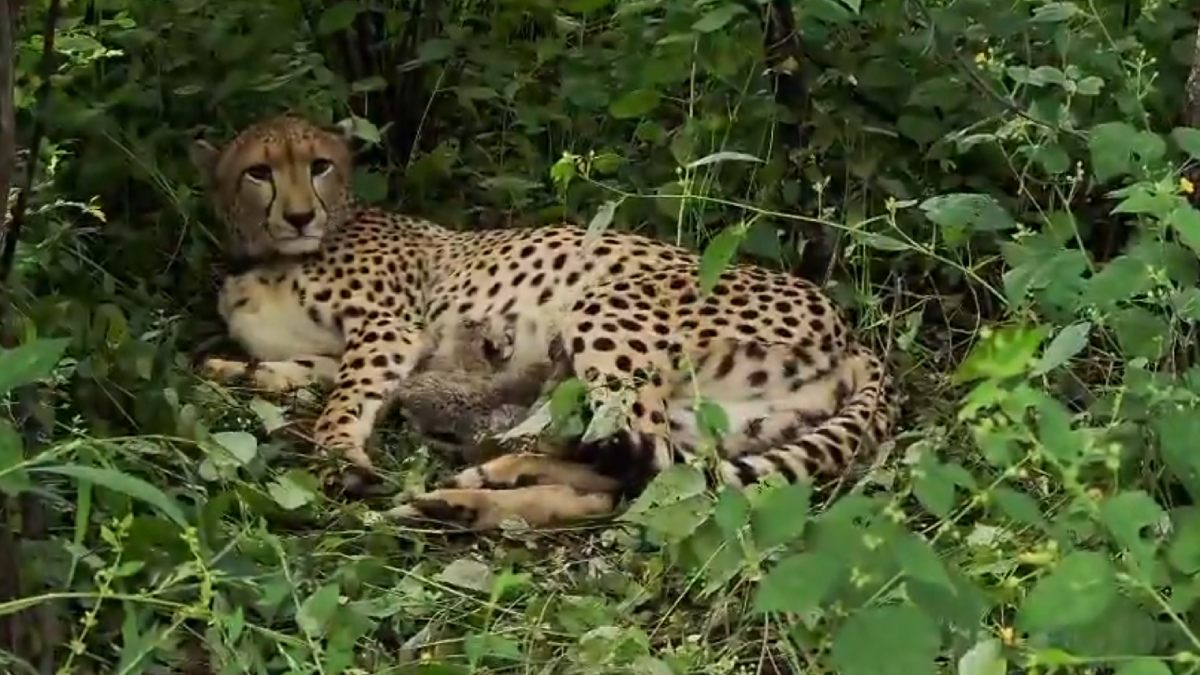
In April 2026, four cubs were born to KGP12, an Indian-born female cheetah; it was the first birth of an Indian-born female cheetah in nature after a reintroduction programme.
KGP12, the daughter of cheetah Gamini, was around 25 months old when she gave birth to the four cubs. The birth took place in the wild at Kuno, and conservation authorities pointed out it was evidence of breeding under natural conditions. The development was a milestone in India’s cheetah conservation journey, Bhupender Yadav said, and wildlife managers, veterinarians, and field staff were responsible.
But the story of the four cubs also shows us the challenges of restoring a wild predator population. On May 12, the four cubs were found dead in their den in Kuno. The officials said that they were also suspected of being preyed upon by another wild animal and that the cubs had last been seen alive the previous evening. The incident was seen as a setback for Project Cheetah and showed the hazards of a young carnivore living in a complex ecosystem alongside other carnivores.
But despite such setbacks, the Project Cheetah population has continued to grow. As of September 17, 2026, India had 52 surviving cheetahs, with 49 in Kuno National Park and three in Gandhi Sagar Wildlife Sanctuary. Of course, 32 of these cheetahs were born in India. The information has indicated that breeding and survival of India-born cheetahs is now more critical for the programme as it moves beyond the initial phase of bringing animals into the country.
Project Cheetah started on September 17, 2022, when the first eight Namibian cheetahs were released into specially prepared enclosures at Kuno National Park. More cheetahs were then brought from South Africa and Botswana as part of the wider reintroduction strategy. It is an internationally first-of-its-kind intercontinental conservation project with the movement of a large carnivore between continents and the establishment of suitable habitats for its long-term survival.
Kuno has been a crucial area where cheetah behaviour, reproduction, territorial movement, and adaptation have been studied in the last four years. Some cheetahs have crossed over to the other side of the field to find territory and hunting spots, and this has made the monitoring team even more workmanlike. Wildlife officials have to be close to them at all times, and the animals must develop natural behaviours and have home ranges.
The programme is now in a different phase, and more emphasis is on establishing a sustainable breeding population and expanding suitable habitats. Gandhi Sagar Wildlife Sanctuary has been established as another important location, and authorities and conservation organisations are looking at more landscapes to assist cheetahs in the future. A recent landscape mapping project will also contribute to preparations for the next phase of the programme.
A truly historic and joyous moment for Project Cheetah!
— Bhupender Yadav (@byadavbjp) September 18, 2026
A day after India's Cheetah Project completed four years, KGP12, an Indian-born female cheetah, has given birth to four cubs in Kuno.
Four years, four new lives—a beautiful symbol of hope, resilience and the growing… pic.twitter.com/f1zbqSvx1b
KGP12 and her four cubs are the picture of the promise and complexity of wildlife restoration. KGP12’s April birth was a watershed moment for reproductive success and showed that an Indian-born female can breed freely in the wild. The loss of the cubs, too, showed the natural dangers that come with rewilding and population recovery.
As Project Cheetah enters its fifth year, the focus is increasingly on the long-term survival, reproduction, and expansion of cheetahs over suitable landscapes. Kuno's four-year journey has produced significant conservation data and has given birth to 52 surviving cheetahs and 32 born in India by September 2026; the need for continued scientific monitoring, habitat management, and careful protection of the animals and their ecosystem is clear.