For years, the technology industry has referred to data as the “new oil” and the immense economic value of information generated by billions of humans and devices. But the artificial intelligence boom is producing another resource crunch that could end up becoming just as important for the global technology economy: computer memory. With RAM prices rising and AI data centres consuming vast amounts of high-performance memory, some industry observers are now calling RAM the “new oil”.
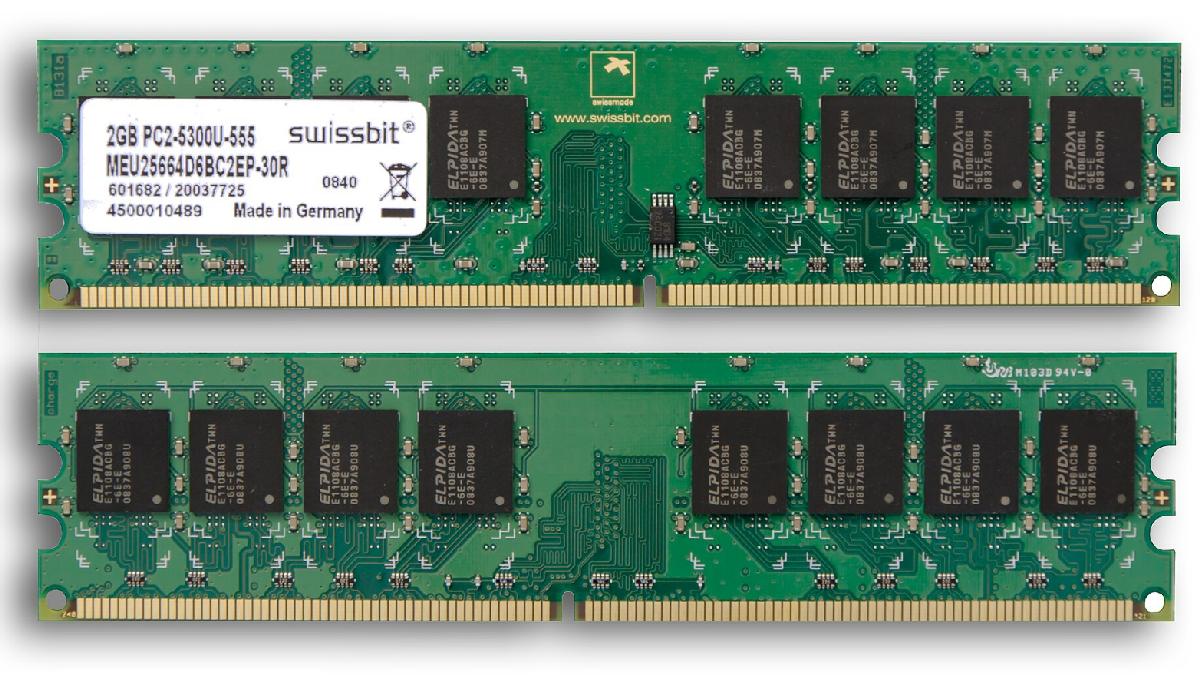
The sharp rise in memory prices is a result of the demand for AI, limited production capacity and manufacturers focused on higher-margin memory products for data centres. While consumers may notice the increase in memory cost at first through expensive computer upgrades, the impact can be much more profound.
Higher memory costs can eventually come from servers, cloud computing, software services, enterprise technology and even products that run on very large computing infrastructure.
More recent reports have highlighted the extraordinary scale of the price increases. Tom’s Hardware reported that some DDR5 memory kits had increased by about 500% compared with prices a year earlier. A particularly striking example was a 128GB DDR5-6400 kit that went up to $3,399. Such prices were not possible during the time when memory was inexpensive and high-capacity RAM was a fairly inexpensive part of a modern PC.
Why Is RAM Suddenly So Expensive?
The main reason behind the current memory squeeze is the rapid growth of artificial intelligence infrastructure. AI models require huge computing resources, and data centres supporting those models need large quantities of high-speed memory.
In fact, traditional cloud workloads already consumed large amounts of DRAM, but the explosion in generative AI has dramatically increased demand for advanced computing infrastructure. AI servers are equipped with powerful processors and accelerators, and huge amounts of memory to handle increasingly large models and datasets.
The memory industry is also closely connected with the production of high-bandwidth memory (HBM), which is particularly important for AI accelerators. As semiconductor manufacturers devote more capacity to lucrative AI-related memory products, the supply available for conventional DRAM can become tighter.
This is a difficult challenge for PC manufacturers, businesses and consumers. And if someone doesn’t use the AI model at all, they may still be affected by the infrastructure required for contemporary digital services.
From Data Centres to Everyday Businesses
The implications of expensive RAM go far beyond gaming laptops and personal laptops. Businesses are increasingly dependent on cloud servers, databases, enterprise software and AI-based applications. All of these services need computing resources, and memory is a key part of that infrastructure.
Zoho founder Sridhar Vembu has expressed his concerns about the mounting cost pressure on businesses as AI costs and memory prices rise. His comments underscore a bigger issue to companies: if the basic infrastructure for computing becomes so expensive, how long can businesses absorb those costs?
Cloud providers may attempt to manage higher hardware costs in the short-term by improving efficiency, longer term contracts and infrastructure optimisation. But if hardware costs keep increasing, cloud pricing and software prices will eventually change.
For startups and smaller companies the problem could be particularly dire. Large technology companies have more purchasing power and capital whereas smaller businesses may struggle to compete for increasingly expensive computing resources.
Could Consumers End Up Paying More?
Consumers may also feel the effects, but the effects aren’t going to be in the same way for all of us. PC upgrades could be more expensive if memory prices remain elevated. Laptops, desktops, gaming systems and other electronics that utilize large amounts of DRAM could incur higher component costs.
And there could also be an indirect effect. If cloud computing, AI services and enterprise software are increasingly expensive to run, companies will eventually pass some of those costs on to customers through higher subscription prices or changes to product plans.
At the same time, technology companies could respond to this by improving software efficiency, to reduce memory consumption of software and reduce software development and/or hardware development. Hardware manufacturers could also increase production capacity if prices remain high enough to justify investment.
Why the AI Boom Is Changing the Memory Market
The present situation shows how AI is changing the semiconductor industry. Artificial intelligence is not only creating demand for specialised chips. It is also putting pressure on almost every aspect of the computing supply chain (processor, networking equipment, storage and memory) of the computing supply chain, which needs to be made to move.
AI data centers require vast amounts of infrastructure and the rapid construction of these facilities can create supply imbalances. Memory manufacturers must decide how to allocate limited production capacity between conventional DRAM, high-bandwidth memory and other specialised products.
That is why RAM is so strategic. Just as oil became the key resource for transportation and industrial production, memory is still the basis of modern computers. Without enough memory, even very powerful processors can’t perform very well.
Is RAM Really the “New Oil”?
The comparison is essentially metaphorical, but it captures an important shift. Data may still be incredibly valuable, but the infrastructure required to process that data is becoming an increasingly important economic resource.
The 500% increase reported for some DDR5 products may not be representative of the entire memory market and prices can fluctuate drastically as supply and demand changes. But the trend is a testament to the enormous pressure that AI is putting on the global semiconductor industry at large.
If AI adoption continues at such a high rate, memory will become one of the biggest constraints for businesses to grow their computing capacity more rapidly. So the industry may be planning on investment in new manufacturing, faster memory technology and more efficient architectures.
But for consumers and businesses, the immediate lesson is clear: the AI revolution comes with a physical infrastructure bill. The more intelligence that moves into data centres, the more processors, networking equipment, storage and memory the world needs. And if RAM remains in short supply, the cost of that AI revolution could eventually reach far beyond the server room.