Rajnath Singh says that although warfare is evolving rapidly, with airpower, precision-guided weapons, and advanced military technologies, successful military operations depend on a strong ground infrastructure in modern warfare. During the Border Roads Organisation (BRO) Strategic Infrastructure Conclave, Singh said those assets, like ports, airfields, roads and tunnels, are vital for national defence and military preparedness.
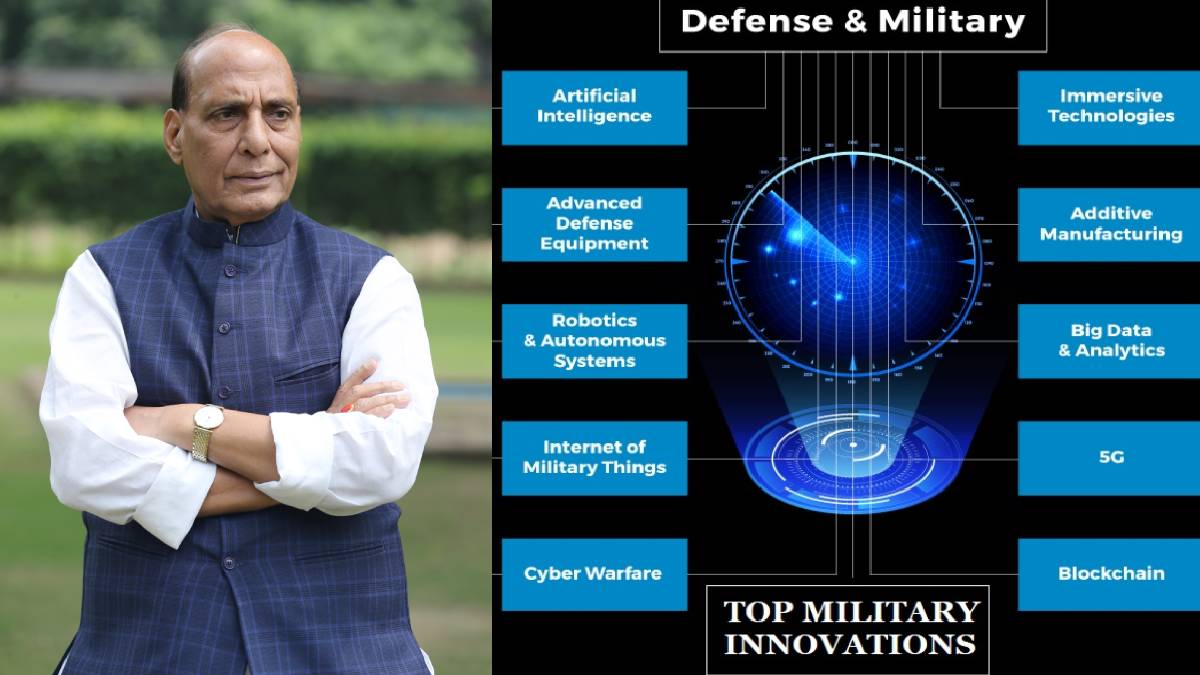
The Defence Minister told military officials, politicians, and infrastructure experts that technological advancement is changing the fight on the battlefield at an unprecedented pace. Today’s armed forces are increasingly turning to precision strikes, unmanned aerial systems, artificial intelligence, network-centric operations, cyber capabilities, and space-based assets to gain strategic advantages.
But Singh said that even the most advanced airpower would not be effective without the physical infrastructure to support it. Air bases, logistics hubs, transportation corridors, and maintenance facilities are the backbone of military operations and support fast deployment, sustained operation, and efficient movement of personnel and equipment.
"The nature of warfare is changing rapidly, linked to airpower, precision, and modern technology. But airpower is also dependent on land infrastructure. Ports, airfields, roads, and tunnels will always remain important," the Defence Minister said during the conclave.
His comments underscore the continued need for strategic infrastructure in an era of technology-enabled warfare. Precision-guided weapons, drones, satellites and advanced surveillance systems have fundamentally changed military tactics, but they require reliable logistical support and transportation networks to operate.
The Border Roads Organisation has played a vital role in enhancing India's defence infrastructure, mostly in the remote border regions. BRO has built and upgraded thousands of kilometres of strategic roads, bridges, tunnels and airfield-related infrastructure in hazardous terrain like the Himalayas and other sensitive frontier areas over the years.
Improved road connectivity allows for faster movement of troops, heavy military equipment, ammunition, and humanitarian relief supplies during emergencies. Strategic tunnels help to keep the connectivity year-round because they bypass snowbound mountain passes, and more powerful airfields allow for rapid deployment and logistics operations of the Indian Armed Forces.
Ports also play an important role in maritime security because they support naval operations, allow military assets to move, and support India’s ability to defend its interests in the Indian Ocean Region. Investments in modern port infrastructure should be a priority for maritime security as it is becoming a priority of maritime security.
The Defence Minister also stressed the growing importance of indigenous capabilities under Atmanirbhar Bharat and Make in India. Advanced defence technologies and world-class infrastructure are needed for India’s long-term security and strategic independence.
As the current global conflicts have shown, logistical resilience is a critical aspect of military success in recent years, defence experts say. Even advanced weapons systems have to have constant supplies of fuel, ammunition, spare parts, maintenance facilities, and transportation networks to sustain them for long periods.
The conclave also provided an opportunity to discuss the integration of new technologies into infrastructure planning. Smart monitoring systems, satellite-based mapping, artificial intelligence, digital engineering, and advanced construction techniques are increasingly being used to improve the durability and efficiency of strategic infrastructure projects.
India has significantly increased investment in border infrastructure in the last decade to enhance operational readiness and enhance connectivity in strategically important places. These projects not only help in improving national security but also contribute to socio-economic development by making transportation and accessibility easier for local people.
Rajnath Singh's words add to the idea that while modern warfare is transforming with the rapid development of technology, traditional infrastructure is still at the heart of advanced military capabilities. As India modernizes its armed forces, modern technology and resilient strategic infrastructure will be central to national security and operational preparation in an increasingly complex world security environment.