Ravi Kishan has been in the centre of political uncertainty since he had been invited to a BJP brainstorming session for the very first time, to be discussed with the party about how to connect and communicate with Gen Z. He has also been in the news and people are wondering if he could eventually be given a bigger ministerial or organisational role in the future. That report has made the central government’s public mind-numbingly curious but the Union Ministry appointments have attracted huge attention to Kishan’s growing political power.
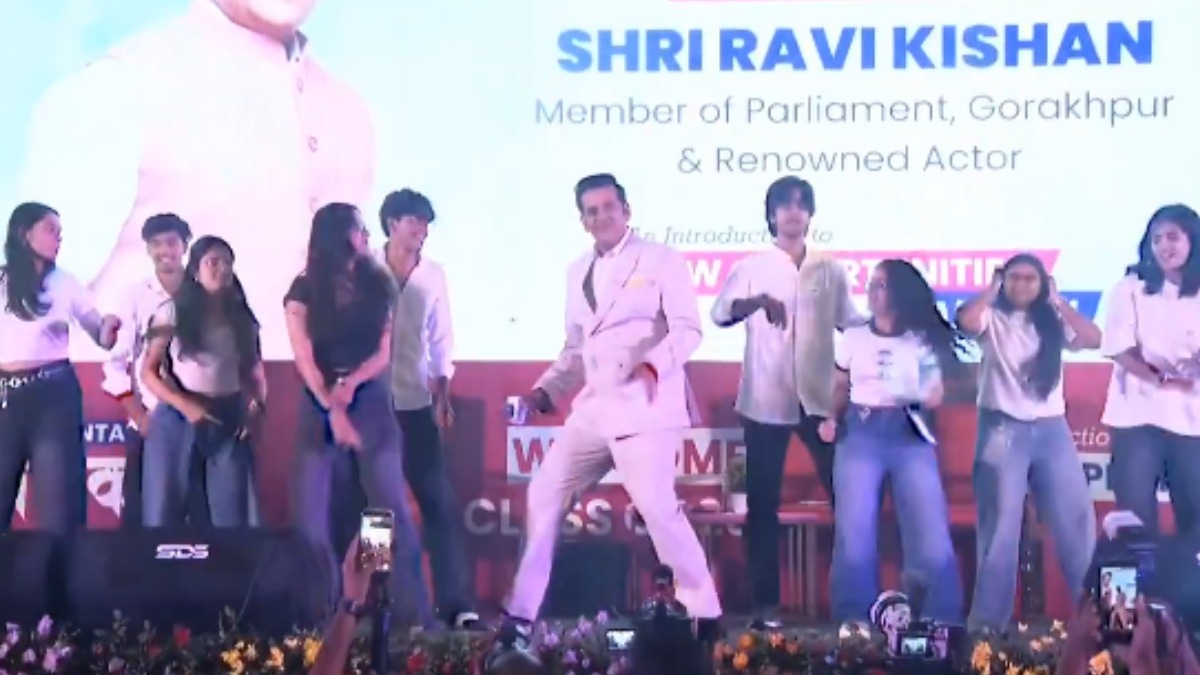
Ravi Kishan has a unique identity in Indian public life, and that is his success in the entertainment industry and his political career. Famous for his work with Bhojpuri movies and television, Kishan became a prominent BJP leader and elected representative. Popular among young people and TV viewers who know about his entertainment career, he has a unique public profile that political parties can use to reach out to them.
This turn up for the younger generation is all the more interesting since Gen Z is increasingly important in political communication of late. Young voters consume information differently than previous generations– they listen to news differently, via social media, short videos, digital creators and online interactions. Political parties are therefore seeking new ways to engage younger people’s minds without recourse to the usual campaign formats to campaign for them and social media.
Kishan’s performance as an actor and public personality could give us a lot about that as well. His knowledge of entertainment, digital audiences and popular culture will assist political communicators to brainstorm ways to communicate political messages in a way that is more accessible to younger audiences and to people who do not pay attention to conventional political messaging. His informal and energetic style of communication with people in a more informal way will be a resource to get our message to voters who might not be used to conventional political messaging.
The news about the development has also led to a joke: Could Kishan be next step for him to get into Union Ministry? He was invited to a BJP brainstorming seminar, and his input was specifically on how to connect with Gen Z, and his suggestions were sought as it is reported that he was asked for in the brainstorming session, and that his input was also about how to connect with Gen Z. But being invited to a discussion in the organization does not mean an appointment as a ministerial appointment is imminent.
Such calls “Ministry or Gen Z” have become a part of the discourse about Kishan’s latest political activity. The playful response online (“Gen Z, Ministry follows”) is a signal to supporters who feel his rising profile within the party might eventually mean more.
Kishan’s political career already shows that the BJP is willing to put forward leaders who are deeply connected to popular culture. His background has paved the way for audiences that are not politically rooted. The Bhojpuri entertainment industry has been his primary target and he has built a large public base in parts of northern and eastern India.
However, the challenge for any political organisation is to convert popularity into meaningful communication. Gen Z is not a uniform voting community and young Indians also have a variety of interests and political priorities. Issues including employment, education, technology, entrepreneurship, climate change, economic opportunities and social development will all play a role in their opinions. To reach this audience you need more than celebrity appeal.
Kishan’s participation in the brainstorming exercise might therefore be viewed as part of a larger effort to understand how political communication needs to evolve. Social media has transformed the relationship between political leaders and citizens. Platforms enable politicians to speak directly to millions of people, but they require messages to be brief, engaging and adaptable to rapidly changing online trends.
Kishan's entertainment background could be particularly useful in this environment. Actors are used to expressing through expressions, telling stories, humour and emotionally engaging formats. In this way, all of these skills can be applied to political outreach— particularly when dealing with younger audiences who are used to visual content.
The development also comes at a time when political parties are paying attention to youth engagement as more and more interest in youth participation is focused on them. India is a country that is young in population and younger voters are key to all elections - with young people being a crucial demographic in India elections - and political parties are taking youth as one of the young people who will be at the forefront of the political dialogue. So political organisations are increasingly focusing on their interests and creating new channels through which to reach out to them and find new ways to talk to them.
Kishan’s involvement in such discussions would help his political profile to rise beyond his constituency. His role as a public figure and his social-media presence are already there and his political career gives him direct exposure to electoral politics and governance.
Even yet speculation of a Union Ministry position should be monitored with caution until there is a formal announcement. To be invited to a brainstorming session or consulted on a particular issue does not necessarily mean that a cabinet or minister-of-state position is being considered. Ministerial appointments are political, organisational and governmental and are influenced by party leadership and government.
For now, the most immediate importance of Kishan’s involvement appears to be the BJP’s interest in his perspective on Gen Z communication. The party’s choice to seek inputs from a person with an extremely strong entertainment and mass communication background shows how political outreach is changing.
The episode also highlights how the lines between entertainment, digital culture and politics are becoming increasingly interconnected. Public figures who have developed strong relationships with audiences through films, television and social media can bring a different communication style to political organisations.
Ravi Kishan’s popularity among younger viewers could therefore make him an interesting voice in discussions about the future of political messaging. But whether that translates into a bigger organisation’s responsibility, ministerial role or simply more outreach efforts remains to be seen.
🚨 BREAKING:
— S Kumar (@SKumararchives) August 29, 2026
Ravi Kishan to join Union Ministry ?
> Won Gen Z’s hearts within a month 🔥
> Invited to a BJP brainstorming session for the first time
> His inputs sought on connecting & communicating with Gen Z
"Ministry or Gen Z?
Gen Z
Ministry follows, my brother
Ministry… pic.twitter.com/ATN5xWUD7x
For now, the “Union Ministry” speculation remains just speculation. What is clear is that Kishan has gained attention within the BJP’s internal discussions on reaching Gen Z, and that development has added another dimension to his evolving political career.
As Indian politics is getting more and more digital, the ability to connect to younger audiences is likely to become even more important. Ravi Kishan’s latest role in that discussion shows that he is also a better fit as an entertainer and politician. Whether “Ministry follows” remains a prediction or eventually becomes reality will be decided by the BJP leadership in the future.