Aggressive Honking Event Puts Road Discipline Talks for Debate. A recent run-in with angry people at a traffic light is putting two people in a little need to get their minds right: when do we, in fact, begin to learn civic sense on Indian roads? And in the clip, the driver of a Hyundai Creta began banging his horn on a biker at a red light, who told him he's cranking up the pressure and discomfort.
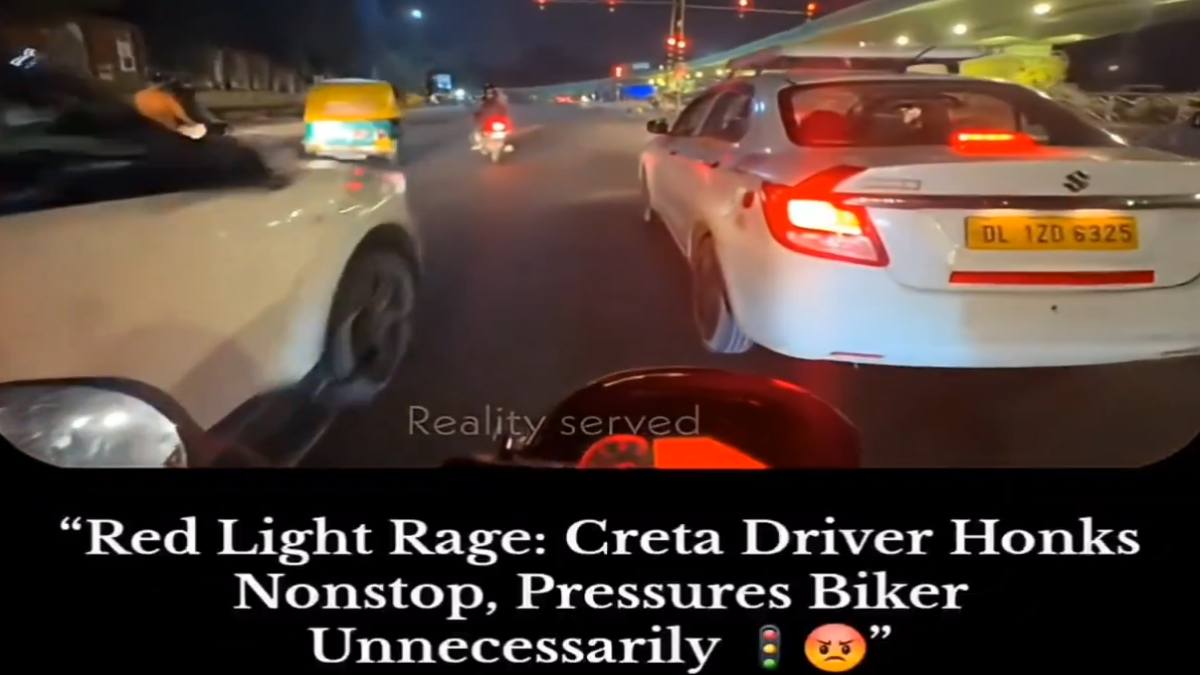
It’s only one tiny incident, not a much larger problem endemic to real traffic behaviors impatience, disregard for rules and a lack of mutual respect among road users. What Happened at the Signal. According to accounts, the biker paused at a red light and seemed to be following traffic laws. Then the driver behind the biker started to go on a loud, persistent honk and honk and honk -the biker certainly indicated to stop.
When will people learn Civic sense? 😒 pic.twitter.com/dvL2ziLRUY
— Chutki Chaiwali🇮🇳 (@Chai_Angelic) April 13, 2026
Rather than slowing the vehicle and waiting for the light to come green the driver allegedly continued to push the biker on, creating a tension and awkward confrontation. Such an act may be irresponsible and may even be dangerous. Honking, in itself, is designed to protect, not to be a source of annoyance. Too much reliance, however, generates noise pollution and strains commuters. The Larger Question of Civic Sense. And this is not a one-off. Aggressive driving behaviours unnecessary honking, jumping signals, tailgating and verbal arguments have become much more common in Indian big cities. For civic sense on the road is about listening to the counsel and needs of others. More a rule than a recommendation. It's a red light for everybody that protects all and keeps everybody at an intersection safe. When drivers disregard these basic, abiding laws they endanger themselves and others’ survival. Psychology Behind Road Rage
. Road rage is borne of stress, time limitation and emotional control, experts often write. And even in densely populated city environments, minor delays can lead to hyper-reaction. Pursuing such impulses, however, makes everything worse. In extreme conditions, aggressive road behavior might be severe, escalate and may take place quickly on the road with spoken or physical aggression or accidents.
Why It Needs Immediate Attention. Bad road conduct is incurring a cost far greater than inconvenience. Ongoing honking (and a general problem of noise pollution) causes problems in health that include anxiety, sleep problems, and hypertension. Also, forcing someone to break a traffic rule (like going at a red light) can result in damaging accidents especially at busy intersections.
The Way Forward. And we can all help elevate civic consciousness. Stronger enforcing of traffic laws, education programmes on the topic, and programs for raising the driver's level of understanding could be a driver role that's important. And on a personal level, a few small individual acts can make a huge difference to wait quietly at signals, be polite at signals, respect the use of the horn, respect each other.
There are countless others. Essential Rule: Patience Saves Lives. That red light will, from some point in time, change, for a moment or so--but that can never erase the harm caused over years of our impatience. The Biker/Creta accident serves as a lesson that roads are not areas of disagreement but common spaces. And unless drivers realize that both discipline and patience are equally important (if not more so) as skill to drivers, these incidents will continue. Civic sense is at least not a theory it’s indeed a social responsibility every good-hearted person on the street knows he owes every person on the street.