India and Canada signed a $2.6 billion uranium supply agreement to support strategic cooperation as it marks the landmark for global energy as well. The deal will come to a mutually beneficial stalemate at the expense of Russia, Canada and the U.S.
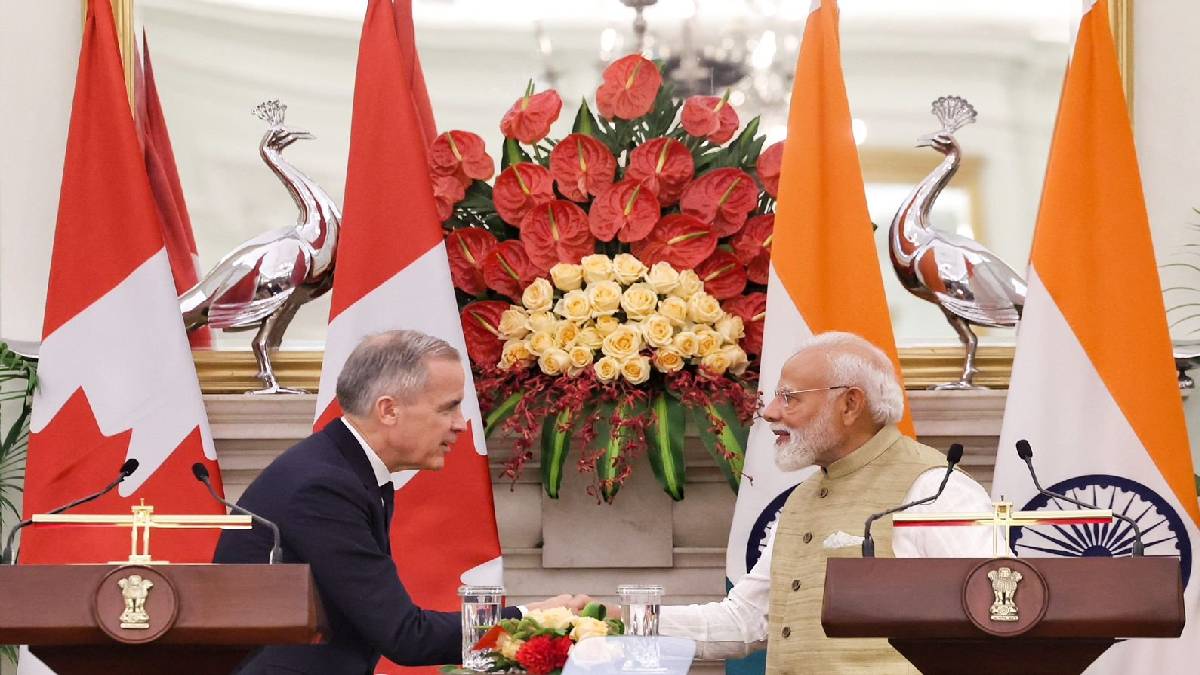
The Uranium Supply Deal: Securing India’s Energy Future
The 10-year agreement guarantees a steady supply of uranium ore concentrate for India’s nuclear reactors. For a nation that is constantly experimenting with a wide range of energy sources and seeks to cut its dependence upon fossil fuels, the development of nuclear power remains essential to achieving long-term energy security and meeting targets for carbon reduction. This action bolsters India’s capacity to satisfy increasing electricity demand and progress on clean energy targets.
CEPA (Comprehensive Economic Partnership Agreement)
Both countries agreed to sign a Comprehensive Economic Partnership Agreement (CEPA) within 1 year. The ambitious target is that bilateral trade will increase nearly fourfold to $50 billion annually by 2030, reaching the $50 billion target each year and above. CEPA is expected to:
- Enhance market access.
- Boost investment flows.
- Strengthen supply chain integration.
- Support industries that nurture innovation-based industries.
Critical Minerals Partnership
As clean energy technologies are strategically critical, India and Canada have signed a Memorandum of Understanding (MoU) for cooperation on critical minerals. This partnership aims to:
- Secure resilient supply chains.
- Encourage electric vehicle manufacturing.
- Advance battery storage technologies.
- Encourage sustainable mining and processing.
Canada’s abundant mineral reserves and India’s manufacturing capacity have synergies within this sector that can make a great deal of sense.

Renewable Energy & Storage Partnerships
The two countries aim to host an India–Canada Renewable Energy and Storage Summit later this year for a deep collaboration on:
- Solar and wind power.
- Energy storage systems.
- Green hydrogen.
- Grid modernization.
This initiative aligns with both countries’ climate promises and clean energy transition approaches.
Broadened Strategic Collaboration
The partnership reaches beyond energy — and there are critical points in which it continues in several areas:
Defense & Advanced Technologies
- Increased cooperation in defense manufacturing.
- Emerging and essential technologies.
- SMRs (Small Modular Reactors).
Education & Talent Exchange
- A new Talent and Innovation Strategy will enhance academic collaboration, research partnership, and student mobility between the two nations.
Space & Quantum Technology
- Collaboration on Earth observation.
- Joint space exploration programs.
- Quantum technology development.
A Strategic Reset in Relations
This new cooperation framework illustrates shared economic interests, democratic values and a coherent strategic plan. The partnership is expected to:
- Generate new investment opportunities.
- Nurture India’s education and vocational development programs.
- Lend its experience in infrastructure projects.
- Generate jobs in high-growth industries.
- Enhance energy and technology security.
- Strengthen global supply chain resilience.
While both nations’ future looks from 2030 onward, this uranium deal could serve as the basis for a much wider, and deeper, strategic alliance.