Popular lifestyle YouTuber Sourav Joshi recently drew the ire of many when he said that a Mercedes-Benz GLC SUV he owned experienced a drastic drop in fuel efficiency when it was filled with ethanol-blended petrol (20% ethanol). Joshi claimed that the SUV mileage dropped from around 16-17 kmpl to nearly 5 kmpl in a video that went viral.
But Mercedes-Benz India now has a reply to the controversy: all the modern petrol cars sold in India are compatible with E20 fuel, and therefore they suggest that owners seek professional diagnosis before making any conclusions.
What did Sourav Joshi claim?
Joshi showed the digital instrument cluster of his SUV in his video and said mileage dropped drastically after refuelling with E20 petrol. The influencer also expressed worry about engine damage and said he would need to transport his luxury SUV from Haldwani to an authorised Mercedes-Benz service centre in Delhi for inspection.
His claims spread quickly on social media, and many users asked how much E20 fuel would impact high-end imported vehicles.
Mercedes-Benz India's Official Response
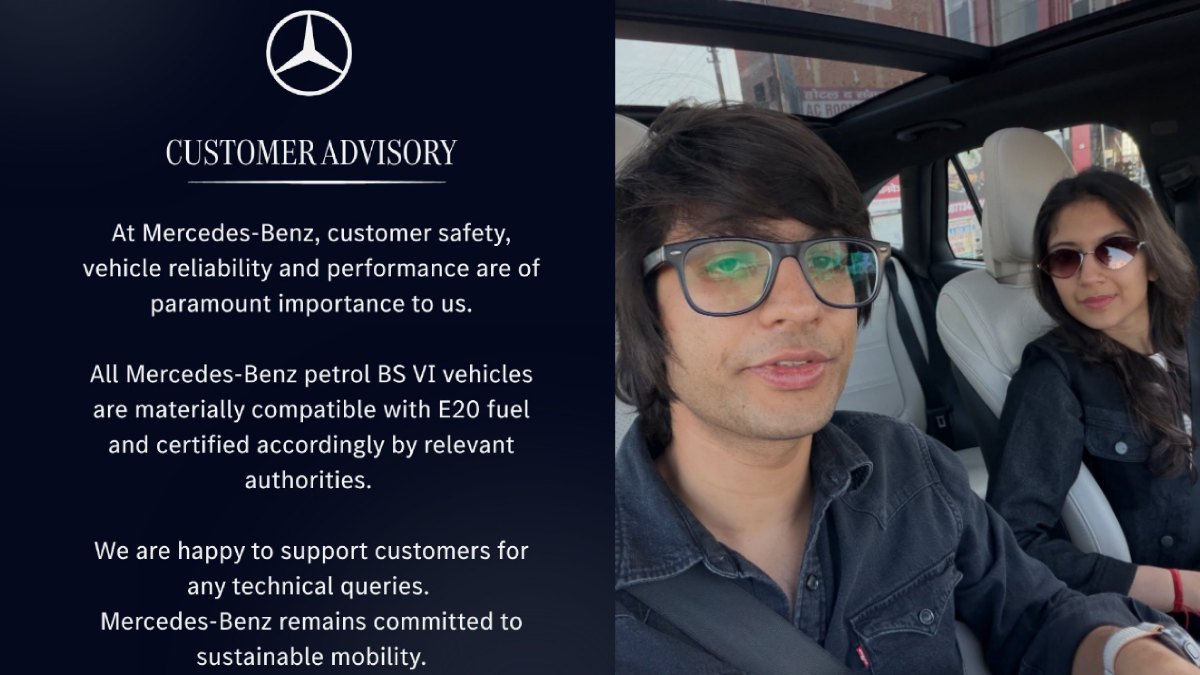
Mercedes-Benz India has also issued an official statement (see Fig.).
The company stated:
In the eyes of Mercedes-Benz, customer safety, reliability and performance is what matters to customers. All Mercedes-Benz petrol BS VI cars are materially compatible with E20 fuel and are certified by relevant authorities, and we are always ready to support customers in any technical questions. Mercedes-Benz is committed to sustainable mobility.
This clarification essentially rejects the idea that E20 fuel alone could cause such a dramatic drop in fuel economy.
Can E20 fuel make mileage less than 70% for car travel?
Experts say no.
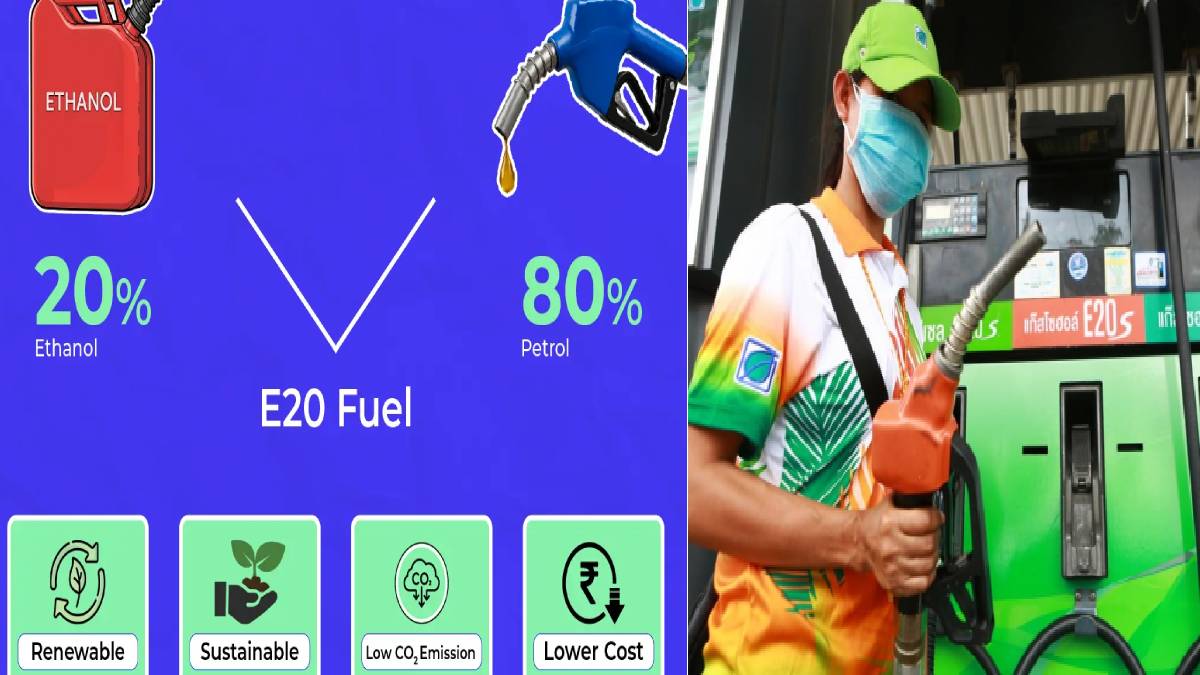
Ethanol contains slightly less energy than conventional petrol so that E20 fuel generally delivers 1.5% to 3% lower fuel efficiency in normal driving conditions. This small reduction has been well-known during vehicle certification and testing.
A drop from 17 kmpl to 5 kmpl is nearly 70% down, a scenario which experts say is far beyond what E20 fuel could realistically cause.
What are the reasons for Mileage Drop?
But some factors could be contributing to the sharp drop in fuel economy, and many factors are thought to be responsible for that sharp drop, experts say. Many reasons could be contributing to the sudden drop in fuel efficiency.
Prolonged engine idling, especially if you are only interested in keeping the air conditioner running. Heavy city traffic or frequent stop-and-go driving impacts fuel economy. Driving on hilly terrain with more engine load. Faulty sensors influencing mileage calculations on the dashboard. Fuel contamination, as water enters underground storage tanks at a fuel station. Mechanical issues regarding the engine, injectors, spark plugs or fuel system.
Without an On-Board Diagnostics (OBD) scan, fuel quality analysis and inspection by an authorised service centre, identifying the exact cause remains impossible.
Why The Issue Matters
India has been gradually expanding the use of E20 petrol as part of its strategy to reduce crude oil imports, lower emissions and support domestic ethanol production. Most of the cars made in the last few years (especially luxury cars) have been certified for E20 compatibility.
Industry experts are concerned that publicly attributing major mechanical failures to E20 fuel without any technical evidence is a recipe for mishap with vehicle owners and vehicle manufacturers.
Mercedes-Benz has advised customers experiencing any abnormal vehicle behaviour to immediately visit an authorised workshop for diagnosis rather than simply look at dashboard readings.
This is important for the debate to go through and be discussed, and the experts have to weigh the concerns of each of the people involved before linking car problems to fuel policy changes.