The Supreme Court on Tuesday sought the Centre’s response to a plea by Anita Bose Pfaff, daughter of freedom fighter Netaji Subhas Chandra Bose, to bring Netaji’s ashes back to India from Japan. The case has once again rekindled the decades-old debate around Netaji’s death and final resting place.
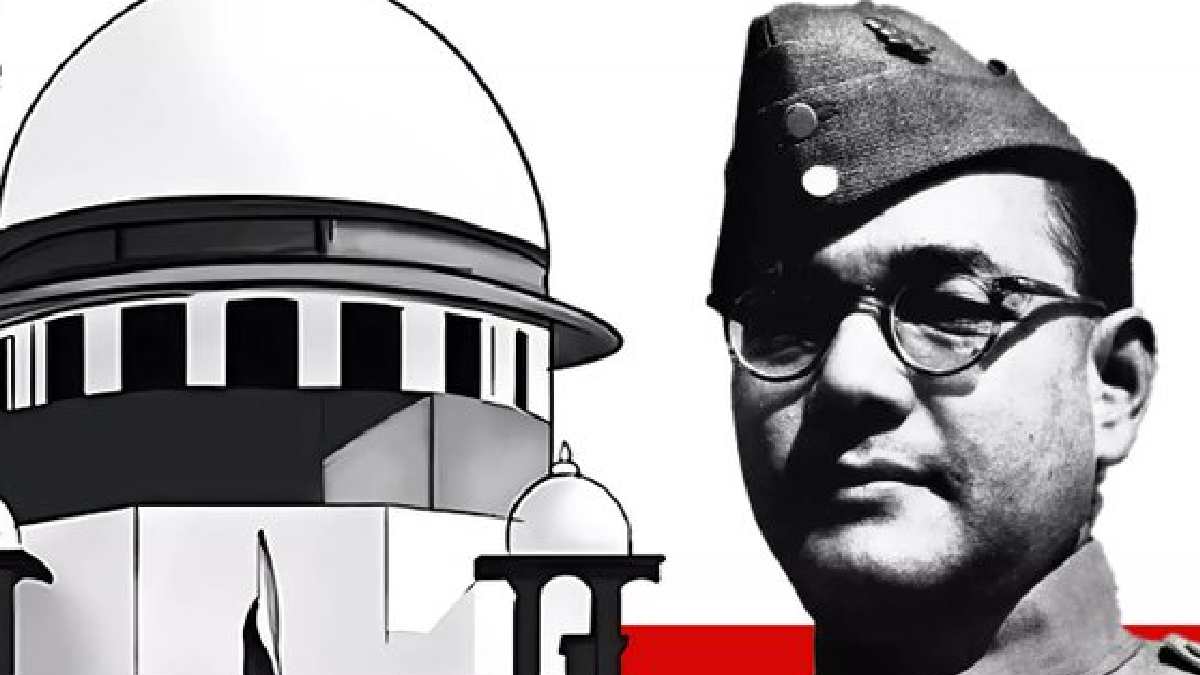
A bench led by Chief Justice Surya Kant and Justices Joymalya Bagchi and V Mohana issued notice to the Centre on the petition. Senior advocate Abhishek Singhvi appeared for Anita Bose Pfaff.
Netaji’s ashes at Tokyo’s Renkoji Temple
The remains believed to be those of Subhas Chandra Bose have been preserved at the Renkoji Temple in Tokyo, Japan. Bose died in an air crash in Taiwan in August 1945, as long-standing accounts say, after suffering burn injuries.
However, questions of his reported death and the identity of his remains have continued for decades. Some inquiries and commissions have been made on this issue and Netaji’s mystery continues to be a mystery.
Anita Bose Pfaff has maintained that the remains should be brought back to India so that her father can be buried in his homeland. Her latest appeal will be before the Supreme Court through a petition filed by a direct family member.
Supreme Court seeks Centre’s response
The court has not ordered the immediate repatriation of the remains. It has asked for the Centre’s response, and now the government needs to present its position in the court.
The development is significant because the issue has already reached the Supreme Court. In March 2026, the court had declined to entertain a petition by Netaji’s grand-nephew Ashish Ray to recover his father’s body, underscoring the importance of the family’s role.
The government has also taken up this issue in the past. A 2002 Lok Sabha response stated that the issue of transferring Bose’s ashes from Renkoji Temple had not arisen in recent discussions with Japan at that time.
Why the case matters
Netaji Subhas Chandra Bose is one of the most prominent figures of India’s freedom struggle. His leadership of the Indian National Army and fight against British rule have left him a great mark on the history of India.
The question of what happened to Bose after 1945 has continued to be one of India’s oldest historical disputes. The Supreme Court’s latest move could therefore renew attention on the government’s position on the remains preserved in Tokyo.
For Anita Bose Pfaff, the petition is also very personal, as she wants to get her father’s remains back to India. The Centre’s response will be closely watched as the case continues.