The Supreme Court has taken suo motu cognisance of the gang rape of a 16-year-old girl in a moving sleeper bus in Delhi-NCR, which has brought back into focus the safety of women and children travelling. It has also been compared with the Nirbhaya case in 2012 and the Supreme Court has said such incidents raise serious questions about the effectiveness of the existing legal and law enforcement mechanisms.
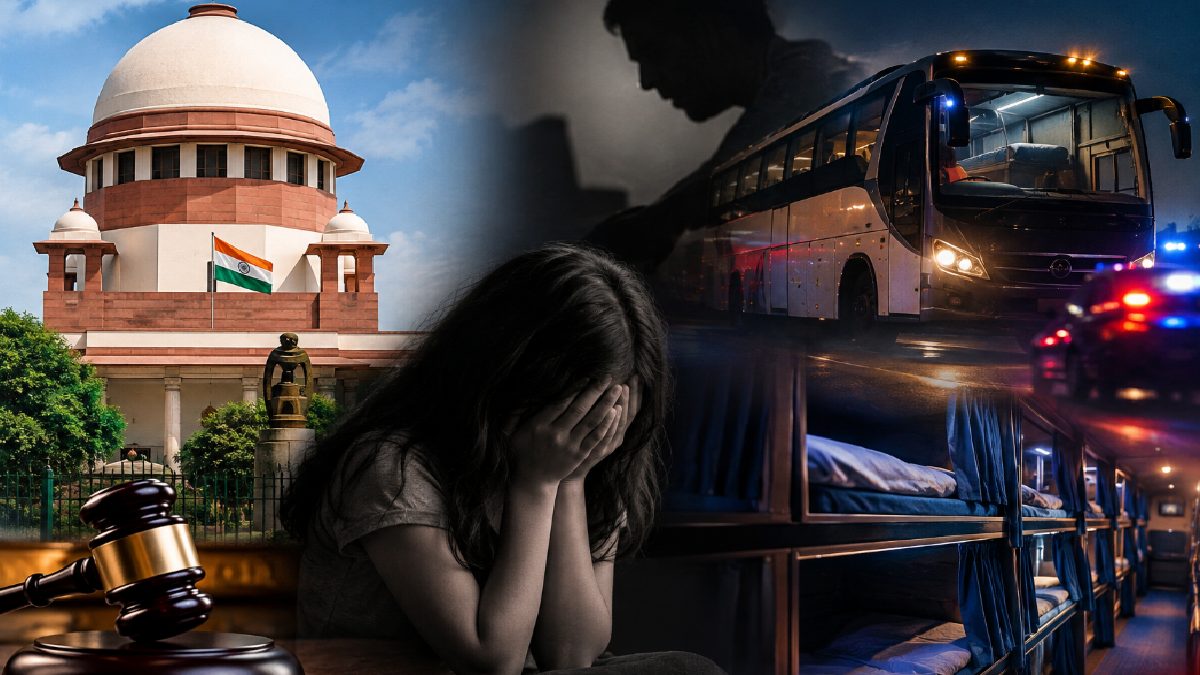
The incident took place on 4 August, when heavy rain and poor visibility made it difficult in Delhi-NCR. According to the report of the case, the minor was travelling from Mainpuri to Noida to meet a relative. During the journey she got off the bus by mistake at Pari Chowk in the heavy rain. She was told by the conductor that the bus would go to Noida Sector 63, after which she entered the vehicle again.
Police sources say that the situation changed when the bus began moving. The conductor is alleged to have been inappropriately touching the girl. The driver and conductor sexually assaulted the minor and threatened her with serious consequences if she tried to resist, police said.
The situation has been investigated and an investigation into the bus movement and the conduct of the accused is being opened.
The girl was allegedly left near the Kashmiri Gate bus terminal later that night and the accused fled from there. The minor approached the Kashmiri Gate police and was given a medical examination in the presence of a woman police officer. Based on her complaint an FIR was registered under relevant legal provisions of alleged gang rape, kidnapping and assault.
In the police investigation, CCTV footage from different points was examined, and they identified the accused. The conductor was subsequently arrested from a parking area in Timarpur. Police have also taken up the bus as part of the investigation and sent it to forensic experts.
CCTV footage and other evidence are being reviewed for the sequence of events in order to determine who is involved, and who is responsible for what.
According to sources, the bus was at a workshop in Surajpur for repairs and once the repair work was done it was returning empty. It was, they said, that the driver and conductor were on their way to the Timarpur parking area when they encountered the minor at Pari Chowk. The investigation is taking into account these circumstances as they are trying to reconstruct the events that led to the alleged crime.
The Supreme Court’s decision to take suo motu cognisance has brought the case into the country’s highest court’s hands. “In that case incidents of this kind point to serious flaws in law enforcement and the protection of women and children,” the court has said. The court is expected to look at what happened in the incident and how authorities reacted to the allegations.
The Nirbhaya case has also been a reminder to the court of the significance of the 2012 Nirbhaya case. The Nirbhaya case was a national disaster and the public and legal debate about crimes against women, policing, criminal justice and victim protection was ongoing.
The investigation of the alleged bus incident is crucial to establishing the full sequence of events. CCTV recordings, forensic examination of the bus, medical evidence, testimony of the survivor and other witnesses will be some of the evidence that investigators are looking at. The conductor has been arrested and the investigation into the involvement of others continues.
The case has once again highlighted the vulnerability faced by minors travelling alone, particularly in adverse weather and difficult travel conditions. It has also raised questions about how passengers seeking assistance can be protected from potential abuse while using private and public transportation.
As the Supreme Court considers the matter, the proceedings are expected to focus on the circumstances of the incident, the response of the authorities and broader concerns related to the safety of women and children.
The allegations are still under investigation and judicial processes. The accused will be entitled to due process in that the final determination of guilt will depend on evidence presented before the appropriate court.