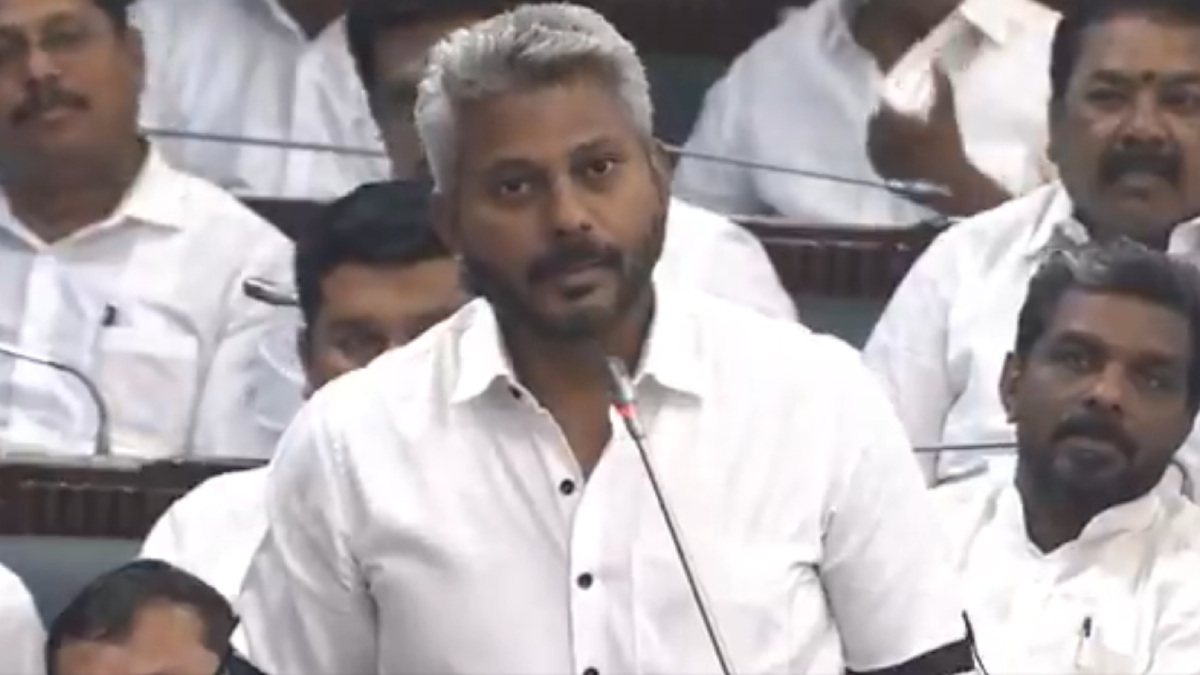
There is a fresh political dispute in Tamil Nadu after Finance Minister Mariya Wilson accused DMK president M.K. Stalin of leaving a huge debt burden on the state’s population. Wilson said Stalin’s financial policies had put a debt liability of over ₹1.28 lakh on every individual in Tamil Nadu and put the state’s fiscal health and long-term economic sustainability in question.
The comments have heightened the political fight between the ruling and opposition parties, and the two sides are now fighting over spending, public expenditure and debt accumulation. Wilson’s comments have reignited discussion in the Indian government over the high debt of states and the issues of how governments balance welfare spending and fiscal discipline.
Wilson told party workers and media representatives that the previous administration's economic policies dramatically increased Tamil Nadu's debt burden. She said excessive borrowing and increasing liabilities have put pressure on state finances, and this is affecting future generations of taxpayers.
The Finance Minister said when you put the total outstanding debt divided by the population of a state, the burden amounts to about ₹1.28 lakh per resident. She said such a figure is a testimony of the magnitude of the financial obligations that the DMK government had to contend with in the past few decades and hence fiscal control must be better in the future.
The comments received immediate attention from political leaders and economists. The ruling class argued the increasing debt levels would limit a government’s ability to invest in infrastructure, education, health care and development projects. And prudent financial planning is necessary for sustainable economic growth and investor confidence, they said.
But DMK leaders have dismissed such claims, saying that borrowing is common practice in many countries for development and welfare programs. Many of the loans were used for infrastructure development, social welfare programs, industrial growth and public services that benefited millions of people, they told Reuters.
The debate on Tamil Nadu's finances comes at a time when several Indian states are under increasing fiscal pressure. Increasing expenditure on welfare programs, subsidies, infrastructure projects and public sector commitments has led many state governments to rely heavily on borrowing. Debt itself is not necessarily a problem, economists say, and when borrowings exceed the economy’s growth rate or if debt-servicing costs eat up a significant portion of government revenues, that is a problem.
Tamil Nadu has been one of India’s most economically important states for more than 50 years. As a result, it is an important state in the manufacturing industry and exports, and in the service sector. At the same time, governments have made huge welfare initiatives in the form of welfare programs to increase quality of life and social welfare for the less privileged.
The financial experts stress that debt figures need to be examined alongside gross state domestic product (GSDP), revenue generation, capital expenditures and economic growth. They add that per capita debt data can be interpreted singly, but does not capture the bigger picture of the fiscal picture.
Political analysts say the issue is likely to be a prominent point of discussion in the state’s political landscape and parties will try to present themselves as responsible stewards of public finances. Debt management, welfare spending, taxation and economic growth are expected to be at the core of discussions to come.
What it also means for the public is that governments borrow money and that they won’t be able to cover it. Debt-funded development is the way of life, but others worry that future governments may find it difficult to pay back.
The war of words continues between the state’s political foes, and the concern for Tamil Nadu’s fiscal health and the ability to maintain economic growth with responsible use of public money as political capital is still a focal point. How such debt burden becomes a defining political issue will probably depend on how both sides present their economic records and policy visions in the coming months.