Bran Castle has become one of Romania’s most recognized tourist attractions, situated high on the mountains of Bucegi and Piatra Craiului. Most modernized around the world as “Dracula’s Castle,” the medieval fortress attracts tourists fascinated by Gothic architecture, vampire legends and the history of Transylvania.
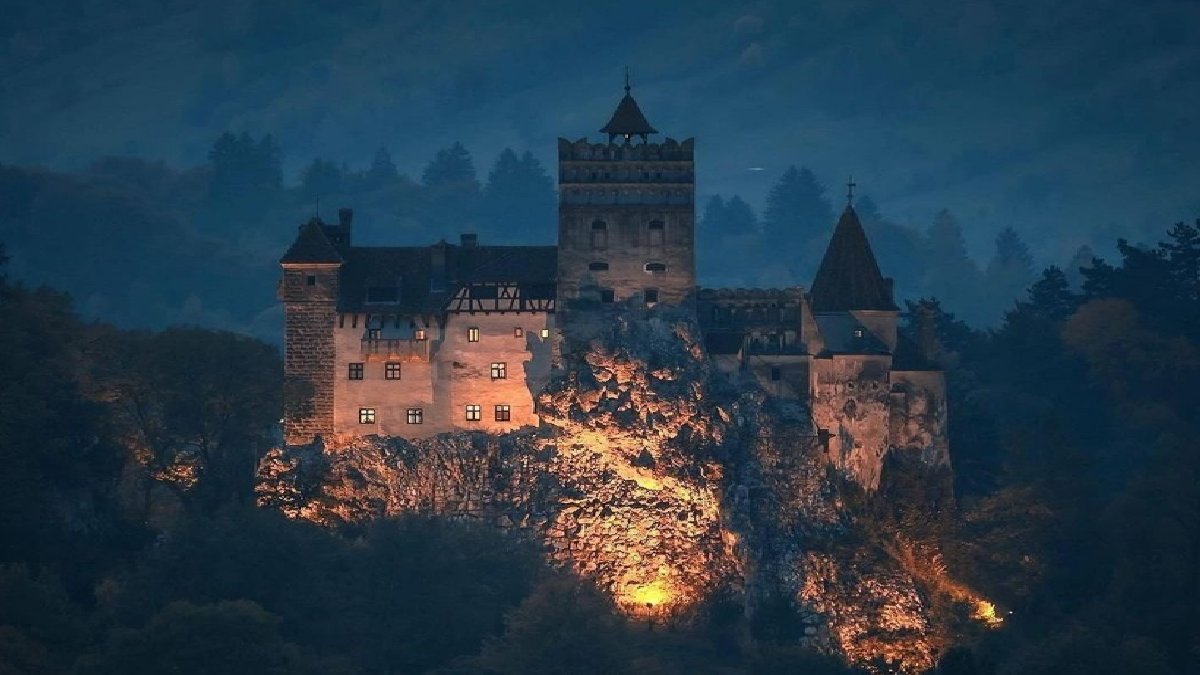
Bran Castle is closely associated with Bram Stoker’s fictional vampire Count Dracula, but the actual history of Bran Castle is so dramatically different from the story of the legendary character. The castle’s association with Dracula is largely a product of popular culture, tourism and later interpretations of the character that it does not really have a tangible historical relationship with Stoker’s inspiration.
A Medieval Fortress In Transylvania.
Bran Castle is located near the town of Bran, in central Romania, and its strategic position made it an important defensive point for centuries. The present fortress was built in the late 14th century and it took a role in controlling a mountain pass between Transylvania and Wallachia.
The castle’s location made it strategic in trade and military activity. Merchants passing through the region used routes around the mountain pass, so the fortress was a defensive point of view to see the surrounding nature.
Bran Castle has changed over the centuries. Its appearance today is a mixture of the various phases of construction, restoration and adaptation.
How did Bran Castle become Dracula’s Castle?
The biggest mystery surrounding Bran Castle is not whether it was a vampire’s home, but how it became associated with Dracula in the first place.
The 1897 novel Dracula introduced Count Dracula, a fictional Transylvanian nobleman and vampire. Stoker never visited Romania, and there is no evidence that he based Dracula's castle on Bran Castle.
The connection became stronger over time because of the castle's dramatic appearance, its location in Transylvania and the region's association with Vlad III, also known as Vlad the Impaler.
Vlad III was a ruler of Wallachia in the 15th century who used his iron fist to deal with enemies. He is often linked to the historical inspiration for the name Dracula, but the relationship between Vlad and Stoker's fictional character is in fact much more complicated than popular media portrays.
Vlad The Impaler And The Dracula Legend
Vlad III has become one of the most famous historical figures associated with the Dracula story. He was born in the 15th century and ruled Wallachia several times and was famous for using impalement as punishment.
The name Dracula comes from the family history of Vlad. His father, Vlad II, was in the Order of the Dragon and Vlad III, Vlad Drăculea, was very much associated with his father's title.
However, historians generally distinguish between Vlad the Impaler and Count Dracula. Vlad was a real medieval ruler; Count Dracula is a fictional vampire created by Stoker.
There is also no strong historical evidence that Vlad lived at Bran Castle for any significant period. This is one of the reasons the castle's Dracula connection is best understood as folklore and tourism rather than established history.
A Castle With A Royal Connection
Bran Castle has another important chapter in its history that has little to do with vampires. In the 20th century it became associated with Romania’s royal family.
After the First World War, Bran Castle was presented by the city of Brașov to Queen Marie of Romania in 1920. Queen Marie used the castle as a residence and a retreat and it was closely connected to the Romanian royal family.
Today’s interiors and furnishings reflect several historical periods, including the castle’s royal chapter. It’s a different view of Romania that tourists can have on the Dracula mythology as well.
What Can Travellers See At Bran Castle?
Visitors to Bran Castle can explore its courtyards, rooms, narrow stairways and medieval architecture. The castle's elevated position provides impressive views of the surrounding Carpathian landscape.
Inside the castle, exhibitions have been shown about its history and the links between the castle and Queen Marie and the Romanian royal family. Depending on the exhibition and period we might also see a few displays on Dracula's legend and vampire folklore.
The Bran region adds to the experience. The traditional villages, mountain landscapes and nearby attractions make the area suitable for travellers who want to mix history and nature.
Why Dracula’s Castle Remains Popular?
Bran Castle’s enduring popularity is a result of the unique combination of history and fiction. Few tourist attractions have such a strong connection to a globally recognized literary character while simultaneously having a centuries-old real-world history.
For horror lovers, the castle offers an opportunity to enter the world that popular culture has associated with Dracula. But its medieval heritage, strategic importance and link to Romania’s royal family are equally compelling reasons to visit.
The surrounding Transylvanian landscape also lends a mysterious quality to the castle. Mountains, forests, old villages and medieval architecture give the atmosphere that has helped Dracula stories remain popular for generations.
Bran Castle, however, is much more than a “Dracula” attraction. It’s a medieval historical site, royal connections and distinctive architecture that make it one of Romania’s most fascinating landmarks. The vampire legend may be what first draws people to the fortress, but the reality of Bran Castle is actually far more interesting when we stray away from the myths.