A newborn has attracted attention after being born with both lower limbs pointed unusually upward, its legs were also significantly different from the baby's normal positions in newborns.
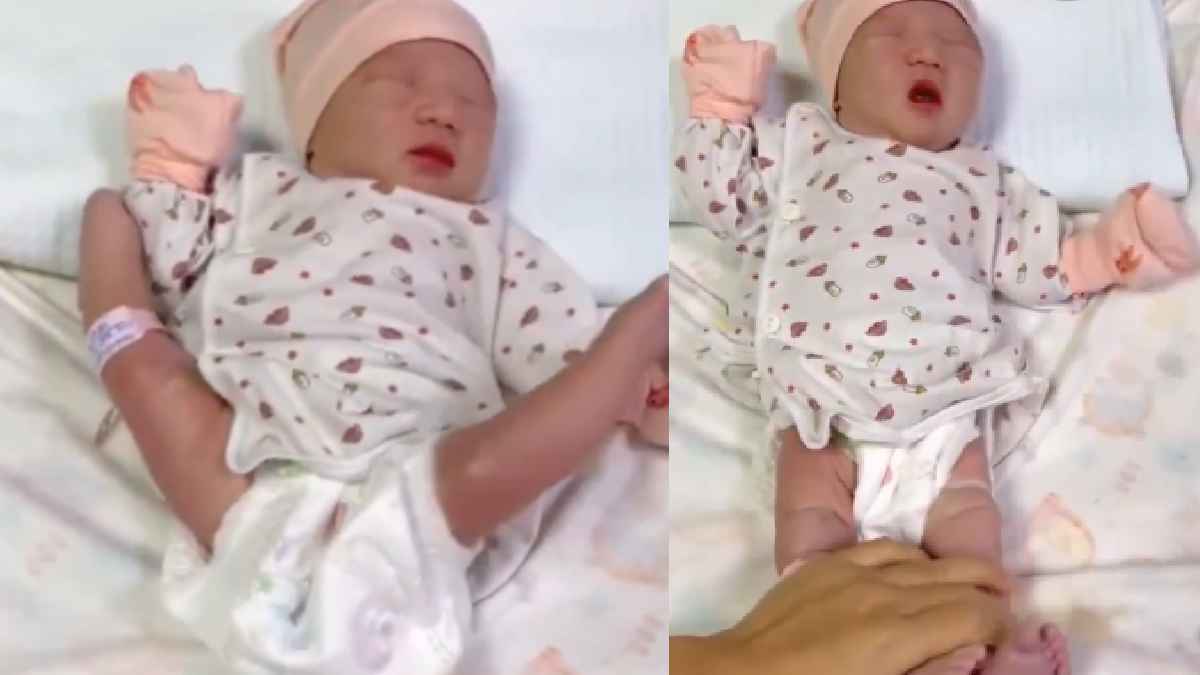
While unusual limb positioning at birth can be concerning to parents, the baby’s bones, joints, muscles and movement are still to be checked by doctors in general but the reason behind the appearance of the baby’s lower limbs, bones, joints, muscles and movement are not necessarily the only reason behind it.
Newborns can have unusual-looking limbs because of the way they were placed inside the uterus during pregnancy. In many cases, baby’s legs or feet are stuck in some unusual positions in the womb because this is where there is less room in the womb.
Such positional changes may be normal after birth, if the joints and bones are structurally normal.
But unusual leg position can also be associated with congenital conditions affecting the development of bones, joints or muscles. These conditions can vary greatly, so before concluding anything any physical examination is necessary.
A newborn presents with both lower limbs abnormally positioned upward at birth. What is the most likely diagnosis? 😳😱 pic.twitter.com/dwBcStjQ6k
— Dr Abdul Hameed 🩺 (@drabdulhameed07) April 15, 2026
One possibility doctors may consider is a congenital deformity of the feet or lower limbs. Clubfoot, hip problems, or other musculoskeletal problems may cause a newborn’s legs or feet to be turned, raised or positioned differently. In some cases both legs may be affected, while in others just one limb is in an unusual position.
The baby's ability to move the legs is also of great importance in medical assessment. Doctors can check whether the hips, knees and ankles move normally, whether limbs are the same length and shape and if the baby responds to touching and movement normally.
Imaging tests such as ultrasound or X-ray could be recommended depending on the examination and age of the baby.
Parents should also be aware that a very unusual appearance does not imply that a baby will be disabled forever. Some positional abnormalities improve with gentle movement, observation or physiotherapy. Other conditions may need specialised treatment.
Treatment depends entirely on the underlying cause. From a diagnosis point of view, doctors may recommend observation, stretching exercises, physiotherapy, braces and casts. More complicated structural problems might require treatment by a paediatric orthopaedic specialist.
The most critical thing for parents is to have the newborn assessed by a qualified paediatrician instead of trying to straighten the legs at home. A baby's bones and joints are delicate, and forceful manipulation could cause injury.
An unusual leg position at birth can therefore have many possible explanations, from temporary positioning inside the womb to a congenital musculoskeletal problem. Only a proper clinical examination can reveal what is happening and whether treatment is necessary.