Despite a variety of government efforts and the delivery of the Graded Response Action Plan (GRAP), the air quality in the Indo-Gangetic Plain is still in the "danger zone". Ghaziabad has the highest average PM_(2.5) concentration among all Indian cities for January 2026, as revealed in the latest monthly report by the National Clean Air Programme (NCAP) tracker.
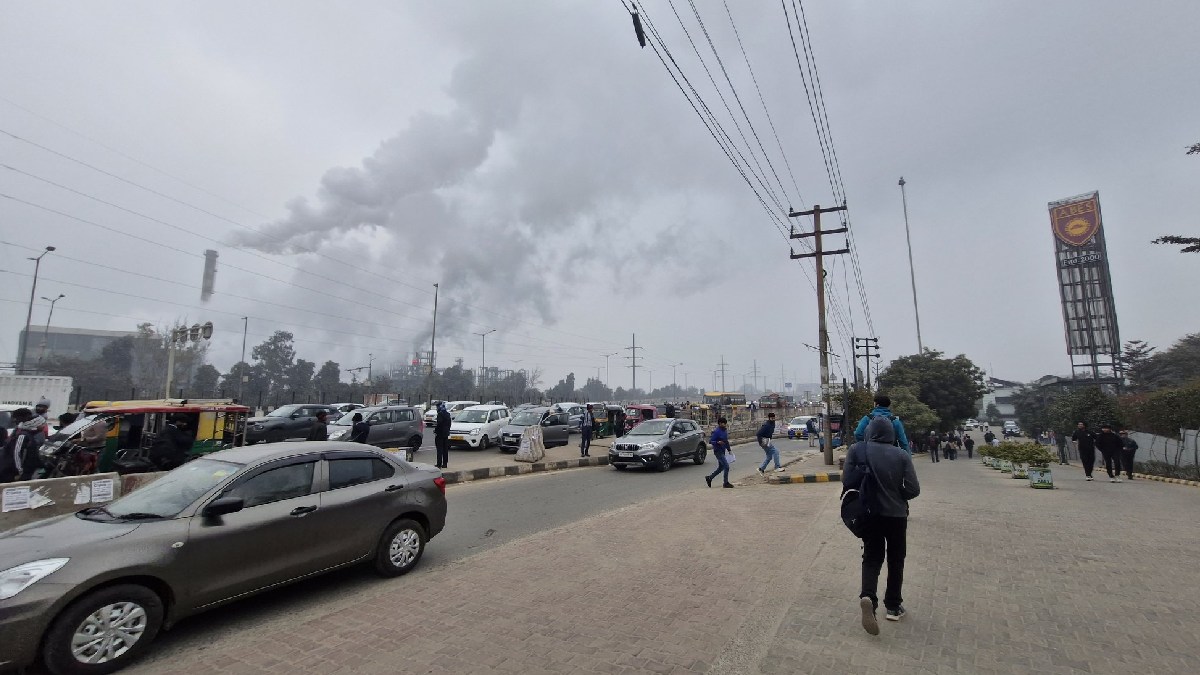
The "Gas Chamber" Stats
The graph really isn't a reassuring face for the nationals of NCR. Though WHO advises 24 hour mean PM_(2.5) concentration of only 15 ug/m3, this was not the case in the top cities which exceeded it by nearly ten-fold. Delhi the traditional face of Indian pollution recorded an average AQI that was consistently three times higher than the national limit of safety 60 ug/m3. AQIs exceeded 450 in two distinct pockets of Anand Vihar and Bawana on some days of January, bringing them into the “Severe Plus” range.
Top 10 Most Polluted Cities (January 2026)
The ten cities with the highest average PM_(2.5) levels (ug/m3) for the month are:
| Rank | City | State | Avg. PM2.5 Level |
| 1 | Ghaziabad | Uttar Pradesh | 202 ug/m3 |
| 2 | Delhi | NCR | 188 ug/m3 |
| 3 | Hapur | Uttar Pradesh | 175 ug/m3 |
| 4 | Bhiwadi | Rajasthan | 169 ug/m3 |
| 5 | Noida | Uttar Pradesh | 162 ug/m3 |
| 6 | Patna | Bihar | 155 ug/m3 |
| 7 | Muzaffarpur | Bihar | 148 ug/m3 |
| 8 | Gurgaon | Haryana | 142 ug/m3 |
| 9 | Faridabad | Haryana | 139 ug/m3 |
| 10 | Meerut | Uttar Pradesh | 131 ug/m3 |
Why is the Air Still Toxic?
They attribute the ongoing pollution to a combination of meteorological factors and uncontrolled local emissions: Temperature Inversion: Low wind speeds and cold air trapped pollutants near the ground, stopping them from dispersing.
Dirt Roads & Construction: Massive infrastructure projects in Ghaziabad and Hapur have resulted in heavy accumulation of road dust.

Biomass Burning: Though stubble burning is now stopped, during winter months use of coal and firewood continues to account for a hefty chunk of PM_(2.5)
The Health Crisis
Hospitals in Delhi-NCR have reported a 35% increase in respiratory illnesses this month. Children are now becoming especially concerned about “smog-induced asthma,” with most schools being forced to stop practicing outside during most of the month. “We are beyond a seasonal consideration.” “This is not a seasonal issue, it’s a chronic public health crisis,” said Dr. Sunita Narain of the Centre for Science and Environment (CSE). “As long as we do not turn entirely to clean energy for transportation and heating, the people of North India will lose years of their average life expectancy.”