The United States and India are making great progress in the defence and civil nuclear sector to strengthen their long-standing strategic relationship. The interest of these countries is in the region and in the world’s oldest and largest democracies as they develop in all areas of security, technology, clean energy and economic development.
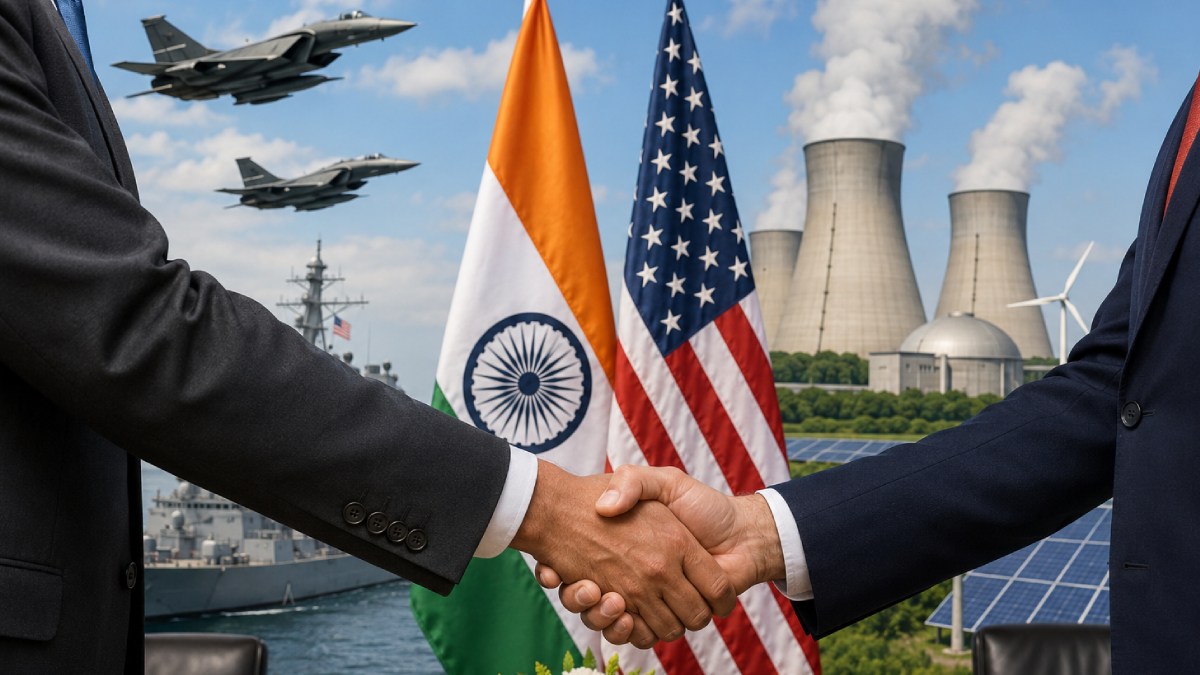
Both countries have made an explicit commitment to the development of cooperation in a number of strategic spheres and for the stability of the Indo-Pacific region and sustainable economic development.
Defence cooperation has been one of the major pillars of India-U.S. relations for the past two decades. The two nations have increasingly engaged in joint exercises, defence technology cooperation, intelligence sharing, and expanded procurement of advanced military equipment. The recent push is expected to enhance interoperability of armed forces and defence technology manufacture as well as co-development and co-production of defence technologies.
India and the U.S. conduct frequent military exercises between the army, navy and air force to enhance operational coordination, disaster response capabilities, maritime security and prepare the two sides for tricky security issues. The experts in defence believe that increasing defence cooperation is crucial for peace, stability and freedom of navigation in the Indo-Pacific.
Another major area that has received renewed attention is civil nuclear cooperation. Both nations have shown a keen interest in developing peaceful nuclear energy to help to develop sustainable electricity generation and long-term energy security. Civil nuclear cooperation is a key element of India’s strategy to diversify its energy mix and eliminate greenhouse gas emissions and meet the high electricity demand. Nuclear power is a reliable low-carbon form of energy that is also a good complement to renewable sources like solar and wind energy sources.
The current emphasis on civil nuclear cooperation also demonstrates that the effort to move for clean energy transitions is more widely shared. India has set ambitious climate goals for energy solutions, which include increasing non-fossil fuel electricity production and long-term sustainability targets. Working with the United States to achieve these goals with nuclear technology, reactor design, safety standards and technical knowledge will benefit from collaboration: these national priorities.
In addition to defence and nuclear energy, the India-U.S. partnership is also blossoming in new technologies in artificial intelligence, semiconductors, space exploration, quantum computing, biotechnology, cybersecurity and telecommunications. These areas are now increasingly understood as vital to our economy and to our security. With a greater cooperation of technology in the future, both countries would be able to increase innovation in the future, to build a robust supply chain, as well as reduce strategic vulnerabilities.
Economic cooperation is also an important part of bilateral relations. The United States is one of India’s largest trading partners in which mutual investments are flowing, joint ventures are growing and collaboration among information technology, pharmaceuticals, manufacturing, education and research is flourishing. Strategic cooperation that is stronger generally creates better conditions for economic cooperation as investors feel more confident to invest and technologies can be exchanged.
The security experts also point out the increasing dynamics of geopolitical issues have made it more important for New Delhi and Washington to cooperate and partner more closely. Common interests in the Indo-Pacific are very much reflected in bilateral policy discussions of free, open and rules-based Indo-Pacific. Defence cooperation is key to maritime security, counterterrorism, humanitarian assistance, disaster relief programs and regional peacekeeping.
Civil nuclear cooperation also has economic benefits beyond electricity generation. Such large scale nuclear projects can enhance investment, employ highly skilled people, stimulate scientific research and strengthen the domestic industrial capacity. Reactor technology, fuel management and safety systems cooperation will also assist in the long-term building of India’s energy infrastructure with the safety standards in common with other nations.
And while there are many opportunities for cooperation to grow and come, for successful implementation to happen it will take a long-term policy coordination and clarity of regulations, commercial partnerships and ongoing diplomatic engagement. Technical, financial and regulatory challenges will remain important as both countries work to translate strategic promises into real projects.
The partnership is also on the basis of common democratic values and people-to-people relations. Educational exchanges, scientific cooperation, partnerships with business and cultural links are continuing to strengthen relations between the two countries. Millions of Indian citizens living in the United States have also further strengthened bilateral cooperation in fields such as that of education.
As the world economy and security landscape continues to evolve with India and the United States in cooperation in the areas of mutual strategic importance, as well as the fact that defence modernisation and peaceful civil nuclear cooperation are now more closely linked means that there is a long-term vision of a partnership which can tackle the contemporary international challenges. It must be built out of technological innovation, security cooperation and clean energy cooperation and such partnerships to strengthen and strengthen the relationship and make it more sustainable and more resilient in the long run both countries are going to help this region to become more stable, economically prosperous and a place to make their own progress.