Finance Minister Nirmala Sitharaman has sought to allay fears of introducing a Merchant Discount Rate (MDR) on high-value Unified Payments Interface (UPI) transactions and made clear that any such charge, if it is to be implemented, will not be paid by customers. In recent months, digital payments in India have been in the news as amendments related to the payments ecosystem are being considered to make them affordable and chargeable.
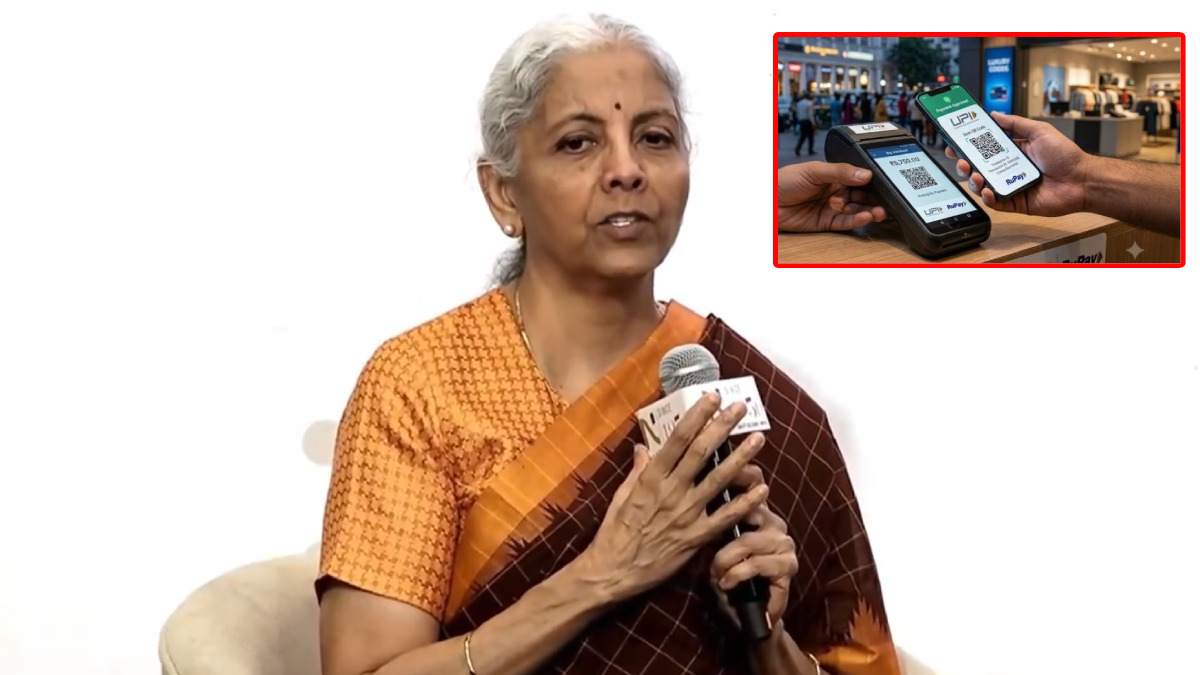
The debate picked up in the wake of provisions in the Taxation and Other Laws (Amendment) Bill, 2026 that were said to have paved the way for an MDR framework for UPI transactions. The proposal provoked a lot of discussion among consumers, businesses, and political leaders who said they feared people on popular payment services such as PhonePe, Google Pay, and Paytm could be forced to pay transaction fees in the future. Sitharaman has said that end users will still receive free UPI payments, and it is for merchants, as opposed to consumers, to come up with the UPI payment system.
Citing concerns by Congress leader Jairam Ramesh on social media site X, the Finance Minister said that the proposed MDR mechanism would be applicable only to merchants accepting UPI payments. She added that claims that ordinary users would be charged for UPI transactions were inaccurate. She said that consumers who would make payments using UPI-enabled apps wouldn’t pay any direct transaction costs if the proposal is implemented.
The government’s consideration of an MDR framework is based on the long-term sustainability of India’s rapidly growing digital payments ecosystem. UPI has witnessed remarkable growth since the zero-MDR policy came into effect, with millions of Indians moving money every month. Today, UPI is one of the world’s most accurate and real-time payment systems that processes billions of transactions every month.
Although the zero-fee model has significantly increased consumer and merchant adoption, industry stakeholders have argued that banks and fintech companies have a huge operational cost for maintaining payment infrastructure. That is money spent on technology upgrades, cybersecurity measures, fraud prevention systems, server maintenance, and innovation to support a growing transaction volume. Financial institutions and payment service providers have long maintained that without an income stream from transaction fees, it could get quite difficult to sustain the ecosystem.
Sitharaman explained that the objective of the MDR framework is to find a balanced and sustainable solution in which banks and fintech companies can recover some operational costs for themselves as well as consumers and will still be able to enjoy free digital payments. She said no decision has been made about the introduction of MDR and that the matter is currently being discussed.
The Finance Minister’s statement also said discussions on the matter will take place after Parliament completes the legislative process of amendments to the Payment and Settlement Systems Act, 2007. The proposal will be reviewed by the UPI and Services Steering Committee chaired by the National Payments Corporation of India (NPCI) before any policy decision is taken.
One of the options is introducing the MDR between 0.3% and 0.5% on UPI transactions of ₹2,000 or more, for merchants with turnover higher than ₹1.5 crore. Another is to charge based on a merchant’s annual turnover rather than on the value of transactions.
The changes proposed in this regard would mainly affect larger businesses, not small traders or individual consumers. Industry experts believe that this kind of approach could not only make the digital payments ecosystem sustainable but may also improve the adoption of UPI in general by the public if it is made more sustainable.
For now, UPI users can make payments without any charges, as the government said protecting consumer interests remains a priority. We do not know the final structure of an MDR framework, but there will be more consultations, regulatory discussions, and parliamentary approval.