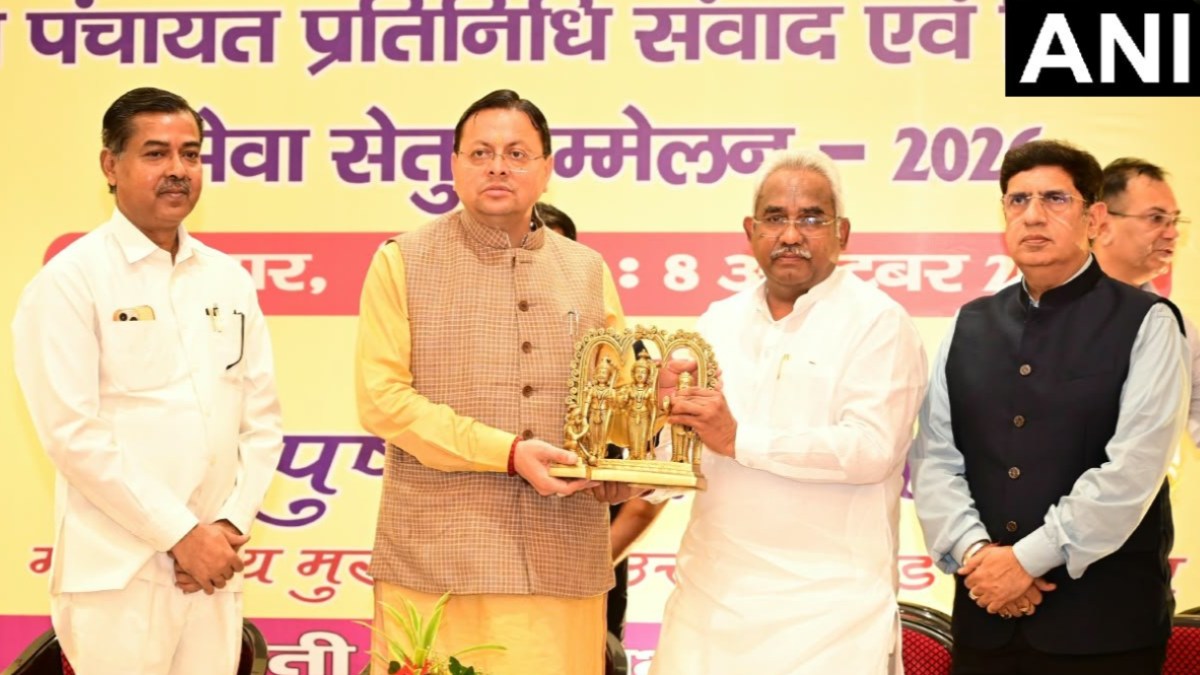
Uttarakhand Chief Minister Pushkar Singh Dhami participated in a one-day orientation and training programme for representatives of the three-tier Panchayati Raj system in Haridwar on 8th October 2026. The programme focused on capacity building and strengthening grassroots governance across the state.
Dhami told the gathering that empowered panchayats are the core of a developed Uttarakhand and we have to strengthen village-level institutions.
Training reaches more than 60,000 Panchayat Representatives.
A key feature of the programme was the simultaneous connection of more than 60,000 Panchayati Raj representatives from development blocks across Uttarakhand.
The initiative is aimed towards the improvement of the knowledge and administrative skills of elected representatives at the gram panchayat, block and district level. Better training can help local representatives identify government schemes and to better implement these and also respond to the needs of the local people.
Dhami described the large-scale training programme as an important step towards giving a new direction to development at the grassroots.
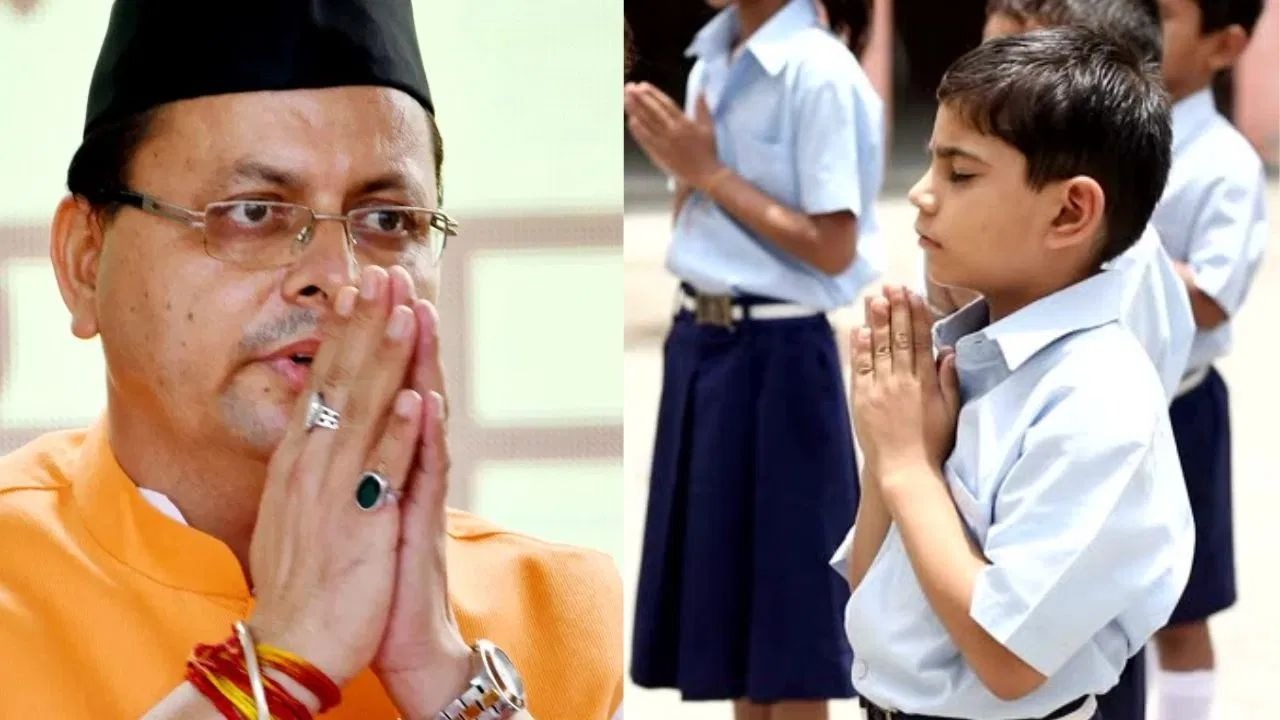
Strong villages for a strong Uttarakhand.
In the programme, the Chief Minister highlighted the importance of villages in Uttarakhand's overall development. In addition, 70 percent of the state’s population lives in rural areas, he said.
Dhami says that panchayat representatives are an important link between people and local democracy. He argued that development at the state level relies on the strengthening of villages and the functioning of local institutions.
The training programme is therefore intended to improve administrative knowledge but also to help elected representatives contribute more effectively to development in their respective areas.
Clean and self-reliant Panchayats.
Dhami also urged panchayat representatives to work with villagers to create clean, attractive, strong and self-reliant gram panchayats.
The appeal focuses on community engagement in conjunction with government projects. Local representatives can be instrumental in driving residents to take part in sanitation, infrastructure, livelihood and other village-based projects at their village level.
In Uttarakhand, where many communities are situated in remote and geographically dispersed areas, effective local governance is essential.
Uttarakhand Chief Minister Pushkar Singh Dhami participated in a one-day orientation and training programme organised in Haridwar for capacity building of three-tier Panchayati Raj representatives. Addressing the programme, CM Dhami said empowered panchayats are the strong foundation of a developed Uttarakhand. He said that connecting more than 60,000 Panchayati Raj representatives across all development blocks of the state with the training programme simultaneously is an important initiative to give a new direction to development at the grassroots level.
— ANI (@ANI) October 8, 2026
Improving delivery of Government Schemes
Capacity building is also expected to enhance government welfare and development schemes.
Panchayat representatives are often among the first local points of contact for residents seeking information about roads, drinking water, housing, livelihoods and other public services. Better awareness of government programmes might make it easier for eligible beneficiaries to access these initiatives.
The simultaneous training of representatives across development blocks is intended to give a broader and more consistent understanding of governance and scheme implementation.
Rural Development at the Centre of the Agenda
The Haridwar programme was part of Dhami's wider engagements in the city on October 8, including an industrial summit.
The emphasis on economic activity and grassroots institutions reflects the state’s broader development agenda. Investment and industry can contribute to economic growth but stronger local institutions are required to ensure development reaches rural communities.
The success of the training program will ultimately depend on the continued support, monitoring and implementation of representatives’ learning in their panchayats. For Uttarakhand, enhancing these local institutions could help create more responsive and self-reliant villages.