Thol. Thirumavalavan has recently expressed the need for strong unity among various national opposition sides in the upcoming elections and called for the Dravida Munnetra Kazhagam (DMK), the main political party in Tamil Nadu, and actor Vijay's new political party to join forces in the INDIA bloc.
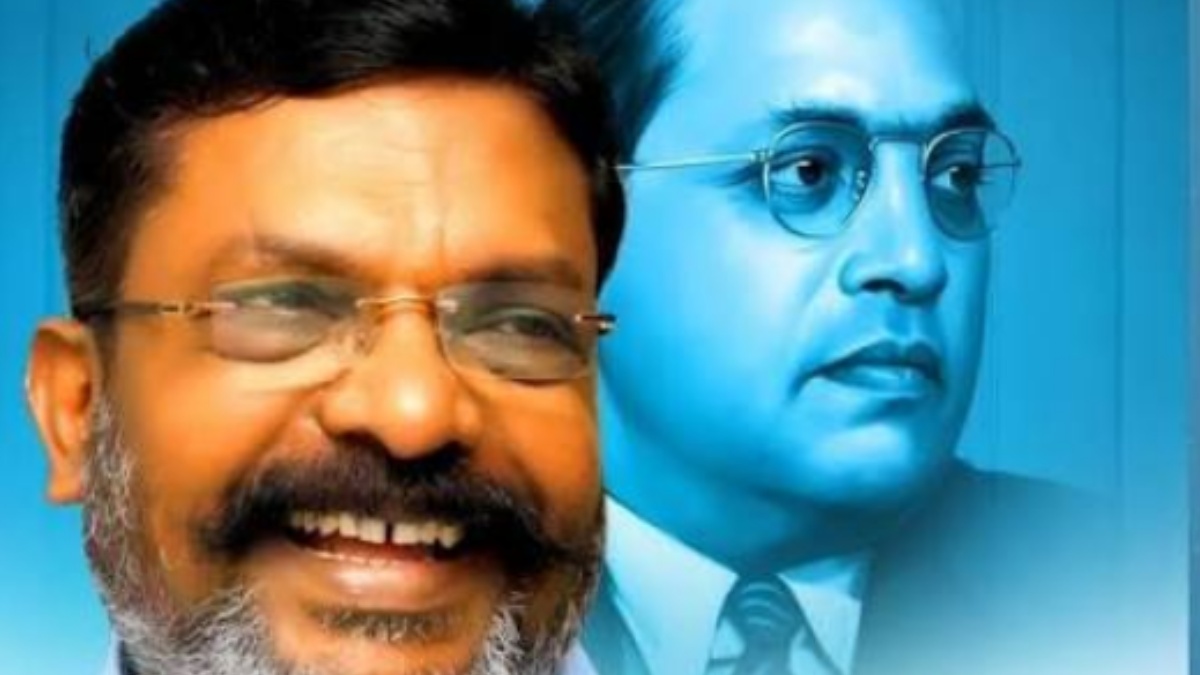
Thirumavalavan said that a larger and united opposition party would ultimately help them to defeat the BJP in the forthcoming elections.
In a public conference that attracted much attention, VCK's leader outlined his vision: ideological differences should not be barriers to building a larger democratic coalition. Opposition parties which have shared goals of constitutional values, federalism, social justice, and democratic governance should work together in a spirit of common purpose to build a political alternative at the national level as he believes that we need a democratic platform.
Thirumavalavan explained the purpose of the INDIA bloc (which has been formed by different regional parties and national parties) to fight against the BJP and its policies. If Tamil Nadu is included in the coalition, the coalition will not only strengthen its electoral power but also have more coordination between parties at state and national levels. That kind of policy execution could make a big difference in motivating voters and resources.
As we can see, actor Vijay’s Tamilaga Vettri Kazhagam is prepping for its first appearance in politics. TVK has been establishing itself as an independent political party since the very beginning where it has been a political entity in Tamil Nadu (with a view to good governance, transparency, youth participation, and social welfare policy for long-term alliance strategy is the aim, and the election is on its way in the election cycle and its potential impact in the political arena.
The DMK, led by Chief Minister M.K. Stalin, already plays a key role within the INDIA bloc and is a key player in the opposition alliance at the national level. Thirumavalavan's pitch is to convince TVK to be a part of this larger opposition coalition and show the necessity of solidarity among coalition partners.
The fragmentation of opposition votes would eventually help BJP in the elections and so we should focus on the issues of economic development, employment generation, social justice, federal rights, education, and welfare not division of political forces.
For political pundits, Tamil Nadu has a long history of alliance-based electoral processes by which various power centres in the regional political system are in the lead up to elections. Coalition strategies have a role to play in electoral outcomes and alliances are now important to ensure that the political situation is going to have a more or less the same shape in the future.
It is certainly going to continue to be a topic of discussion and discussion during elections in Tamil Nadu and in general as well as the political landscape.
TVK has brought new dimensions to the political landscape in Tamil Nadu. It will be a diverse voter base, including youth and a large portion of Vijay’s huge fan base. But the political community will be closely watching how TVK can function in the state's electoral arena. If it decides to stand independently or join an existing political coalition, it will play a key role in changing the political landscape in the state.
The theme of opposition unity has no end in Tamil Nadu and is quite much more widespread in the national political landscape where regional parties are now calling for more coordination in governance, economic policy, and Centre-state relations.
The leaders of various opposition parties have consistently argued that the common platform must be one that is able to reflect and account for the specificities and priorities of all kinds of political groups.
Political experts urge caution: alliances are a tricky process that is often cumbersome and involves the negotiation of seat-sharing arrangements, leadership roles, policy priorities, and campaign strategy. It is true that unity is still encouraged but the development of the INDIA bloc will take a lot of discussion and compromise by all parties.
At this stage neither DMK nor TVK has a ready response to Thirumavalavan's comment. All the political observers say that decisions on future alliances will be made in the context of internal discussions and discussions with potential partners closer to the elections.
The VCK has always advocated for cooperation of secular and regional parties, which has to do with social justice, constitutional values, and inclusive development. Thirumavalavan said that in order to strengthen democratic institutions and maintain federal principles, those parties need to work together, not break apart into separate groups of opposition.
As political activity goes on ahead of future elections, there are still discussions of alliances to come. It is not clear whether TVK will be part of the INDIA bloc or go independent but Thirumavalavan’s appeal has raised the discussion of opposition unity and coalition politics again to the forefront of Tamil Nadu and the national political scene. And how these opposition parties will be able to collaborate in the elections and political environment of India in the future will be of crucial importance.