The Tamil Nadu Chief Minister C Joseph Vijay's government has extended welfare programmes on public transport, school education, healthcare, marriage assistance and household needs. The latest initiative, the expanded Vettri Payanam scheme, covers free government bus travel for women and transgender people across the state. The scheme is expected to attract around 84.32 lakh women every day.
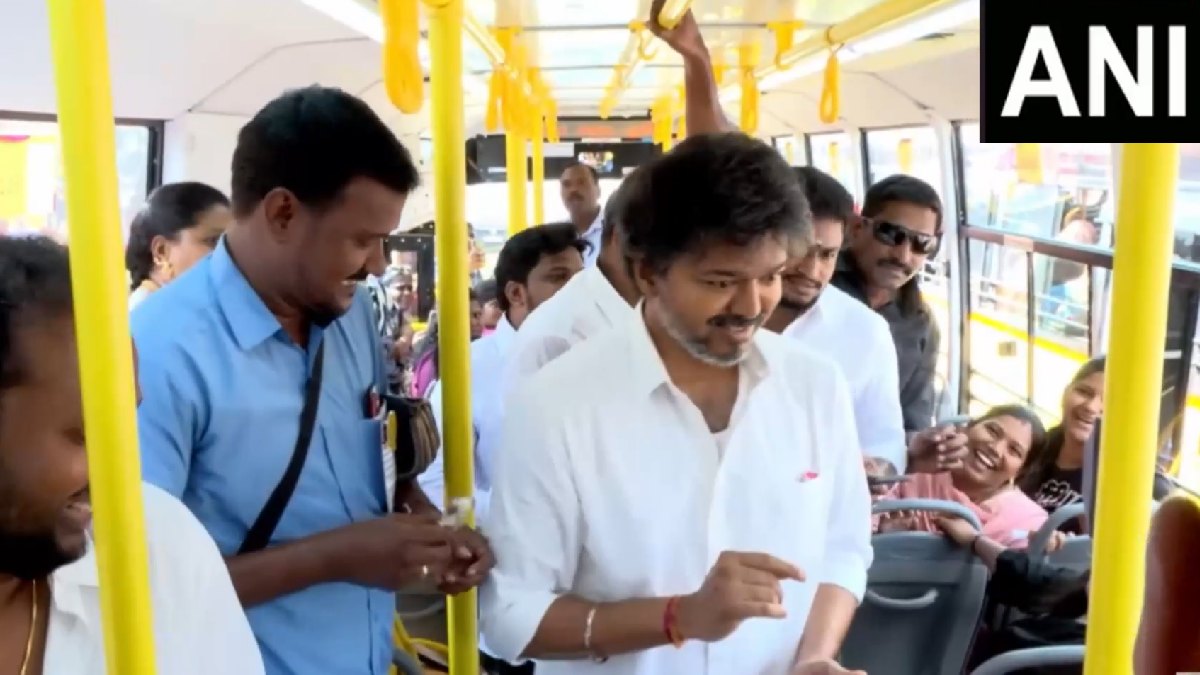
The expansion was launched at Chennai’s Koyambedu bus terminus where Vijay personally gave free tickets to women passengers. Beneficiaries can travel without paying any fare on a larger number of government-operated services such as Express, Limited Stop Service and Deluxe buses in metropolitan and urban areas, along with Mofussil Ordinary and certain Ghat Ordinary services.
The government has said there is no income ceiling and no daily limit on the number of trips under the expanded facility.
Since then, government figures show that more than 12,600 buses operated by the state’s seven transport corporations have been brought under Vettri Payanam. It is designed to make commuting easier for women who are commuting to work, universities, colleges and hospitals and other essential services available.
The state government has framed the expansion as a policy that reduces the impact of transport costs on access to education, jobs and healthcare in schools and education and healthcare.
The transport initiative is part of a larger welfare approach being rolled out by the five-month-old TVK government. Rather than being limited to a single section of society, programmes announced or expanded so far touch different stages of household life, from childhood and education to employment, marriage, childbirth and daily mobility.
Breakfast Scheme Expanded To More Students
Education and nutrition are also part of this welfare system. The Chief Minister’s breakfast programme which started under the DMK government in 2022 is now expanded to students in Classes VI to VIII in government and government-aided schools. The 2026-27 Tamil Nadu budget provides Rs 710 crore for the breakfast programme.
The expansion is expected to bring a huge number of additional students into the programme. It links school attendance with access to a morning meal, so nutrition will be a key component of the state’s education-related welfare spend.
The government has also proposed the Vetri Laptop Scheme, with Rs 2,000 crore allocated in the 2026–27 Budget for providing laptops to college students. In addition to that, the Budget also covers the funds for modernising government schools and other education-related works.
Gold Ring Scheme For Newborns
One of Vijay’s most innovative programs is the Thaimaman Thanga Mothiram Thittam or Maternal Uncle’s Gold Ring Scheme. In this programme, newborn children who are delivered in government hospitals are given a 1-gram gold ring.
The scheme was launched at Government Rajaji Hospital in Madurai on 28 September. The government has explained the programme using the traditional Tamil cultural role of the thaimaman, or maternal uncle, who traditionally has an important ceremonial role in family occasions involving children.
The 2026-27 Budget had allocated funds for the newborn gold-ring programme. According to the PRS analysis of the Tamil Nadu Budget, Rs 560 crore was allocated to the scheme. The government has separately announced a larger allocation of Rs 755.83 crore in connection with the programme.
Marriage, Household and Other Welfare Measures
The welfare architecture also extends to marriage assistance. Under Annan's Seer Scheme, eligible brides will receive an eight-gram gold coin and a silk saree. The budget for the programme is Rs 812 crore.
Another proposal is Annapoorani Super Six, in which eligible women-headed households are to receive three free cooking gas cylinders a year. The programme will start around Pongal in January 2027, according to the government’s plans.
Combined, these schemes would suggest a welfare system that covers a number of daily costs. Free transport covers mobility costs, the breakfast programme focuses on school nutrition, laptops for higher education, the gold-ring scheme is related to childbirth and marriage aid is another form of household support.
Questions Over The Cost Of Welfare
The expansion of welfare programmes also brings the question of fiscal sustainability into focus. Tamil Nadu already has a huge debt burden, and the state’s 2026–27 Budget has allocated much of the budget to welfare, education and social-sector programmes.
The government has said that better revenue collection, administrative reform and technology-driven governance will help make fiscal space for its programmes.
The financial question is particularly relevant since many of these initiatives involve recurring or large expenditures. Expanding a free transport programme to thousands of additional buses, providing school meals and providing benefits connected to childbirth, marriage and education all need sustained funding.
The welfare measures also reflect the political setting in which the TVK government is operating. Some of the programmes build on schemes already in place under the previous administration and others have names and characteristics associated with Vijay's party and its election promises.
The expanded Vettri Payanam scheme, for instance, builds on an existing free-bus travel programme while broadening the range of services covered.
For the Vijay government, the new welfare model is continuity and expansion. The existing social programmes have been kept or extended and new ones have been introduced in areas like newborn assistance, college education and household support.
As more schemes are rolled out, their reach, implementation and long-term financial needs are most likely to be important topics of public debate in Tamil Nadu.