The plan to organise Kambala as part of the Mysuru Dasara celebration has drawn objections from Thammanna Shetty, a renowned Daivaradhane priest in coastal Karnataka. Shetty had said this was not a good way to organise Kambala during Navaratri and was not in line with traditional practices of Tulu Nadu.
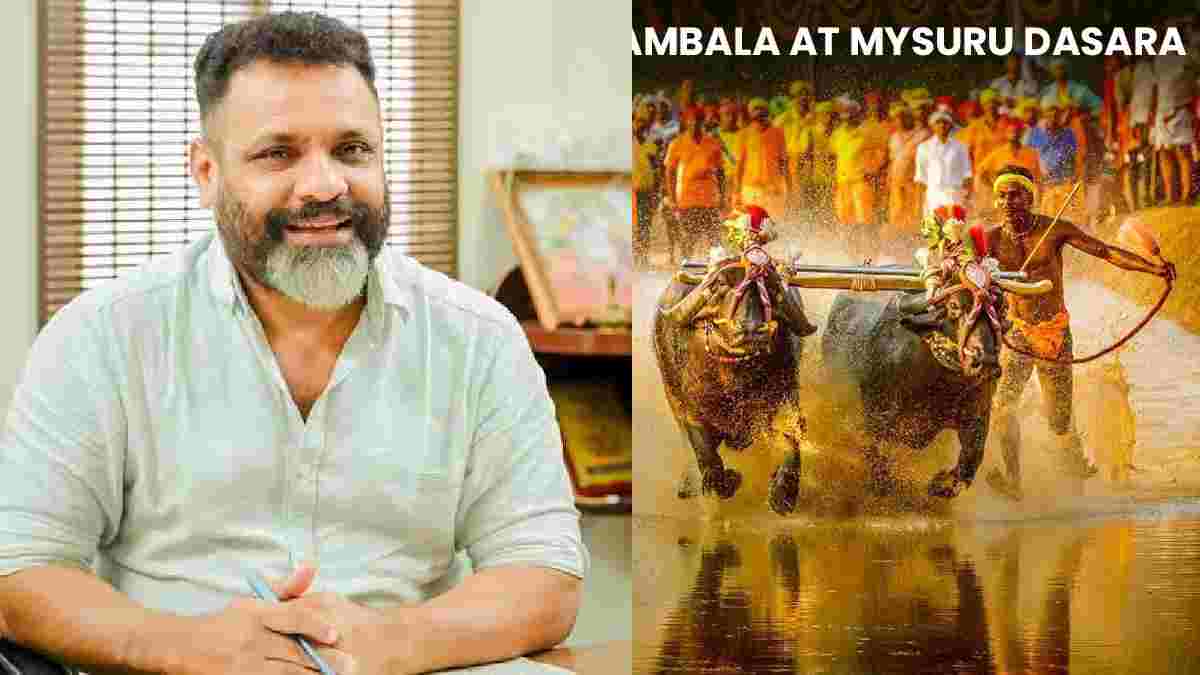
Mysuru Dasara is celebrated every year with cultural activities, sporting events and traditional activities. The proposed Kambala event is to bring the traditional buffalo race of coastal Karnataka to Mysuru as part of the Dasara festivities.
But the proposed event has also triggered a discussion about cultural and religious traditions associated with Kambala.
Kambala and Daivaradhane connection
Thammanna Shetty argues that Kambala is not just a sporting competition or entertainment programme. He has argued that the traditional buffalo race is deeply connected with the rural agricultural culture of Tulu Nadu and has links to local religious practices and Daivaradhane.
He has pointed out the importance of the Kambala field and the various practices for preparing the buffaloes and bringing them to the field. Such customs, he believes, are intrinsic to the traditional character of Kambala.
So the problem is not simply about having a buffalo race in a different place. Shetty has argued that organisers need to also understand and respect the cultural context in which the sport traditionally takes place.
Objection to holding Kambala during Navaratri
One of Shetty’s main objections is about the timing of the proposed Mysuru event.
The Navaratri period in Tulu Nadu is also referred to as Marnemi according to the traditions cited by Shetty. He said that the period has special religious significance, with special worship and rituals associated with family and village deities.
Shetty has said that traditional restrictions and practices are observed during different important periods of the year such as Sankramana, Chauthi, Parba and Bisu. He has also argued that Navaratri is a period during which these traditional practices are valued.
According to his account, Kambala has not been conducted during Navaratri. He also pointed to the presence of paddy crops in many coastal fields during this period as another factor related to the traditional Kambala calendar.
Concerns Over Cultural Representation
Shetty has even argued against using Tulu Nadu's cultural and religious traditions for publicity or commercial purposes. He has pleaded for Kambala and its customs to be considered when organizing the event outside the traditional region.
He also believes that ignoring established customs could upset local deities. These are, of course, his religious and traditional understanding of Daivaradhane and should be taken in that light.
Those concerns have led to a debate as Kambala has been seen more and more outside coastal Karnataka. Those who would like to take the sport to new places may see the Mysuru event as an opportunity to bring an important coastal tradition to a wider audience.
At the same time, the objections raise questions about how traditional cultural practices should be represented when they are organised outside their original geographical and social context.
Debate over Mysuru Dasara Kambala
The Dasara Kambala is therefore a topic of discussion on social media and amongst the public. Some may be pleased that coastal Karnataka is included in the Mysuru Dasara programme, but others have emphasised the need to maintain the customs and cultural aspects of Kambala.
The debate also raises a bigger question for cultural events: when a new audience is introduced to traditional traditions, then how can the old customs and religious associations be incorporated into the cultural event?
Such a matter is important for Kambala because the sport is intimately connected to the agricultural and cultural traditions of coastal Karnataka.
Call to respect traditional practices
Thammanna Shetty has exhorted organisers to respect the traditional heritage, local beliefs and customary practices associated with Kambala. His point is that the relationship between Kambala, Daivaradhane and the agricultural culture of Tulu Nadu should be taken into account while planning such events.
As preparations for Mysuru Dasara continue, how the proposed Kambala event progresses and whether the organisers or other stakeholders respond to the concerns raised by Shetty will be the focus of attention.
The discussion around the event reflects the larger challenge of presenting traditional sports in new environments while not losing their cultural context and maintaining the culture associated with them in a manner that is respectful of the beliefs of the people that have been associated with them.