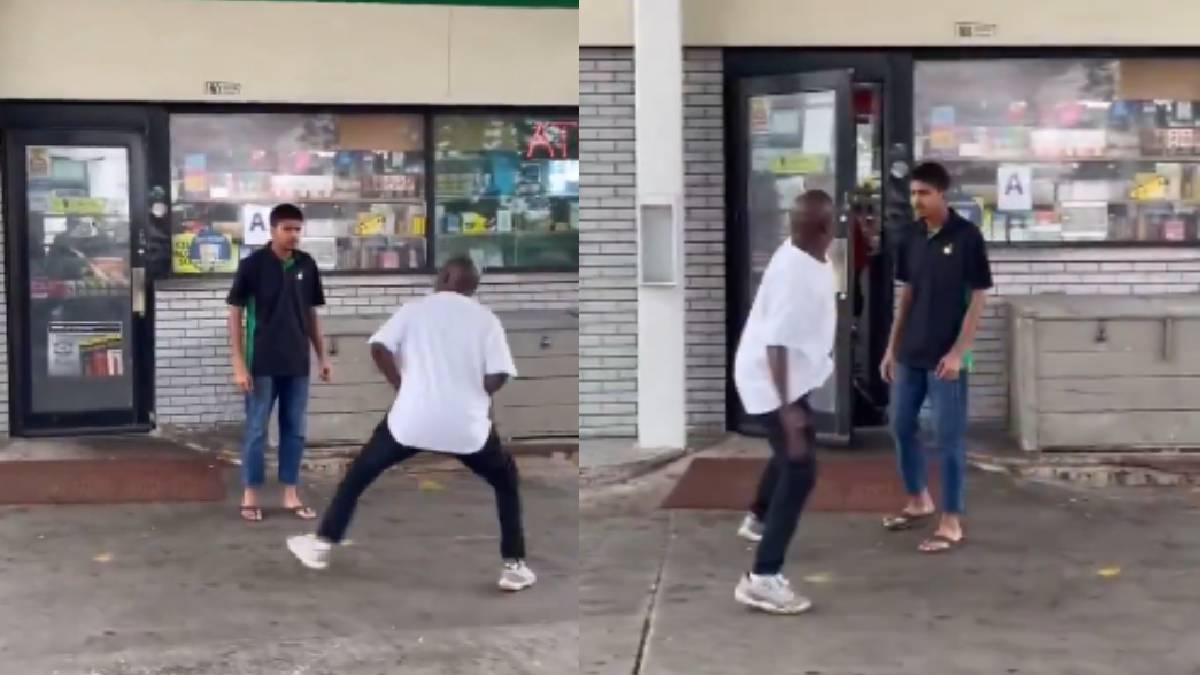
An upsetting video of an Indian teen getting beaten in front of a store has been rousing all over social media. The event, which the attacker’s friend apparently filmed, has prompted some serious questions about physical violence, racism and the increasing propensity to use physical violence to earn online attention. The video shows a young man being approached and assaulted as someone else stands nearby and possibly filming the scene for social media.
On video, reporter Ian Miles Cheong said the attack was random and racially motivated. In his tweet, a Black man attacked an Indian teenager while his friend took a camera. What seems to be the motive behind the attack is social media content that was criticized by many viewers as shocking and provocative. The tweet promptly went viral, as tens of thousands were alarmed and demanded accountability.
A black man randomly assaulted an Indian teenager while his friend filmed the attack to post on social media. Why are people like this? pic.twitter.com/1A3SWkcRyq
— Ian Miles Cheong (@ianmiles) January 14, 2026
The video shows three people outside what looks like a convenience store or gas station. Someone in white shirt comes hard toward a teenager who is wearing a black shirt and standing by the entrance. The third person in a red shirt and cap stands off to the side and is apparently the person filming the episode. It seems like a calm setting, but the immediate aggression the video shows viewers have left people shaken.
This latest example shows an alarming trend of violence as entertainment. There’s been cases in recent years where people have filmed battles, bullies and whatever else to receive likes and shares. Experts caution that it can reinforce cruelty and also help viewers and particularly young people desensitize themselves to real-world suffering. They are urged to clamp down on users who create or distribute violent content, social media platforms are facing increasing penalties for the actions social media services play and urging them to take more extreme actions.
The attack’s racial dimension has also caused controversy. Many have termed the attack to be a hate crime because the victim was targeted without provocation, many users say. Others have called for justice and a proper investigation, asserting both the attacker and the person filming should be in legal jeopardy. It is a serious crime to assault; you can’t help the victim or just shoot the act and then tell someone that you helped them.
The identity of the Indian teenager was not made public but several online users have expressed sympathy and support. Some have offered assistance, although others are seeking counseling and legal assistance for the victim. Community leaders and activists are also speaking out that seek immediate attention from authorities to the case; they urge justice.
This incident is a reminder of our shared responsibility as bystanders. Rather than filming violence, people should intervene or call for assistance to halt it. Silence and inaction compound the problem. It is a wake up call, too, for parents and educators and social media companies to lead young people into empathy and responsible behavior online.
But the attack on an Indian teenager which was supposedly videotaped and later shared on social media is a sobering reminder that online fame can cause harm in real life. It poses profound inquiries about racism, youth conduct and digital platforms’ influence on public behavior. And after seeing the video go viral they must put it on a different, and more violent, platform of discussion: justice for the victim, responsibility and a tougher and more robust force against future such events. Violence should never be entertainment (and every viewer, platform and community has a small part to play in ending it).