As for Bengaluru, though, when people know severe heat has swept it all in 2026, they will know in Bengaluru also that, for all a mild city which in the past looked very hot, now it seems much hotter. Global climate patterns and the rapid pace of urbanisation are blamed for the heat surge, experts say.
The Role of El Niño
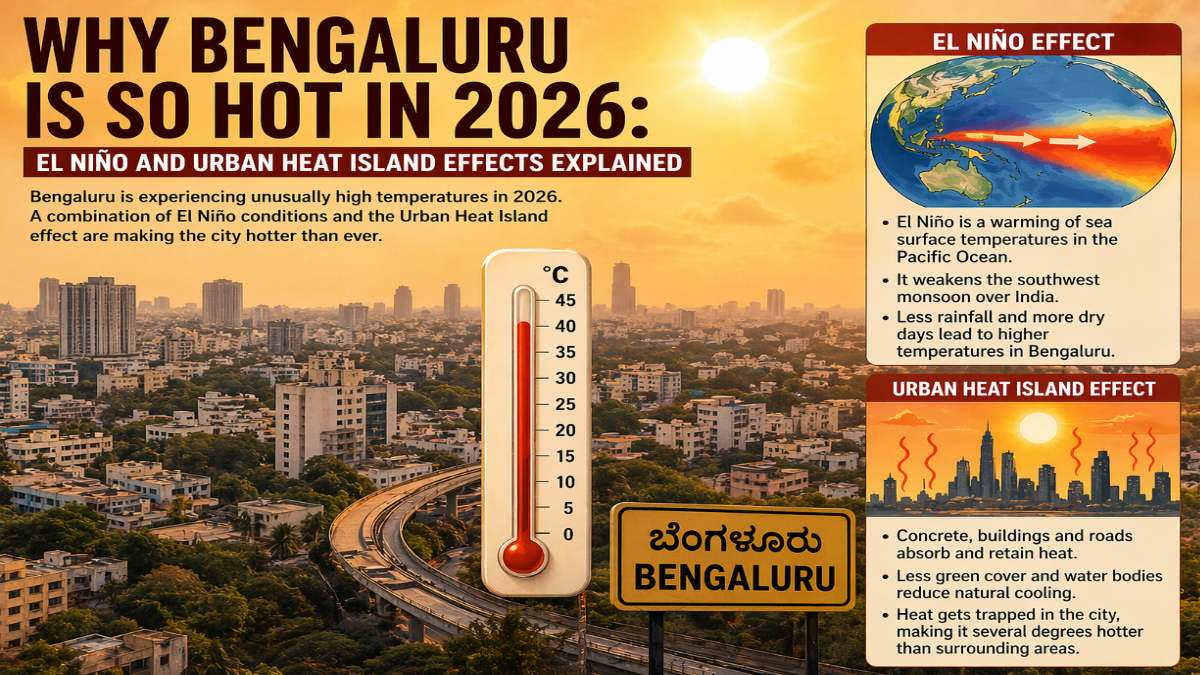
And this year, one of the most important reasons is El Niño, a pattern of seasonal warming of sea surface temperatures in the Pacific Ocean. The impacts are worldwide, we’re experiencing less rainfall and heating up in some places in India. If the southwest monsoon weakens during an El Niño year, we expect long droughts and further heating in our region.
This translated into less pre-monsoon rain in Bengaluru to make the city cooler overall in summer. So the time it takes for the temperature to rise is longer in warmer areas.
Urban Heat Island Effect
Another major cause is the Urban Heat Island Effect, or cities getting much warmer than surrounding rural regions, which is to say that warmer temperatures are found in more cities. And buildings, roads and infrastructure absorb and store heat more than in rural areas and that leads to their own, therefore, more heat.
This is the cause. Bengaluru has also been subjected to widespread urban sprawl over the past several decades, where the build-out of concrete buildings, loss of green and growth of road vehicles accelerate global warming. Those changes reduce natural cooling, hold onto heat in the city, much of it during nighttime, then add to heating it even more.

Loss of Greenery and Water Bodies
The transformation has also meant cities have lost lakes and vegetation, which is crucial to regulating temperature. Trees have shade and shed moisture in the air so they cool down the air, which helps maintain a balance in your surroundings, but trees are also a good way to provide shade. Without them, it warms the city’s surface. Heats up faster and cools more slowly.
The Rise of Energy Use and Pollution
Because of this high volume of burning vehicles, more and more car and automobile owners use these methods of air conditioning to help with the heat problem. It contributes to the warming effects; however, it releases hazardous heat into the air. Hot air in our climate can hold heat, and that increases temperatures.
What It Means for Residents
Both foreign and domestic events have made summers in Bengaluru even hotter. Residents could be at risk of having dehydration, heat exhaustion and respiratory diseases. Those simple mitigations could include drinking enough water to hydrate the body, not spending much time in the outdoors during the peak period of the day and even cooling, experts said.
In the city at large, adding more green cover, saving lakes and developing greener infrastructure are some of the basic practices to address the issue of elevated temperatures.
The Bigger Picture
This event in Bengaluru represents one of the global trends among cities as urban places are becoming more exposed due to severe weather now. So, for instance, while El Niño-type events can be temporary and part of nature, this urban heat island is almost wholly human-made, and therefore an effect of construction.
But over 2026, Bengaluru’s heat is a lot wider than one type of environment which represents an environmental anomaly it is just one of many signs that climate change and urban sprawl are remaking earth anew.