The question of the oldest country in the world has fascinated historians and history lovers for ages.
While today’s political borders have evolved a lot over time e.g., today’s world and history, some countries have their cultural, political, and civilizational roots in the past thousands of years. India is among them, after all, and the history of Indian history stretches back to antiquity.
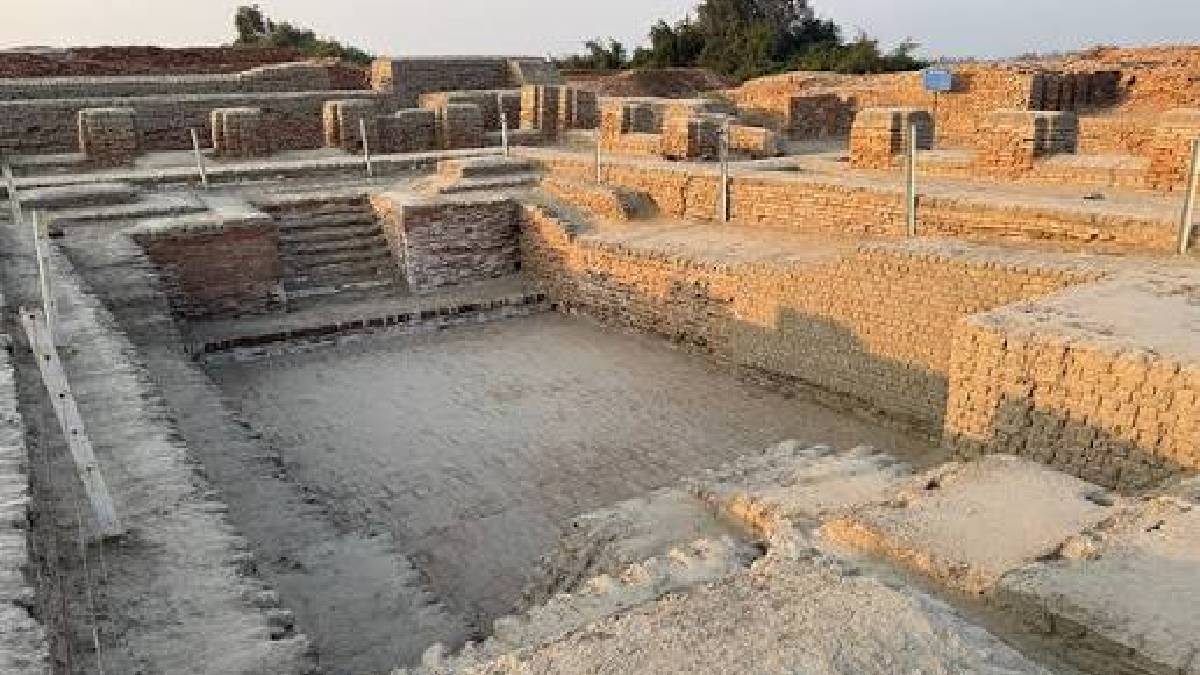
India is one of the oldest continuous civilizations in the world. Archaeological findings from the Indus Valley Civilization dating back to about 3300 BCE reveal exceptionally sophisticated urban planning, drainage systems, trade networks, and organized societies.
Cities like Harappa and Mohenjo-daro are still great examples of early human civilization.
India’s cultural heritage evolved over thousands of years, unlike many ancient civilizations that disappeared completely. The Vedic period, followed by powerful empires like the Mauryas, Guptas, Cholas and Mughals, cemented the country’s identity before it became the modern Republic of India in 1950.
Which are the oldest countries in the world
The oldest country depends on the criteria used. Some criteria are continuous civilization, while others are uninterrupted statehood or national identity. Countries that are widely recognized as the oldest in the world are:
- Egypt - One of humanity’s earliest civilizations dating back to about 3100 BCE.
- Iran (Persia) - A civilization dating back to the Elamite Kingdom and Persian Empire.
- China - China is known as one of the world’s oldest continuous civilizations with thousands of years of history.
- India - One of the oldest continuous civilizations in the world and has traditions dating back over 5,000 years.
- Greece - the birthplace of democracy and Western theory, with roots in old city-states.
- Japan - It is traditionally believed that its imperial history dates back to 660 BCE so it is one of the oldest continuous monarchies in the world.
How old is India
If we look at history from the start of Indus Valley Civilization, India's roots can be traced back more than 5,000 years. But the modern Republic of India was in fact founded on January 26, 1950, when it was liberated from British rule in 1947 and a constitution was adopted.
This distinction is between the state of the modern political formation and the age of the civilization. Modern India is decades old as a republic, but its cultural and historical legacy spans millennia.
Why India Stands Out
India is unique in that it is a country of continuity: the ancient traditions, language, philosophies, festivals and religious practices are still relevant in daily life. Sanskrit literature, Ayurveda, Yoga, classical arts, ancient temples and monuments are all examples of a living heritage that has survived centuries of changes.
The diversity of the country has also been instrumental in preserving its historical richness. India’s civilizational identity has survived invasions, colonial rule, and political transformation.
A Legacy That Continues
The oldest countries in the world are more than historical landmarks, but are living examples of humanity’s journey through time. The fact India is among these ancient civilizations not only is it so important for archaeology and cultural heritage but also because it is so cultural.
As history continues to find new pieces of evidence, one thing is clear India’s history is the longest and richest in the world and one of humanity’s greatest civilizational success stories.