Indian women’s football has made progress during the past years, with the national team, domestic clubs and youth sides being given more opportunities to compete. But behind that progress, clubs and players are still faced with a basic issue: the lack of clarity over the domestic football calendar.
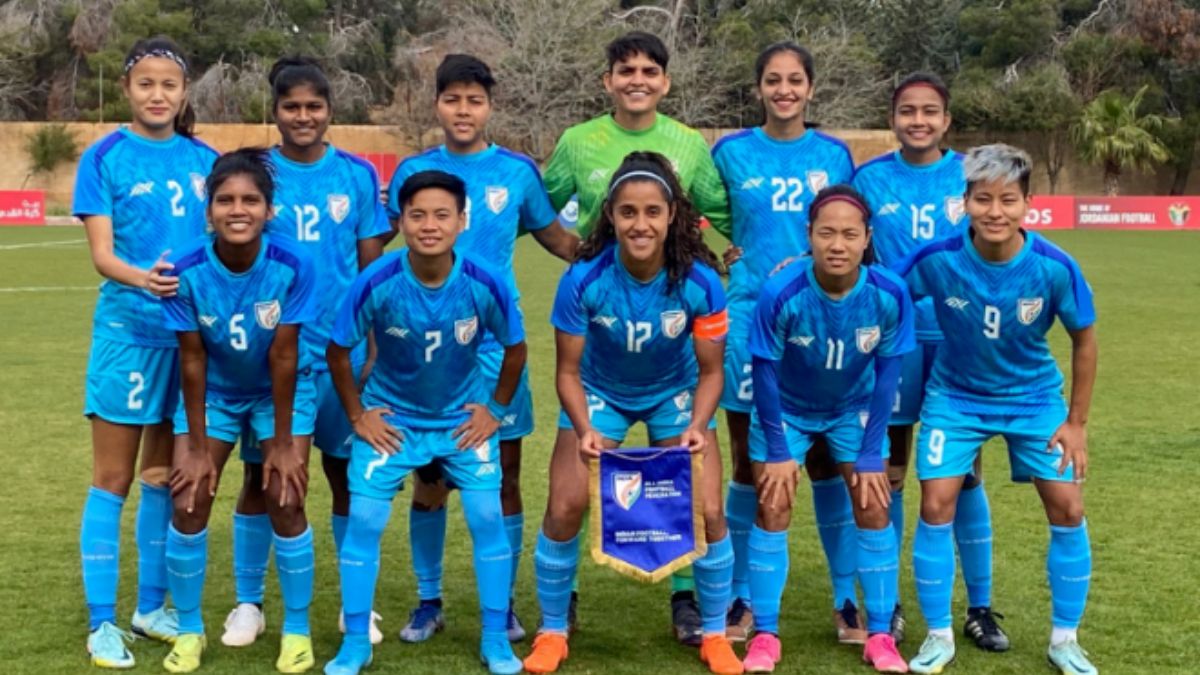
The lack of clarity of AIFF women’s football schedule has left clubs waiting for plans to be drawn together and players wondering what is next for them.
The issue is particularly important because a regular domestic calendar is essential for the growth of women's football. Players require regular matches to develop, clubs need predictable schedules to plan their squads and coaches need enough competitive football to prepare their teams.
The current situation could affect all three.
Clubs need a clear calendar.
It is months of preparation for any professional football club to plan a season.
Clubs have to set their budgets, recruit players, appoint coaches, set up training camps and plan travel. They also need to negotiate player contracts based on the expected length of the season.
When competition dates are uncertain, much of the planning becomes difficult.
This is especially challenging for women’s clubs, where budgets are generally smaller, and resources are more limited than men’s football.
A club cannot simply keep a large squad together indefinitely while waiting for the next tournament to start.
Players also need to know when they are to report for training and when they will be expected to play competitive matches.
The longer uncertainty continues, the harder it is for clubs to make proper decisions.
The Indian Women's League Is Central To The Problem
The Indian Women's League (IWL) is still the country's primary domestic competition for women's football.
The league has grown over time, but its scheduling has not always provided the kind of consistency that players and clubs need.
For the 2025-26 season, AIFF decided to split the IWL into two phases because clubs asked for a change due to international commitments. The first phase was from December 20, 2025 to January 6, 2026, while the second phase was from April 20 to May 10.
That decision makes sense from the point of view of the international commitments as well as the whole issue.
Women's football in India has several competitions competing for space on the calendar. National team camps, international tournaments, youth competitions and domestic leagues all need to fit into the same schedule.
Without careful planning, one competition can disrupt another.
The National Team’s Success Makes The Timing More Important
India's women's national team has had an increasingly busy international calendar.
The senior team qualified for the AFC Women’s Asian Cup 2026, while India’s U20 and U17 women’s teams have also been involved in major Asian competitions.
So that is a good development.
But it also creates a scheduling challenge for domestic football.
When a large number of players leave their clubs for national team camps, domestic competitions either have to continue without them or take a break.
The AIFF said its two-phase IWL structure was intended to balance club commitments with national-team and continental duties.
The bigger question is whether India will eventually establish a calendar in which these competitions complement each other rather than compete with each other for dates.
Players are the ones most affected. The players’ uncertainty is not only about football. It can affect their livelihood.
A professional footballer depends on matches and contracts for income. So when there is a long gap between competitions, players will have to train for months and they do not know when they will next play competitively.
This can also influence contract talks as well.
A player deciding whether to stay with a club or move elsewhere needs to know what the club's season will look like.
Young players are particularly vulnerable.
They need regular competitive football to develop their skills and gain experience. Training won’t replicate the pressure and intensity of the actual games.
If there is a fragmented domestic calendar for the younger players, then they will struggle to get enough competitive minutes.
Clubs Also Face Financial Pressure
Women’s football clubs already operate in a challenging financial environment.
Unlike the biggest men's clubs, many women's teams do not have huge commercial revenues or huge matchday income.
That makes planning even more important.
A club must know how long the season will last before spending money on players, coaches, accommodation, travel and other expenses.
Uncertainty can make those decisions more difficult.
It affects sponsors.
Companies are more likely to invest when they know exactly what competitions they are associating themselves with, how many matches will be played and when the season will take place.
A stable calendar can therefore help not only football development but also the commercial side of the women's game.
India Already Has A Packed Women's Football Schedule
The challenge is not a complete absence of women’s football activity.
In fact, the 2026 calendar has a number of large competitions.
The senior women's team has international commitments, and India's U20 and U17 teams are also participating in Asian competitions. The IWL is also a big part of the calendar.
The question is how do these competitions mesh?
A proper football pyramid needs different levels to work together.
The senior national team needs international matches. The clubs need a strong domestic league. Young players need age-group competitions. Players need enough rest between tournaments too.
If one part of the system is not well timed, the problems can be elsewhere.
The 2026-27 Calendar Offers Some Hope
AIFF's tentative calendar for the 2026-27 season has given some indication of where women's domestic football is heading.
According to the proposed schedule, the Indian Women's League is planned from September 3, 2026 to January 24, 2027. The Indian Women's League 2 is proposed for July 9 to August 22.
The fact that dates have been proposed is a positive step.
But calendar approval is not final. So clubs need to have final approval for this before they can plan with confidence.
They differ from a tentative date to a confirmed date in terms of clubs and players.
A club can start preparing when it has a clear schedule, but it can’t commit long term on a proposal.
Why Consistency Matters More Than Just More Matches
Indian women's football does not necessarily need an endless number of competitions.
It needs consistent and meaningful competitions.
A league that takes place at predictable times every year can give players something to build towards.
Instead of assembling teams for a short time period, clubs can develop long-term plans, rather than assembling teams quickly.
The young players can move through the system with the knowledge of when and where they will be given opportunities.
Coaches can also create training programmes around the proper competitive calendar.
This is how football ecosystems in stronger women's football nations have developed.
The goal should not merely be to add tournaments to the calendar. It should be to create a structure where players can compete regularly throughout the year.
A Longer Domestic Season Could Help
So one way to do it is to have a longer and more predictable domestic season.
Instead of compressing the IWL into a short window or repeatedly shifting dates because of international commitments, AIFF could build the calendar around FIFA and AFC windows from the beginning.
That would enable clubs to know when their players are likely to be unavailable. The AIFF itself has recognised the need to align domestic competitions with international windows. Its recruitment framework for women's competitions specifically includes preparation of the football calendar with continued focus on domestic competitions and FIFA windows.
More coordination may lead to less last-minute changes. Better coordination would reduce last minute adjustments, too.
Women's Football Needs Stability
Indian women's football is now at a stage in which just creating opportunities is no longer enough.
The next step is to make those opportunities reliable.
The national team's international success has generated much more interest in women’s football. The domestic game needs to give them a good platform to grow.
That requires clubs to have confidence in the competition structure and players to have confidence in their careers.
A footballer should not have to wonder when her next competitive season will begin.
A club should not have to make all its budget around uncertain dates.
And young players should not lose valuable development time because domestic competitions are delayed or compressed.
The Bigger Picture
The calendar crisis of our time is so much more than the few delays.
It raises a larger question about how India wants to build women's football in the next decade.
The country has already demonstrated women's teams can compete internationally. The senior group will be able to qualify for the 2026 AFC Women’s Asian Cup and the young team in the country has also made progress in the continental scene.
And international progress must have a strong domestic base.
That means regular leagues, better club structures, reliable contracts and a predictable calendar.
The proposed 2026-27 schedule would provide some stability, and the IWL is penciled in from September to January.
What clubs and players have now is clear.
The Players Cannot Afford To Wait Forever
Women’s football in India has for years been trying to move from occasional games to a more professional format.
The progress is visible, but the calendar remains one of those things that needs the system to be improved.
In the case of clubs, uncertainty means difficult financial and squad decisions.
The uncertainty of contracts, income and competition for players may also affect players.
For young footballers, it can take up valuable development time.
The solution is not complicated in principle. India needs a women's football calendar that is predictable, coordinated and built around the needs of players and clubs.
AIFF has the opportunity to turn the uncertainty into a stable system.
If India is to develop women's football beyond individual tournaments and national team performances, it must develop the domestic game as a professional path.
Until that happens, clubs will continue waiting, players will continue paying the price, and the progress of Indian women's football will remain harder than it needs to be.