
India’s student-led Orion Racing team is bringing motorsport, engineering innovation and entrepreneurial thinking to the table of international Formula Student competitions. The team is designing, developing and building race cars, so students can apply what they learn in school to real-life engineering problems while also learning how to create a complex project like a start-up business.
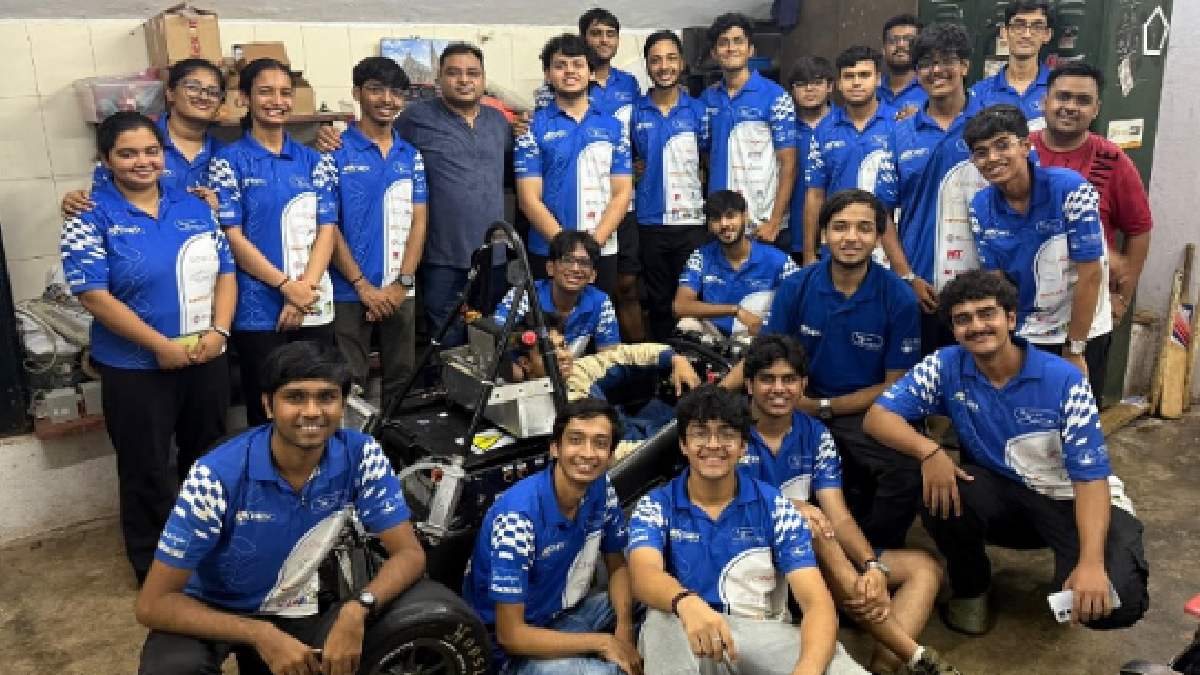
The team’s approach reflects the changing landscape of engineering education where practical experience, teamwork and innovation are more fundamental than ever. Formula Student competitions require us to do more than build a fast car. We need to display technical know-how, budget our money, have relationships with suppliers, establish business plans and give our vehicles the safety and competition.
For Orion Racing, in this way engineering and management is a match that makes it so students can develop skills beyond the race track. There are many stages of vehicle design and component development, from initial design and component selection to manufacturing to testing and international event preparation.
Orion Racing: Engineering Students With A Start-Up Mindset
Orion Racing’s philosophy is in line with the idea that a student racing team can operate as a start-up and a student racing team that goes from the concept of Orion Racing. Everything has to be done carefully and professionally with a plan, clear goals and responsibilities, resources and financial backing and creative solutions to unexpected problems in a crisis if you have to work in a high-pressure situation.
In order to develop a race car, students must collaborate with other technical groups to develop different systems. These may involve chassis design, suspension, vehicle dynamics, aerodynamics, powertrain engineering and electronics.
All of them need to work in sync with each other to ensure that any performance and reliability improvement in each department is incorporated in the overall vehicle.
At the same time, the team must also handle non-technical roles (fundraising, sponsorship relationships, procurement, budgeting and communications). These are important because engineering projects require materials, specialised equipment and access to manufacturing facilities.
This structure has students working with limited resources. They must assess different design options, consider their costs and determine whether a proposed improvement works with the limited team time and budget.
The start-up approach also promotes accountability. The students are not just doing individual academic assignments but also working on a shared project, where engineering decisions will determine the final vehicle's performance.
What Makes Formula Student Different?
Formula Student is an international engineering competition to enable university students to get hands-on experience in automotive development. Teams design and build small formula-like racing cars, and then present their engineering solutions and compete in various assessments.
Unlike traditional motorsport competitions, Formula Student evaluates the various aspects of a vehicle development project. Technical design, cost considerations, business planning and dynamic performance are all important aspects to these events depending on the event rules.
Static assessments typically involve students explaining their engineering decisions and showing knowledge of the vehicle’s design, manufacturing costs and commercial viability. These evaluations are to test whether the team can convince itself of its decisions based on sound engineering principles rather than just a performance claim.
Whereas dynamic events test the vehicle in different driving situations. Depending on the competition, acceleration, handling, autocross and endurance challenges can all be included. Reliability is of particular importance as a vehicle must be able to keep up with technical and safety requirements.
These demands are required for teams like Orion Racing, so they provide a full learning experience. Students need to see speed, handling, durability, safety and cost as interconnected elements instead of taking each engineering problem as individual problems.
Technology And Innovation At The Centre
Data, simulation and precision engineering are increasingly important to modern motorsport. Student teams using computer-aided design tools and engineering simulations and testing can examine the potential for improvements in design before applying them to a vehicle on the road.
For example, suspension design determines how a car reacts in the corners, braking and road conditions. Aerodynamic choices affect drag and downforce and the chassis design accounts for how the vehicle is able to balance structural strength and weight.
These decisions are trade-offs. A feature that improves one aspect of performance may create challenges elsewhere, so students need to compare other components and validate their designs through calculations and testing.
Electronics and data analysis can also help vehicle development teams to understand performance characteristics and identify areas for improvement. By gathering and interpreting test data, students can leave assumptions behind in order to make sound engineering decisions.
Such practical experience is so valuable for students in automotive production, electric mobility, vehicle research and development, etc.
But rather than just adopting technology, good engineering relies on students understanding the technology behind it, how well it works and how it is done and how the solutions are implemented as per competition rules.
International Competitions Offer Global Exposure
International competitions can give student teams the chance to compare engineering techniques and design philosophies of universities in different countries. These events attract students with different technical backgrounds, design philosophies and manufacturing skills.
The experience can help to see where strengths exist in our development processes and where improvements are needed. It also opens up students’ eyes to the alternate solutions of such technical problems to be found in judges, engineers and others.
International competitions require strong organisation. Teams need to plan transport of vehicles and equipment, coordinate travel, prepare technical documentation and make sure that the car is ready for inspection and testing.
For Indian students, these events will also help to develop their knowledge of international engineering expectations and the importance of having professional technical work that is done in a commercial manner. They help to show India’s engineering talent in a competitive environment and to demonstrate its capabilities in terms of what India’s engineering capabilities can do in terms of the competitive scenario.
Specific competition results, rankings and awards should be verified against official event records before being attributed to Orion Racing.
Preparing India's Next Generation Of Engineers
India's automotive sector is undergoing a dramatic transformation in technology in a very fast track as many companies are investing in electric vehicles, advanced driver-assistance systems, lightweight materials and more efficient manufacturing processes. Developing engineers with the technical experience which are now more sophisticated in these areas is becoming very important.
Student-led motorsport projects are the pathway for developing these skills in practice. Participants learn how to integrate theoretical knowledge and on-the-ground experimentation, manage deadlines and speak to people in different disciplines.
The experience also gives you transferable professional skills. Working under pressure, resolving disagreements, managing budgets and coordinating a large project are all skills that are very valuable across industries, not just motorsport.
Industry partnerships and sponsorships can enhance these efforts by providing financial support, technical guidance, components and access to specialist facilities. Universities can conduct workshops, laboratories, faculty mentorship and interdisciplinary collaboration.
In student teams, continuity is another important issue. Younger students take on a lot of responsibility and keep the technical knowledge of previous batches as they graduate. Documentation, structured training and good leadership are therefore critical for long-term development.
The Road Ahead for Orion Racing.
Orion Racing’s approach shows how student motorsport can be a vehicle to merge engineering education with entrepreneurial thinking in the automotive sector. This integration of technical development and financial planning with the management of the team enables students to see the complexity of getting something from concept to competition in their own way.
Formula Student also shows that engineering excellence is about much more than an impressive machine. The ability to explain design decisions, manage resources, work collaboratively and improve performance through testing is also very important.
As India continues to invest in engineering talent and automotive innovation, student-led teams may help to build a better learning system. Work like this can prepare graduates for job-oriented research, manufacturing, product development and emerging mobility technologies.
Orion Racing’s start-up mindset is so much about ownership, flexibility and a results-driven approach to the problem. The combination of motorsport, technology and entrepreneurship allows students a chance to make academic learning into a real-life experience and on an international scale; an idea that they can apply to real-world competition.
The reason student racing is important is that it is not only in racing itself but in the engineers, problem solvers and future innovators who are born out of the design, construction and testing of a race car.






Comments