Lalremsiami Hmarzote has come a long way from a young girl who didn’t know hockey to being one of India’s most prominent women hockey players and Mizoram’s first Arjuna Award winner. Her remarkable journey began at the age of 11 when she was a student at school with school sport and has taken her to international hockey places like the World Cup and the Olympic Games.
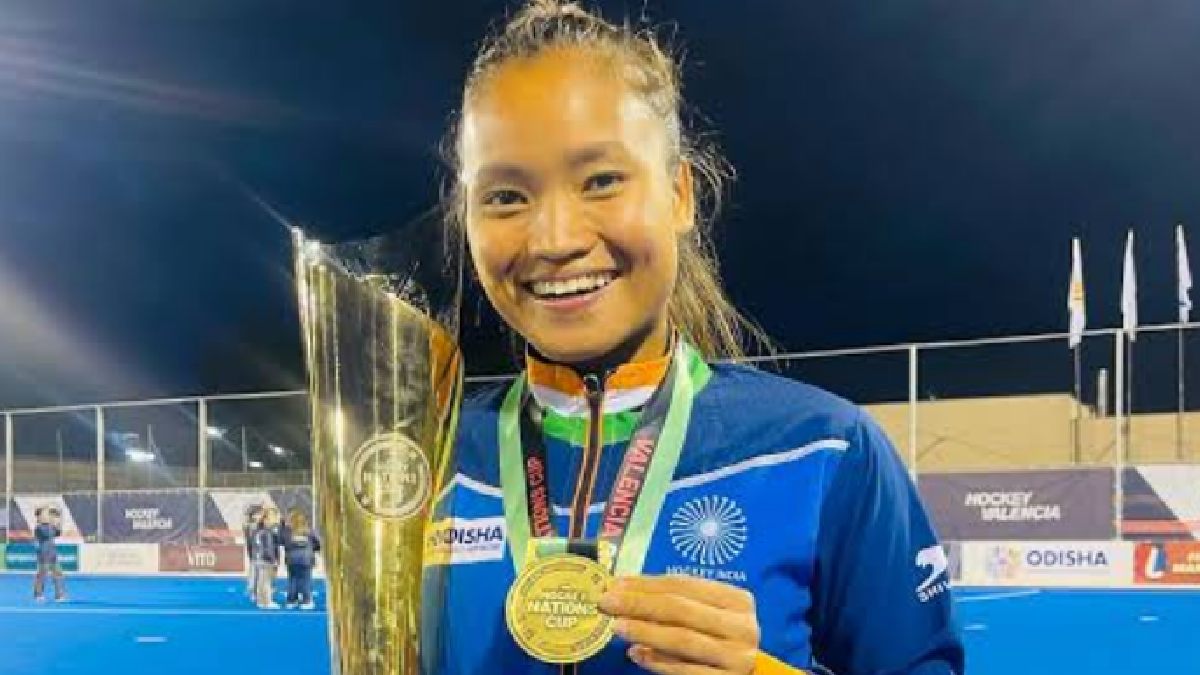
Lalremsiami grew up surrounded more by football than hockey in Mizoram. Football is a huge sport in the northeastern state and she played it between classes. But she didn't even understand football's basic positions, or hockey at times at the time. Her real introduction to hockey was almost by chance when she got a stick and a ball at a school sports competition.
“When I started playing hockey, I didn’t know anything about it,” Lalremsiami said in an interview with Sports Now. What was a totally new sport to her at first began as an unknown one and became a passion when she joined a hockey academy in Mizoram. It was when she first started with her and started to understand the game she began to connect with the game of hockey and realized that hockey could be a way to represent India and work and start a career.
For her, the prospect of playing for the country was the biggest motivation. She also discovered that successful hockey players could find jobs—employment at the railways, for example. So those possibilities set the young player up for success and got her to take the sport seriously.
An opportunity to join the National Hockey Academy in Delhi changed her career in 2016. But moving to the capital was not an easy one. Her father had initially refused because Lalremsiami was still very young and did not understand Hindi or English. He was concerned about sending his daughter to a completely different city and worried about whether she would be able to shift.
Lalremsiami, however, was determined. She told her father that she had a dream of playing for India and that leaving Mizoram was necessary if she were to do so. In the end, her father trusted her and supported her and asked her to work hard and never regret the choice.
Delhi posed a new set of challenges. Lalremsiami found language and adjusting to a different environment difficult; her teammates made it a lot easier for her to settle in. They corrected her Hindi, taught her how to talk and helped her overcome one of the biggest barriers she faced away from home.
Her development within India's junior hockey system eventually led to senior level where she faced an even more demanding standard. Senior hockey requires much more technical and game knowledge, Lalremsiami said. Training with experienced players showed her how quickly the game moves and how important decision-making is at the highest level.
Her international breakthrough came quite early. At just 18, Lalremsiami represented India at the 2018 Women's Hockey World Cup. She even scored during the tournament, breaking the dream she had thought distant. She admitted she had expected to take part in the World Cup at such a young age and felt like she was lucky to have got there.
The next big achievement was at the Tokyo Olympics. Lalremsiami was the first Mizoram athlete to represent India at the Olympics. This had a big impact on her career and after coming back home she saw a change in the way Mizoram people viewed women’s hockey.
Parents started approaching her and asking how their daughters could get into the sport. They told her that they had not realized girls from Mizoram could reach the Olympic level until they saw her doing it. Thus her success inspired an entire generation of young athletes.
At the 2026 Women's World Cup, India had its best performance since 1974 at fifth place. The campaign included a historic 6-1 win over South Africa, India's biggest win in the tournament. At the same time, Lalremsiami was given the news that she had been selected for the prestigious Arjuna Award.
The honour brought great joy to the hockey star and her family. She immediately called her family after seeing her name on the list. The recognition also provided motivation for her as she went to the World Cup.
Despite India's great performance, the team never got a medal. Loss is an essential part of elite sport, Lalremsiami says. She knows how it feels to be disappointed because players sacrifice time with their families and spend much of their lives training, recovering and preparing for the competition. But she insists that lessons and motivation for the future need to be learnt from the losses.
She still lives in hockey. Training, treatment and rehabilitation take up most of her day and team dinner on Sundays offers her some time to relax. Music is also a big part of the team’s daily routine, especially before games. Hindi, Punjabi and English music usually fills the dressing room with Navneet Kaur often taking responsibility for the team’s music.
The next big challenge for Lalremsiami and the Indian women’s hockey team is the Asian Games. India enters the competition as defending champions; Lalremsiami said the team will focus on one match at a time and not too much ahead of time.
If that is so, the Arjuna Award is a great achievement for someone who didn’t even know the name of the game she was playing. Lalremsiami says she still can’t conceive of how far she has gone in her life. From the school-level sports field in Mizoram to the World Cup and Olympics, her story is an example of opportunity, determination, and support that can change a young athlete’s life.
She also hopes her journey will encourage more girls to participate in sport. The message she would give to Indian hockey fans is simple: continue supporting the team as they chase another major title. The Asian Games will take place later in the year and Lalremsiami will now have to work harder at gold medal level.