India’s rich cultural and spiritual legacy of Sarnath has been recognised by the World Heritage Committee with an entry on UNESCO’s list of world heritage sites.
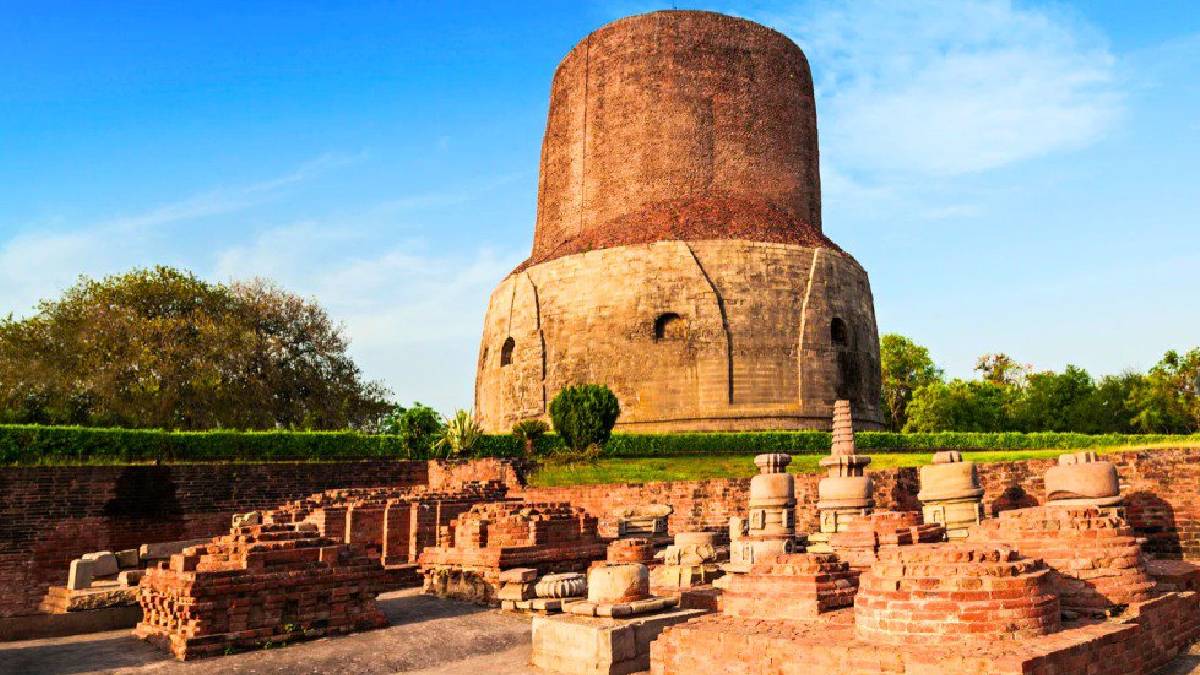
Sarnath is situated near Varanasi in Uttar Pradesh. It is well known for being the site where Buddha delivered his first sermon, known as the Dhammacakkappavattana Sutta (Setting the Wheel of Dharma in Motion), when he arrived at Bodh Gaya. This event was the start of Buddhism, and Sarnath is one of the four holy pilgrimage places associated with the Buddha’s life.
A Site of World Spiritual Importance
The UNESCO inscription recognizes Sarnath's great contribution to human civilisation and its lasting influence on Buddhist philosophy, art and culture. The site has drawn pilgrims, scholars and tourists from around the world for centuries, and people from far away to see its historical monuments and spiritual atmosphere.
The archaeological remains at Sarnath are evidence of centuries of religious activity, artistic achievement and architectural excellence. The monuments that are on the site convey what Buddhist architecture looks like during the Mauryan period, the Gupta period, and beyond.
Rich Heritage and Iconic Monuments
Sarnath is home to several impressive structures and archaeological treasures, including:
Dhamek Stupa, one of the famous Buddhist monuments in India, and is believed to have been where Buddha gave his first sermon. Chaukhandi Stupa, often associated with Buddha’s meeting with his first disciples. The remains of ancient monasteries and temples that once had a thriving place of Buddhist learning. The Ashokan Pillar, built by Emperor Ashoka in the 3rd century BCE to signify the significance of the place. The celebrated Lion Capital of Ashoka was discovered at Sarnath, which was adopted as the National Emblem of India.
Together, these monuments give us valuable insights into India’s ancient history, Buddhist traditions, and artistic heritage.
Boost for Tourism and Conservation
The UNESCO World Heritage inscription will greatly improve Sarnath’s international profile and draw more domestic and international tourists. Heritage experts are convinced that it will lead to more investment in conservation, archaeological research, and visitor infrastructure, and that the recognition will promote more investment in conservation and archaeological research and visitor infrastructure and the establishment of an integrated heritage park.
We hope that improved preservation efforts will protect the monuments of the site and ensure that future generations can still understand its historical and spiritual significance. The inscription is also expected to create new opportunities for local communities through tourism, hospitality, handicrafts, and cultural activities.
Strengthening India's Global Heritage Presence
India has many UNESCO World Heritage Sites and cultural, natural, and architectural heritage. Sarnath further solidifies India as one of the world’s leading custodians of heritage and civilization.
The recognition highlights not only Sarnath's importance to Buddhism but also its broader contribution to humanity's shared cultural legacy. As Buddhism spread from India to countries in Asia and beyond, Sarnath became a symbol of peace, compassion, and the pursuit of knowledge.
A moment of National Pride
The inscription of Sarnath on the UNESCO World Heritage List is a proud moment for India. It acknowledges the country’s commitment to preserving its ancient monuments and promoting cultural heritage on the global stage.
Sarnath is an ancient site that is a sacred place to many Buddhists (especially history lovers) and to the world’s great spiritual traditions in the name of Lord Buddha.
Sarnath is now internationally recognized as a World Heritage site and will be able to receive more international attention with its new World Heritage status, as well as continue to influence the world with its message of peace, wisdom, and compassion, which still resonates with everyone to see a lot of people in its long-term philosophy of peace, wisdom, and compassion as a world heritage site.