
Bengaluru: Greater Bengaluru Authority (GBA) is exploring a faster response mechanism to repair road potholes, like similar services offered by apps such as Blinkit and Zepto for quick delivery, GBA Chief Commissioner Maheshwar Rao said.
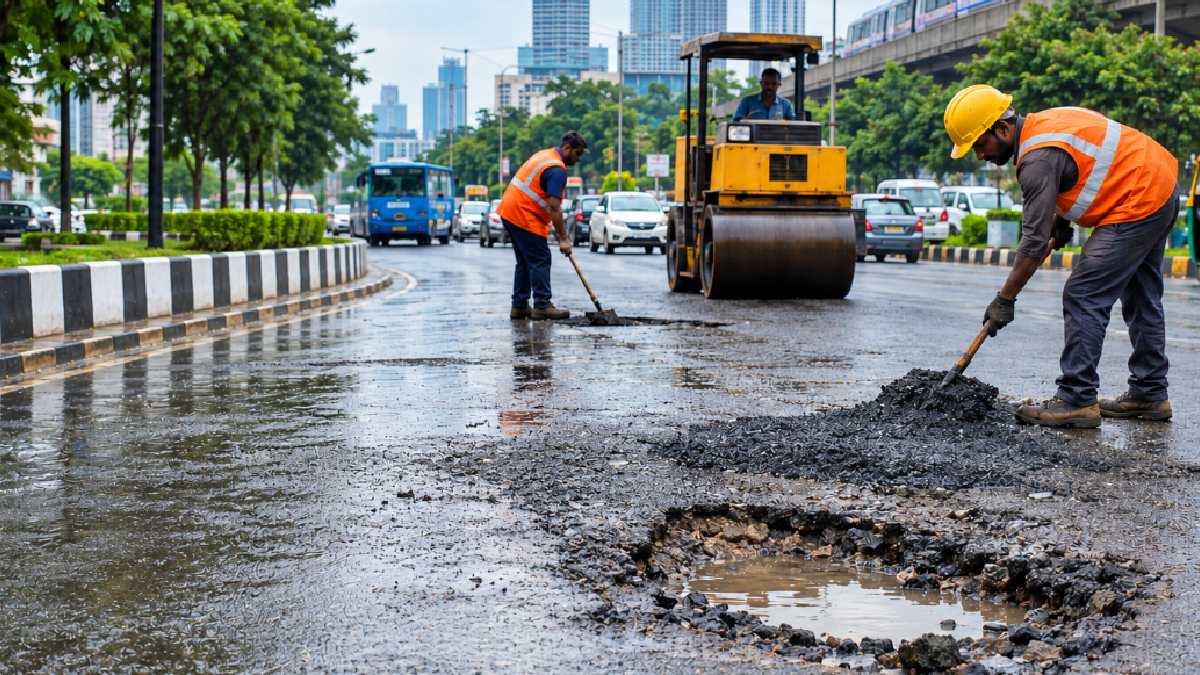
It must be directed to citizens so that they can report complaints promptly and the city can be put in place to fill potholes and reduce the time that they wait to have their road repairs done.
Rao said on the GBA official X account that in a podcast he listened to on the road condition problems in Bengaluru that the civic body wants to create a system through which pothole complaints can be passed along to the city council so that we can get it right in the ground and get it done quickly.
The comparison with instant delivery platforms is coming at a time of frequent complaints from citizens about damage to roads and traffic congestion during monsoon season. Potholes can lead to traffic jams, long travel times (drivers, two wheeler riders, pedestrians and so on) and are hazardous to motorists, too. Residents often ask why repairs take so long when there are sufficient funds available from the civic administration.
When asked why it takes so long to repair even a single pothole, Rao said it’s because road quality, weather and the city’s aging underground infrastructure is all related to it; he too said that Bengaluru road quality needs to be improved and said there was a technical difficulty in dealing with permanent repairs in the rainy season.
Rao said pothole problems are more noticeable in the monsoon period because rainwater and road condition can quickly be worsening the road surface. He said that Bengaluru needs to improve the overall quality of the roads but also that pothole repair could never be done properly in the rain and that in the rainy season the government may have to use wet mix material only for temporary work but not whole day to day repair works.
Such a restriction can make it difficult to maintain in the long run and when damaged areas need frequent repair. But preventive maintenance and better road construction measures can reduce potholes and require repeated repairs, he said.
Rao also pointed to aging underground water and drainage pipelines as a factor for road damage. Water supply lines and drainage infrastructure are often laid beneath city roads and pipelines which have been in operation for 20-30 years can need to be replaced.
These aging pipes leak under the road surface and if not replaced or maintained properly can cause potholes in different sectors of the city to form.
These underground infrastructure problems are among the issues that make road maintenance more difficult, said the commissioner. So potholes are more than filling up road surfaces; they must be solved and the causes of such damage can be identified.
The rapid expansion of Bengaluru is also placing more strain on its roads, Rao said. Work on roads and utility needs will continue to do so, and the growing population will require for water supply, drainage, electricity, transport and other basic services.
Older infrastructure may no longer be sufficient to cater to the modern-day requirements of the city. Rao said that the capacity of essential services such as pipelines must be increased to accommodate the city's increasing population.
If road excavation and infrastructure projects are carried out by multiple agencies at once, the damage may lead to additional maintenance problems that cannot be avoided if the road is properly repaired after the projects are completed.
Rao explained that replacing an old structure with a four-storey building may cause more demand on nearby civic facilities. Water supply, drainage and other services can be upgraded to cater for the extra demands.
Bengaluru’s expanding metro network, road-widening projects, electricity cables, water pipelines, communication cables, stormwater drains and sewage system all need space and investment.
As demand for these services increases the pressure on existing infrastructure becomes more pronounced. These interconnected issues mean that road maintenance cannot be viewed as an individual responsibility; it needs to be integrated with long-term urban planning and coordinated infrastructure development.
The proposed quick-response pothole repair mechanism may help the GBA better handle complaints and that is only if it is backed by strong accountability and inspections and a well-functioning system to keep track of repair work.
If the complaint process is swift and is organized, then officials can identify damaged areas, prioritise urgent repairs and monitor the work done. But quick improvements to temporary repair might not solve the ongoing pothole problem in Bengaluru.
Better road construction, timely replacement of ageing pipelines, improved drainage, coordination among all local agencies and regular road inspections are also key.
Although Rao’s message shows that the GBA is looking for a solution to pothole complaints more quickly, the implementation time and the operation of the proposed system has not been disclosed in the statement. Residents will see if this approach will lead to faster repairs and safer streets in Bengaluru.





Comments