
The infamous Bengaluru Ring Road murder case, which shocked Karnataka in 2003, has been brought back to light after the state cabinet rejected the mercy petitions of Shubha Shankaranarayana and D. Arun Verma, who are serving life sentences for the killing of Girish, who was engaged to Shubha at the time of the murder.
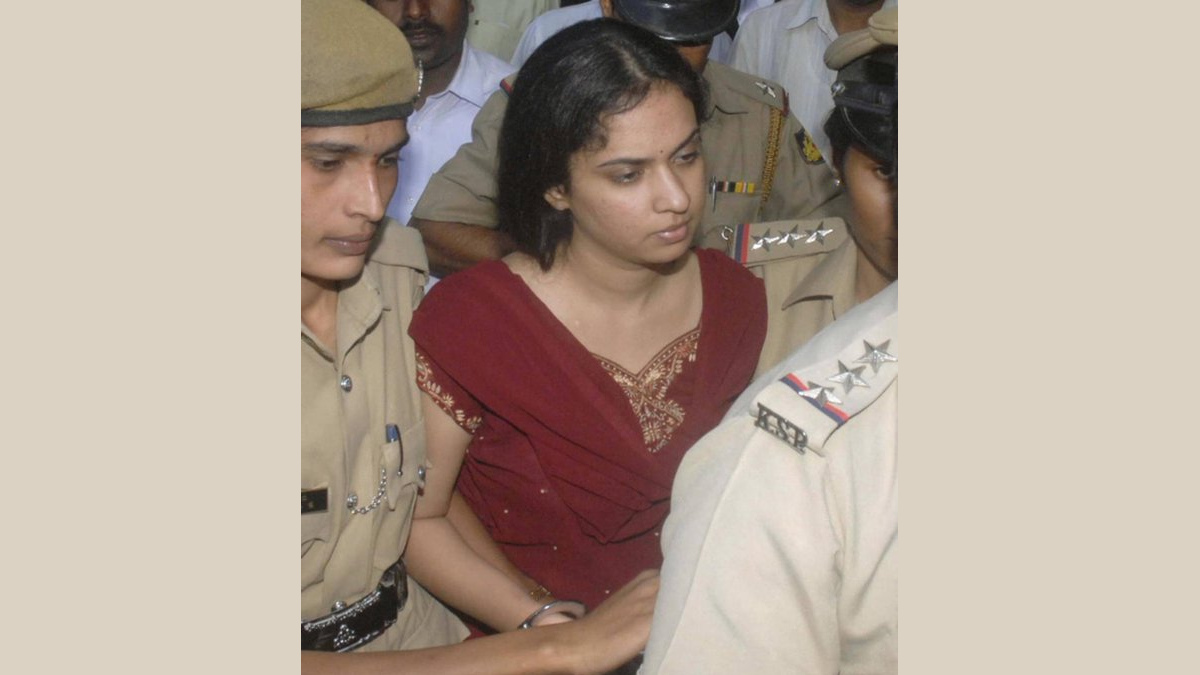
The decision was made at the Karnataka Cabinet meeting on October 15, 2026. State Home Minister Priyank Kharge announced the Cabinet’s decision after the meeting, saying that the mercy petitions were rejected and the Governor would be informed about it. The case, remembered for its alleged love triangle and conspiracy to murder, stands out as one of the most well-known cases in Bengaluru’s history so far.
According to information shared after the meeting, Home Minister Priyank Kharge said the mercy petition filed by Shubha was rejected because it did not fall within the applicable legal framework. Arun Verma’s plea was also taken up by the cabinet.
Advocate General Shashikiran Shetty was called to the meeting to brief ministers on the legal aspects of the case before the decision was taken. The government made its decision to reject the petitions and convey them to the Governor after the discussion. Mercy petitions are considered through the constitutional and legal processes for clemency, and the Cabinet’s decision represents the state government’s position on the matter. The next steps will depend on the procedure followed and the Governor’s consideration of the government’s recommendation.
The murder dates back to December 3, 2003, when Girish went out with his fiancée, Shubha Shankaranarayana, in Bengaluru. The couple had been engaged on November 30, 2003, and their families were acquainted with each other. Girish worked for a software company, and Shubha studied law.
The investigation uncovered information that Shubha was romantically involved with Arun Verma, a junior student of her college, and that the two had allegedly conspired to eliminate Girish so that they could marry. Girish had taken Shubha out for dinner that night.
She had expressed a desire to watch aircraft taking off and landing near HAL Airport, so he had taken her to a viewing place along Ring Road. Girish was attacked while they were watching the aircraft. The attackers hit him on the head with a motorcycle shock absorber, causing him to be in critical condition.
Girish was rushed to a hospital for treatment, but he died the next day in a private hospital. K.A. Nanaiah, the then inspector of Viveknagar Police Station, investigated the case and collected phone call records and other evidence in order to find out what happened.
Although the attack was initially said to be an unknown attack by unknown persons or a robbery, the police investigation revealed evidence of a conspiracy involving people known to Girish. Shubha, Arun Verma, and two other suspects, Venkatesh and Dinesh, were arrested in connection with the case.
The prosecution claimed that the murder was planned to remove Girish from the picture and let Shubha and Arun move forward with their relationship. The investigation and subsequent trial attracted extensive public attention to the case because of the alleged betrayal of an engaged partner and the planning behind the killing.
All four accused were eventually found guilty and sentenced to life imprisonment after the trial. The accused challenged their convictions and sentences, and the Supreme Court reportedly upheld the life sentences in July 2025, bringing their judicial challenge to a decisive stage.
The case has continued to draw attention because it involved a murder allegedly planned around a personal relationship and because the victim was killed only days after his engagement. The latest development concerns the separate request for mercy, rather than a fresh trial of the original murder allegations. Such petitions seek clemency under the applicable constitutional or statutory provisions and are distinct from appeals challenging a conviction. The Cabinet’s rejection therefore does not represent a new finding of guilt; it is a decision on the requests for mercy submitted by the convicted individuals.
With the Karnataka Cabinet rejecting the mercy petitions on October 15, the Ring Road murder case has once again become a major talking point in the state. The government has stated that the Governor will be informed of the decision. The precise legal and procedural consequences will depend on the formal communication and the applicable rules governing the petitions.
The case also highlights the distinction between judicial remedies and executive clemency: a conviction and sentence may be upheld by courts, while a mercy petition is considered separately under the relevant legal framework. For now, the Cabinet’s decision marks a setback for Shubha Shankaranarayana and Arun Verma in their efforts to obtain clemency.
The 2003 murder of Girish remains a notable case in Bengaluru’s criminal history, and the latest decision has revived public interest in the investigation, the trial, and the long legal proceedings that followed.





Comments
Leave a Comment