
A social media post on the famous Sringeri Sharadamba Temple has turned into an online debate on tourism, regional identity and the protection of the Malnad region of Karnataka. What began as praise for a revered Hindu pilgrimage site has now become a larger Kannada-Telugu debate on the role of tourism in local communities and why places of worship are now being perceived in a regional context too.
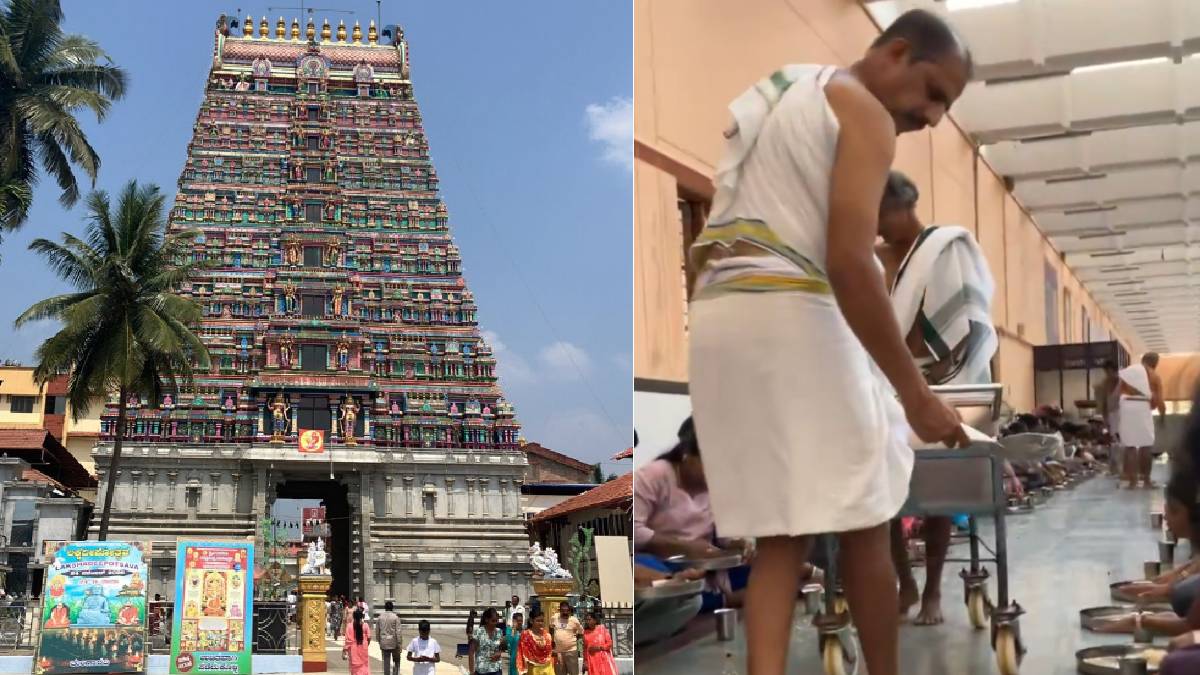
At the heart of the debate are two issues that should be considered separately: protecting Sringeri’s peaceful environment and local way of life, and the need to welcome devotees without making them feel unwelcome due to the language they speak.
Shringeri temple lo Dining hall chusaka pichi ekkesindhi bayya 🥵🙏 peak maintainance, peak taste, peak everything ❤️ https://t.co/3SS1WXUwz0
— ᴇᴅᴜᴘᴜɢᴏᴛᴛᴜ ʏᴇᴅʜᴀᴠᴀ 🦁 (@mohith000000) October 14, 2026
How a temple appreciation post became a regional debate
Sringeri’s dispute started when one social media user praised Sringeri, and it drew attention from people who viewed the post as a chance to appreciate the temple and its surroundings.
Some Kannada-speaking users felt that Sringeri would be under pressure as much as other popular tourist destinations do, and others worried about the pressure on Sringeri. Increasing visitor numbers, commercialization, and the potential for investment from outside may change the nature of the region; people in Kannada-speaking communities were worried about the nature of the region, they said. Residents also worried about losing their land if development would destroy the surrounding landscape and weaken their connection to their hometown.
Such concerns are not necessarily opposed to visitors from another state. At their best and most constructive, they raise a larger question: how can a destination welcome people while protecting its environment, culture and residents’ interests?
But some of the online discussions went beyond tourism management. Some responses used language that could be interpreted as discouraging Telugu-speaking visitors specifically, turning a discussion about development into a debate about regional identity.
Telugu-speaking users pushed back and said many Kannada-speaking devotees visit the pilgrimage centers in Andhra Pradesh such as Tirumala, Srisailam, Mantralayam and Srikalahasti. They said people should not be criticized just for visiting and appreciating a temple in another state.
Other users attempted to calm the debate and highlight the mutual respect between the two areas. The temples in Karnataka attract devotees from Andhra Pradesh and Telangana just as temples in those states welcome pilgrims from Karnataka. And so the common pilgrimage tradition should be a reason for respect and not a source of resentment, they said.
But some responses turned more hostile, and some would like to shut off visitors entirely. That has hurt people on both sides and is not the same as protecting a beloved destination.
Sringeri's history goes well beyond the modern borders of the state.
Sringeri is more than a tourist spot. It is a center of Hindu religious and philosophical tradition on the banks of the Tunga River in Karnataka’s Malnad region.
According to Sri Sringeri Sharada Peetham’s official history, Adi Shankaracharya established it more than twelve centuries ago. Sringeri Sharada Peetham is one of the four traditional Amnaya Peethams associated with his spiritual legacy. In its history, it also traces the contributions of the successive spiritual leaders and the patronage of various Indian kings over the centuries.
Adi Shankaracharya is associated with Kalady in present-day Kerala. That historical connection does not make Sringeri less rooted in Karnataka, nor does it make it the property of one linguistic community. It shows how religious traditions and intellectual exchanges have crossed the boundaries of modern states.
Karnataka’s cultural landscape, its people and the natural beauty of Malnad are deeply connected to Sringeri’s identity. And it’s natural to respect local identity and the temple’s wider spiritual significance.
What is the difference between celebrating a place’s regional heritage and arguing that people from elsewhere would not have any right to come in and visit it?
Tourism issues need to be listened to, and they are not hidden.
Some of the concerns of local residents need to be addressed. Popular destinations around the world also suffer from such issues when visitors arrive much faster than the local infrastructure can keep pace.
Tourism has also made road, parking facilities, water supply, sanitation and waste management problems worse. Commercial buildings, hotels and other tourist facilities that are created can change a landscape residents have been building for generations. Increasing property prices also make it difficult for local people to keep land or maintain their traditional livelihoods.
Development in ecologically sensitive areas like the Western Ghats needs special care. Poorly planned construction, littering, traffic and inadequate sewage management can threaten rivers, vegetation and wildlife habitats.
These are the general risks of poorly managed tourism, not proof that Sringeri has experienced every one of these problems to the same degree. Local environmental damage, land transactions or visitor-related pressures need to be backed up by evidence from residents, environmental assessments and official records.
The answer is not to blame people based on their language or state of origin. It is to protect tourism from becoming a business they can’t keep a lid on.
Local authorities, temple administrators, businesses and residents can work together on waste segregation, responsible construction, traffic management, protection of riverbanks and limits on development where environmental rules require them. Local communities should have a meaningful voice in decisions that affect their land and livelihoods.
As a visitor, one can do something to assist other people as they are going to the temple, local businesses, etc.
Kannada pride and Telugu devotion need not compete
Language and regional identity matter to people. For many Kannadigas, protecting Malnad and preserving Karnataka’s cultural heritage is a matter of genuine emotional attachment. Telugu-speaking devotees will also be grateful to visit a famous temple and express gratitude without being dismissed as outsiders.
Neither of them needs to cancel out the other.
Kannada-speaking pilgrims visit temples in Andhra Pradesh and Telugu-speaking devotees visit Karnataka’s religious places. The pilgrimages are a testament to the deep-seated ties of faith, family, trade, travel and cultural exchange. The exact number of visitors to either linguistic community may differ, but the common theme of inter-state pilgrimage is clear.
The same is true for religion: people travel across state boundaries for education, work, medical treatment, holidays, family events and family activities. Such movement can enrich communities, even if it opens up responsibilities for visitors, businesses and governments.
A person praising Sringeri does not threaten Kannada identity. A local resident who is anxious about overcrowding or commercialization should not necessarily be hostile to Telugu people.
The content and intent of individual statements matter. Criticism of irresponsible development is different from hostility towards an entire community, and appreciation of a destination is different from demanding unrestricted commercial expansion. Protecting Sringeri while keeping its doors open. The debate is one where we can concentrate on practical solutions and not on regional resentment. Sringeri’s natural environment and religious relevance should be safeguarded through responsible planning, better waste management, environmental protections and meaningful consultation with local residents. Development should benefit the community, not the tourists who live there. But visitors need to know that the pilgrimage destination is not just a place to put out their photos or share something on social media. It is a living religious and cultural place and culture that everybody’s alive in and a place to live in and a place for the pilgrimage to occur.
Online discussions should not turn individual comments into accusations against whole linguistic communities. Social media often rewards provocative statements, but the loudest voices do not necessarily represent the views of every Kannadiga or Telugu speaker.
But the deeper connection between these communities is more important than a viral argument. They both have temple worship, reverence for spiritual teachers, family pilgrimages, and respect for sacred places. And our common religious landscape goes back decades before the political and administrative boundaries of today.
Sringeri can stay proud to be part of Karnataka but still attract devotees from all over India to our city. Protecting local identity does not mean excluding outsiders, and welcoming visitors does not have to mean leaving behind land, culture or the environment.
I think the best message is simple: respect the place, respect the people who call it home, and respect every devotee who visits in good faith. Tourism should preserve what makes a destination special, not destroy it, and regional pride should build communities rather than divide people who share so much.






Comments
Leave a Comment