
April is the start of a new financial year and a good time for financial advisors to start off the business with guidance if it could be the start of the month. During this period a structured strategy, better client experience, the level of compliance, and better business growth in the long run all matter.
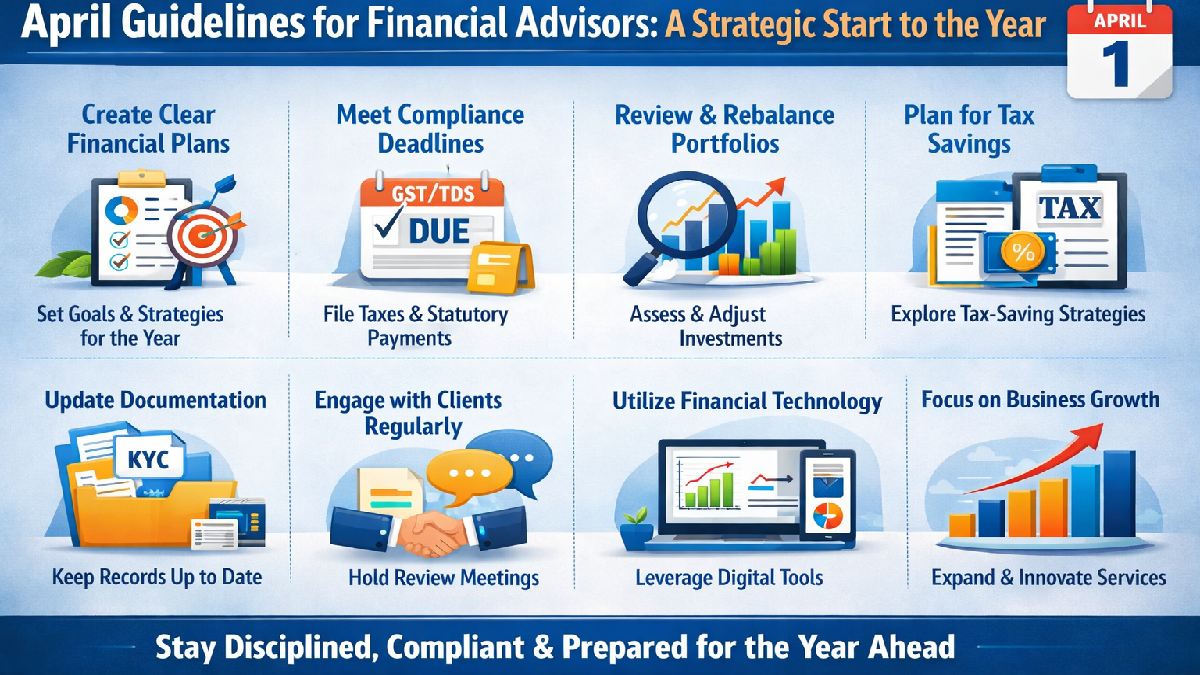
It is recommended financial advisors start by having a clear and structured financial plan in outline for their clients. Understanding why you have specific goals and risk appetite, timing, and investment dates for the investment would be one thing where your best strategies are in place at the beginning of the year; that is what makes a year start, and what kind of strategic thinking is clearly planned around your client when investing in them in the early months so you can take a more proactive stance by having that early to the process, and planning also means making a decision with little time to think of changes during the course of the period of transition.
Assessed compliance deadlines are equally crucial. April needs for GST filings, TDS, statutory payments, and so on. Delivering timely submissions helps avoid penalties and also helps ensure financial discipline for clients.


This must be followed with a portfolio review. Advisors must look at last year’s performance and recalibrate their portfolio based on current market conditions and what clients expect from them.
Tax planning should not be delayed. Early planning in April helps give advisors an opportunity to find such tax-saving options as well, and also to structure finances strategically. This approach prevents last-minute decisions and maximizes what opportunities can be seized by any agency-based approach for the coming quarter of this year.
Documentation is also key and we also have a right to stay close to it. KYC records, financial statements, and supporting documents can be updated to facilitate the procedures as an assurance when it comes to filing or auditing and may reduce the risk for errors to occur on documents.


Client interaction has a huge impact on creating trust in such relationships. Regular interactions through review meetings, updates with clients, and financial discussions enhance confidence and keep clients updated on financial status as they come along.
Advisors would benefit from technology for efficiency. Digital instruments for compliance tracking, portfolio management, and reporting are good tools to be used for streamlining and minimizing manual error.
Stay updated with relevant changes in finance and accounting, as new financial and tax rules may be in force from April. Advisors who are aware can then be more relevant and make sound advice to clients when it becomes necessary.
At last, April is an appropriate time to concentrate on business growth. An expansion of the customer base, introducing new services, and further developing advisory practices may form long-term business opportunities.
To sum up, following a disciplined approach in April enables financial advisors to keep their systems and actions up to date, compliant, client-centered, and to plan for the year ahead.











Comments