
With the upcoming financial year 2025-26, it is paramount to have a clear understanding of the most recent income tax slabs and deductions so that we can plan our finances correctly going forward. Selecting the right tax regime can save you a huge sum depending on your income and investments, as they may save in taxes.
New Tax Regime
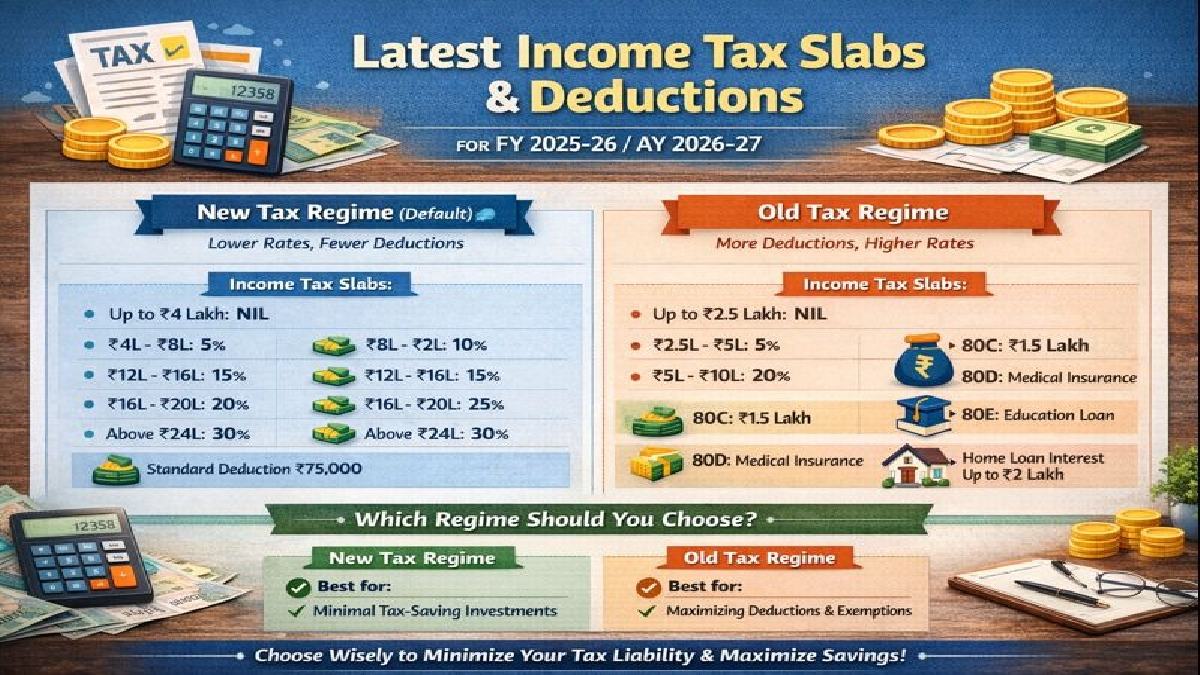
This new tax regime is set to reduce taxes, particularly for the higher income brackets, but will have fewer deductions and exemptions. The slabs for FY 2025-26 are:
| Income Range (₹) | Tax Rate |
| Up to 4,00,000 | Nil |
| 4,00,001 – 8,00,000 | 5% |
| 8,00,001 – 12,00,000 | 10% |
| 12,00,001 – 16,00,000 | 15% |
| 16,00,001 – 20,00,000 | 20% |
| 20,00,001 – 24,00,000 | 25% |
| Above 24,00,000 | 30% |
In addition, there is a standard deduction of ₹75,000 and a Section 87A rebate which allows taxpayers earning ₹12 lakhs or less not to pay any tax. The best case: Professionals with limited investment in tax-saving instruments.


Old Tax Regime
Although the tax rates are a bit higher, the old tax regime has more deductions and exemptions:
| Income Slab | Tax Rate |
| Up to ₹2,50,000 | Nil |
| ₹2,50,001 – ₹5,00,000 | 5% |
| ₹5,00,001 – ₹10,00,000 | 20% |
| Above ₹10,00,000 | 30% |
Central part of the deductions are Section 80C (₹1.5 lakh) for personal investments, Section 80D for medical insurance, Section 80E for the interest of education loan, Section 80CCD(1B) for contribution to NPS up to ₹50,000, and Section 24(b) for home loan interest up to ₹2 lakh. The old regime works for taxpayers who invest in tax-saving instruments.
Which One Should You Choose?
The alternative is the new tax regime versus the old one depending on how much you earn, what you invest and what you hope to achieve. If you have little in the way of tax-saving investments, the new regime could end up saving you even more. But if you routinely invest money in tax-saving schemes or pay home loan interest, the old regime might be more favourable. When you smartly plan and know what you have into these slabs and deductions you save accordingly, you’re able to maximize your tax breaks while also staying under tax law in the most convenient manner possible.










Comments