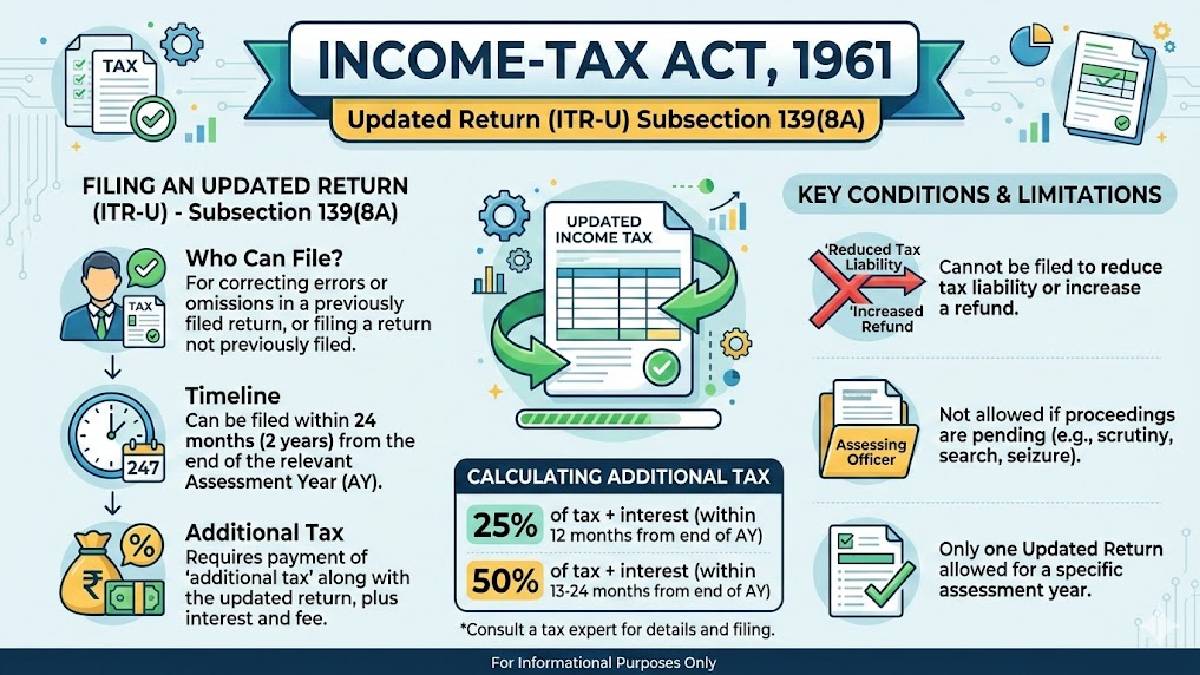
The idea of the Updated Return (ITR-U) was created to allow taxpayers to choose to correct mistakes or omissions in their previous Income Tax Returns they already provided a voluntary opportunity to correct.
Updated Return
An Updated Return shall be filed by a taxpayer within 48 months (four years) from the end of the relevant Assessment Year (AY) under Section 139(8A) of the Income-tax Act, 1961.
This provision allows individuals and businesses to voluntarily declare other income that may have been overlooked before the tax deadline and pay the relevant tax as well as other charges.
ITR-U — Statutory Deadline
Within the deadlines of the Assessment Years, taxpayers may file an Updated Return for the following:
- AY 2021-22: On or before March 31, 2026.
- AY 2022-23: On or before March 31, 2027.
- AY 2023-24: On or before March 31, 2028.
- AY 2024–25: On or before March 31, 2029.
- AY 2025-26: On or before March 31, 2030.
You are asked to ascertain the four-year period from Assessment Year end, not from the date of original return filing.

Key Provisions and Conditions
- An Updated Return (ITR-U) should be filed only once.
- Purpose of Filing: ITR-U can only be filed to declare additional income and pay the corresponding tax. This is to help correct misreporting of income.
Restrictions: ITR-U cannot be filed:
- To claim a refund.
- To help reduce current tax liability.
- To increase a loss.
- If it lowers the total tax payable.
Additional Tax Liability
Updated Returns must be paid an extra amount of taxation beyond normal tax and interest. The additional tax rate depends on when the relevant interest rates are paid:
- 25% of the aggregate tax and interest on the filing date within 12 months from the expiration of the relevant AY.
- 50% for a filing over 12 months to 24 months.
- Higher rates (as amended) may be applied for filing beyond a period of 24 months, but maximum would be 70% depending on how long those rates are set after filing.
Why Consider Filing ITR-U?
ITR-U provides a compliance-focused path for taxpayers who notice errors, omissions, or missed income disclosures when they file their original return. In making these mistakes voluntarily, those taxpayers may escape future litigation, penalties, and scrutiny proceedings. Proactive action leads to better financial compliance and greater credibility with tax authorities.