
As India approaches its Union Budget for FY 2026–27, expectations are building that policymakers may move beyond short-term fiscal consolidation and articulate a more durable growth strategy. With global demand moderating, supply chains being reconfigured, and domestic consumption recovering unevenly, the upcoming budget is widely seen as a critical signal for businesses and investors assessing India’s medium-term trajectory.
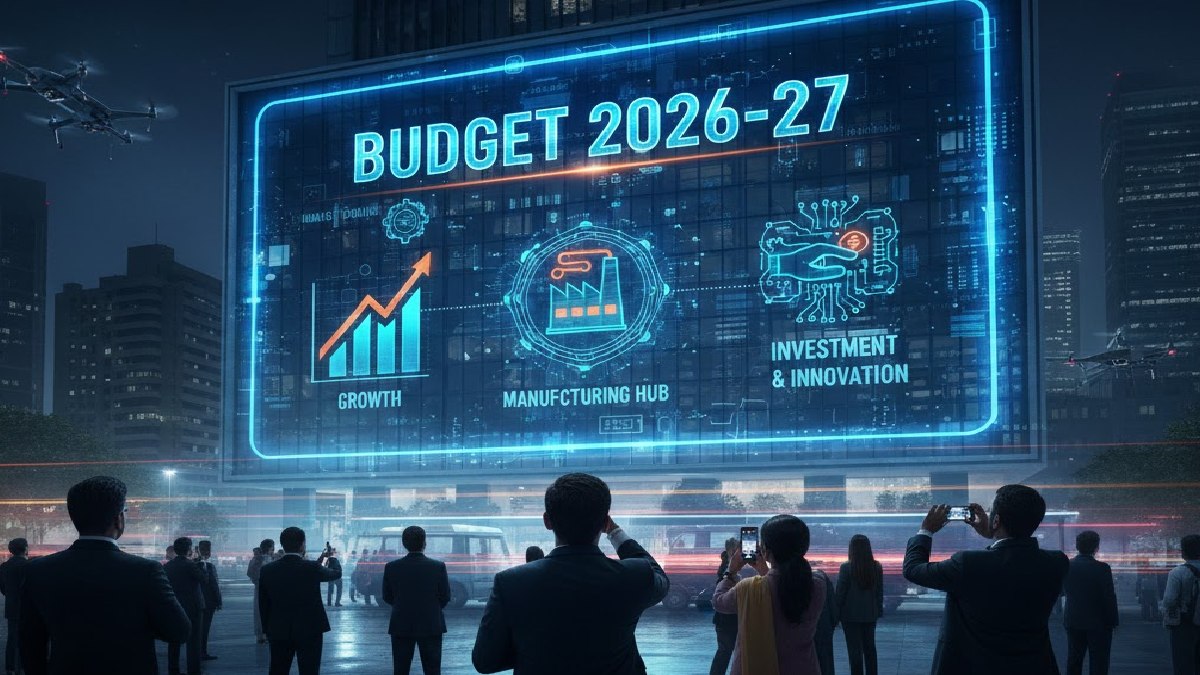
At the centre of policy discussions is a possible shift from annual fiscal deficit targets to a medium-term framework anchored in the debt-to-GDP ratio. Such a move would align India more closely with global fiscal best practices, allowing greater flexibility for growth-supportive spending while maintaining long-term macroeconomic credibility. For investors, this would signal a more predictable and counter-cyclical approach to fiscal management.
A debt-based fiscal anchor would also allow the government to prioritise the quality of expenditure, particularly capital spending with high multiplier effects. India has made significant progress in fiscal repair since the pandemic, but policymakers increasingly recognise that sustaining high growth will require continued public investment in productivity-enhancing areas.
Capital Expenditure as a Growth Catalyst
Budget 2026–27 is expected to maintain a strong emphasis on public capital expenditure, especially in infrastructure, logistics, industrial corridors, and energy systems. These investments are critical for reducing transaction costs, improving supply-chain efficiency, and supporting private investment.
For manufacturing firms and exporters, infrastructure quality is often more decisive than fiscal incentives. Improvements in ports, transport networks, power availability, and digital infrastructure directly affect competitiveness, delivery timelines, and cost structures.

Global manufacturers evaluating India as a long-term production base are likely to view sustained capex commitments as a strong signal of policy intent. As supply chains continue to diversify, consistent infrastructure execution could strengthen India’s position as a reliable manufacturing and export hub.
Supporting Consumption and MSME Liquidity
Over the past year, the government and the Reserve Bank of India have adopted a coordinated approach to stabilise domestic demand. Measures such as income tax relief, GST rationalisation, and a cumulative 100 basis point reduction in the policy repo rate during calendar year 2025 have aimed to improve household and business confidence.
Building on these efforts, Budget 2026–27 is expected to further support consumption through simplification of the income tax regime and rationalisation of tax deducted at source (TDS) rates. These measures could have a meaningful impact on disposable incomes and cash flows, particularly for professionals, small businesses, and exporters.
For India’s MSME sector, which plays a critical role in employment and exports, liquidity constraints remain a structural challenge. Lower withholding taxes and reduced compliance complexity could improve working capital cycles, encourage reinvestment, and support job creation. A gradual recovery in consumption would also benefit MSMEs operating in domestic supply chains.
Manufacturing and Export Competitiveness
Manufacturing remains central to India’s long-term growth strategy. While production-linked incentive schemes have attracted investment in select sectors, industry participants are increasingly focused on policy stability, execution efficiency, and ecosystem development.
Budget 2026–27 is expected to reinforce the government’s commitment to manufacturing-led growth by prioritising infrastructure, regulatory predictability, and ease of doing business. For exporters, sustained investment in logistics and trade infrastructure could help offset global pricing pressures and enhance competitiveness.
As global firms seek resilient supply chains, India’s ability to offer scale, policy continuity, and improving infrastructure will be critical. Rather than expanding incentives, the budget is likely to focus on ensuring that existing frameworks deliver outcomes effectively.
Capital Markets and Access to Finance
Another important area of focus is expected to be the deepening of India’s capital and credit markets. Improved access to long-term financing for MSMEs and mid-sized manufacturers, alongside efforts to strengthen corporate bond markets and trade finance mechanisms, could reduce dependence on bank lending.
For investors, deeper and more liquid capital markets enhance transparency, improve capital allocation, and reduce systemic risk. For businesses, diversified financing options support scale and resilience, particularly during periods of global volatility.
Implications for Investors and Growth Outlook
For global investors, Budget 2026–27 will be closely watched as a barometer of India’s commitment to growth with macroeconomic discipline. A credible fiscal framework, combined with consumption support and sustained public investment, could help anchor real GDP growth above 7% in FY27, even amid a challenging global environment.
More broadly, the budget could reinforce India’s positioning as a structurally strong, reform-oriented economy capable of delivering predictable policy outcomes. This is particularly relevant for long-term investors, who increasingly prioritise stability and execution over short-term stimulus.
A Strategic Inflection Point
If Budget 2026–27 delivers on these expectations, it could mark a shift from incremental fiscal management to strategic economic stewardship. For businesses, it could offer greater clarity on investment planning and supply-chain integration. For MSMEs, improved liquidity and demand conditions. For investors, enhanced confidence in India’s medium-term growth path.
Ultimately, the significance of the budget will lie not in headline numbers alone, but in its ability to balance fiscal prudence with growth ambition—an equilibrium that may shape India’s economic trajectory for the rest of the decade.









Comments
Leave a Comment