
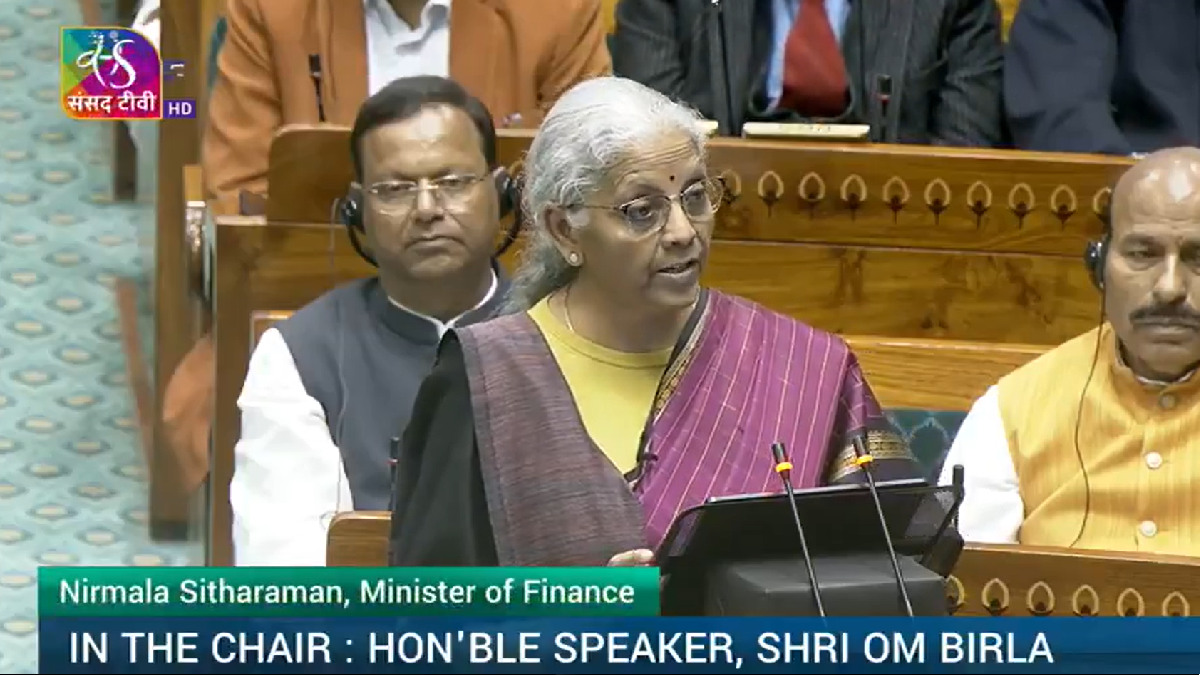
Next week in the run-up of Union Budget 2026, the Indian middle class is looking to Finance Minister Nirmala Sitharaman for a glimpse of a “taxpayer-friendly” budget. While the government is transitioning toward the New Tax Regime, many industry experts and salaried professionals have urged that important deductions that were once sidelined be restored. It is no secret that the goal is to simplify the tax structure and also to provide instant economic security against higher cost of living.

Among the most awaited changes would be the re-introduction of the Section 24(b) benefit under the New Tax Regime. Under this regime, homeowners who own their own self-occupied property cannot deduct interest paid for self-occupied property today. There have also been calls from commentators to return the ₹2 lakh deduction, effectively bringing the cost of owning a home down significantly for middle earners who would be expected to become homeowners and injecting much needed energy under a new tax climate into the real estate industry.
Along with housing, healthcare will continue to be a top issue. Section 80D benefits have increasingly been extended to those who file under the new tax structure. The government should encourage preventive health care by allowing taxpayers to deduct premiums of up to ₹50,000 for health insurance premiums for both themselves and their families.
Not only would this lower the cost of health insurance, but it would also mean millions of households would be more effectively avoiding the financial havoc that emergencies cause. Financial experts are also watching Section 80C and most agree that the existing ₹1.5 lakh limit is outdated.
Increasing this figure to ₹2 lakh or ₹2.5 lakh encourages all citizens to spend more on safe assets i.e. PPF, ELSS, EPF down the road. And last but not least, raising the standard deduction up to ₹1–1.5 lakh from ₹75,000 could be a lever to pad disposable incomes and boost sales throughout the nation.
Finally, the budget may respond to the needs of India’s senior population by pushing relief to the elderly. Proposals are made for special tax slabs or raising the basic exemption limit for retirees exclusively under the new scheme. If both are done so, taxpayers will save ₹60,000 to ₹7.5 lakh a year in savings from one income category.
Essentially, Budget 2026 can recast the tax regime as simplified (with less complexity) and in point of fact, “beneath the surface” also good for the “backbone” of the economy.





Comments
Leave a Comment