Google DeepMind employees have raised concerns about the company’s internal AI-assisted hiring process and warned some job-seeking candidates that their CVs can be screened out and/or take too long to reach the people responsible for recruitment. The concerns mirror a growing tension in the technology sector: while companies are now using artificial intelligence to streamline recruitment processes, AI researchers working in these organisations may not be comfortable using automated systems to evaluate candidates.
According to a report by Bloomberg, Google DeepMind’s AGI Safety and Alignment Team asked candidates applying to certain positions to fill out an additional form alongside their regular job application. The purpose of the form was to make sure that applications reached a human member of the team for review instead of just relying on the company’s standard recruitment systems.
The document warned that Google’s application system had a “non-trivial probability” of failing to properly screen a CV and delaying its arrival with the hiring team. For candidates competing for highly specialized AI jobs, a delay or incorrect screening could prevent a very qualified applicant from being considered.
The guidance is particularly interesting as it is from a team that is working on some of the most cutting-edge areas of AI, the report said. Google DeepMind has been at the centre of the company’s efforts to develop more powerful AI systems and researchers at its own research center at DeepMind are concerned about automated recruitment.
DeepMind Team Encourages Human Review
The additional form appears to have been designed to make the candidates directly connected with the team's human reviewers. They were recommended in the report that applicants submit their information separately so that a member of the team could personally look at their application.
The guidance also apparently contained a note that advised applicants not to share the document widely. That detail indicates the form was intended as an internal workaround or team-specific recruitment technique, not a general alternative to Google’s official hiring process.
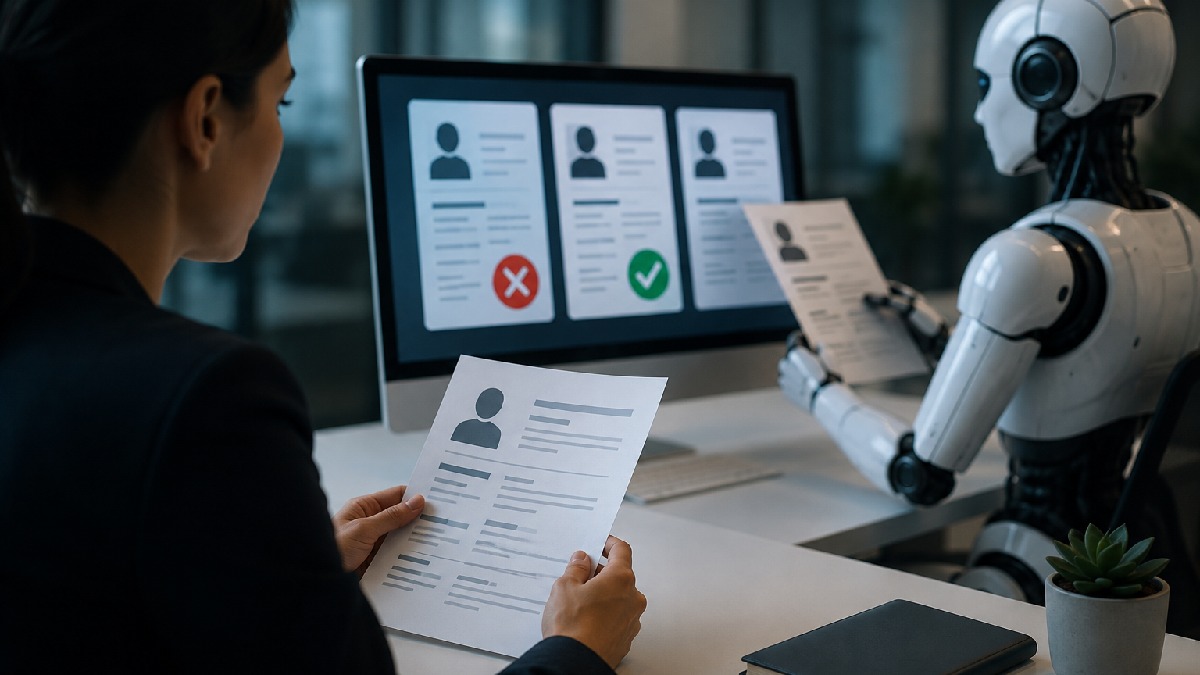
The situation begs the question of the role of AI in recruitment. Automated screening tools can help companies cope with huge numbers of applications, identify skills and organise candidates more efficiently. But if they fail to spot unusual career paths, non-standard CV formats, specialised experience or qualifications that don’t fit into the usual pattern, they can come up short.
For the most technical applicants who are in a very high position, this could be a big issue. A candidate may have experience that is very relevant for a job but they cannot use the exact terminology and formatting that an automated system expects from them. If an algorithm evaluates an application and considers it before a human recruiter sees it, that person could lose a chance to have their true qualifications recognized.
Google Rejects the Suggestion of Shortcuts
Google rejected the suggestion that its recruitment systems improperly reject qualified applicants. Bloomberg quoted Google DeepMind as saying that it is interested in hiring the most qualified people.
The additional form was created to connect applications directly to the relevant team instead of relying entirely on the normal recruiter review process, they said. The form does not provide applicants with an easier route into Google, the report said.
"There are no shortcuts to getting hired," the representative said.
That distinction is vital. Our concern is not necessarily that Google’s recruitment technology is purposefully excluding qualified candidates. But the concerns are indicative of the broader problem of the limitations of automated systems and the need for human oversight of decisions that affect careers in a big way.
Researchers Also Warn Against AI-Generated Applications
Notably, DeepMind team guidance seems to go beyond the concerns about automated CV screening. The applicants were also warned not to rely too heavily on large language models.
The additional form reportedly told candidates that a real human would read their responses and members of the team had gotten tired of reading AI-generated answers because many of them sounded similar.
This is another emerging challenge in modern recruitment. As generative AI tools become more capable of producing polished cover letters, application responses and professional summaries, recruiters are going to encounter a lot of applications that use similar language and structures.
An application that is technically flawless may not convey to the candidate what makes them unique. For teams hiring researchers and engineers who are looking for a creative, independent thinker and problem-solving approach at work, generic AI responses can render it difficult for applicants to stand out.
The Bigger Problem With AI-Powered Recruitment
The situation at Google DeepMind is a symptom of a much wider topic about AI in employment. Automation is increasingly being used in companies to manage recruitment because they are able to process applications at a scale that human recruiters would not be able to handle in their own right. But efficiency does not automatically guarantee fairness or accuracy.
AI systems learn from data and work according to programmed or learned patterns. If that pattern does not capture the qualities a hiring team is looking for, applicants may be overlooked. Another risk is that the knowledge of how automated systems work will be used to optimize their applications for algorithms rather than to present an authentic picture of their skills.
Human review can therefore be of particular importance, particularly when more specialized roles are involved and experience cannot always be reduced to keywords or standards of qualification.
The warning from Google DeepMind researchers is therefore significant not because it indicates that AI hiring systems are inherently unreliable, but because it shows that even teams who are working on AI development know that human judgement is important.
With artificial intelligence becoming more and more an integral part of recruitment, companies may find it difficult to strike a balance between automation and personal evaluation. AI can help recruiters manage large volumes of applications, but human reviewers will still be necessary to help in context, find unusual talent and ensure that the most promising candidates are not lost in the screening process.
For job seekers, the same lesson is as applicable. AI can enhance an application, of course, but a genuine CV and a personalised message could be more valuable than just a polished, generic text. And the hiring process still relies on people deciding whether the candidate has the right skills, imagination and experience to do the job.