Google DeepMind has developed Gemini Robotics 2, a new family of AI systems that will help extend humanoid and industrial robots’ capabilities. The new AI system can help robots to move in the body with more accuracy, plan complex physical tasks, and even work with other robots, an immense step forward for intelligent robotics.
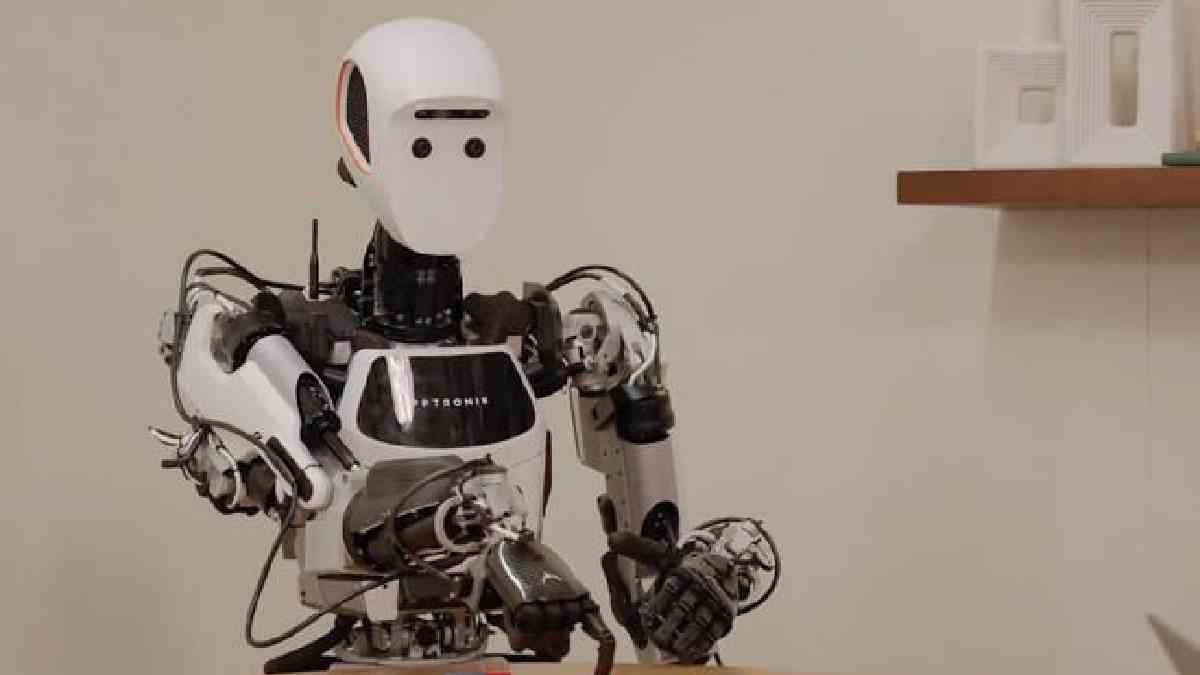
Unlike previous robotic AI systems that focused on tabletop tasks or robotic arms, Gemini Robotics 2 extends control to an entire humanoid body. Robots powered by the technology can walk, bend, balance, reach for objects, and perform coordinated movements using both arms and hands.
Google presented the technology in a launch with Apptronik's Apollo 2 humanoid robot and dual-arm robotics. Apollo 2 successfully followed verbal instructions to move to a table, pick up a watering can, and put it on the bottom shelf of a storage unit. While the demonstration showed impressive autonomy, Google noted that more movement speed still needs to be achieved before robots can be widely used in homes or factories.
Three AI Models Power Gemini Robotics 2
The Gemini Robotics 2 family consists of three AI models that are specialized in different aspects of robotic intelligence.
The flagship Gemini Robotics 2 model is a Vision-Language-Action (VLA) system that interprets camera input and spoken or written commands into physical actions. That allows humanoid robots to understand instructions and conduct complex movements from walking to grasping delicate objects.
The second model, Gemini Robotics ER 2, is the robot's reasoning engine. It analyzes the environment, communicates with humans, develops task plans, monitors progress, and continuously adjusts actions until the assigned work is completed.
The third model, Gemini Robotics On-Device 2, is designed to be run directly on robot hardware without reliance on cloud computing. Developers can adapt it to a new two-arm robot with less than 200 training examples and only a few hours of fine-tuning, Google says.
Gemini Robotics ER 2 is currently available via the Gemini API and Google AI Studio in private preview, and movement and on-device models are available to selected early-access partners.
Advanced Hand Control Enables Delicate Tasks
Gemini Robotics 2 has an advanced hand manipulation capability. The AI can control the five-fingered SharpaWave robotic hand (22 degrees of freedom), enabling robots to do things that require extraordinary dexterity.
Google showed robots tying knots, sealing ziplock bags, and handling delicate objects with great precision. The system also supports conventional two-finger robotic grippers. The AI, with the Franka Duo robotic platform, successfully packed objects into tight spaces (with precise force control, timing, and positioning).
Real-Time Task Monitoring and Faster Decision-Making
Gemini Robotics ER 2 continuously monitors task execution through live video analysis. It divides work into multiple stages so robots can check if they have completed a task correctly and decide the next action without unnecessary pauses.
According to Google, the system achieved 57.4% accuracy in task-progress classification and 91.3% accuracy in detecting the precise timing of events by an average error of less than one second. Also, it is claimed that the company's planning process is four times faster than large AI models evaluated internally.
Can Robots Work Together?
Collaborative robotics is one of the key innovations in Gemini Robotics 2. Different robots can communicate and split responsibilities based on their strengths. For example, a wheeled robot can scan an environment to see what it is and give the tasks of lifting or handling objects to a humanoid robot or robotic arm.
Google demonstrated this feature with Apollo 2 and the Franka F3 Duo robotic platform, with both systems successfully working in concert to complete a shared assignment.
Safety Remains a Priority
In recognition of the need for safe human-robot interaction, Google introduced the ASIMOV-Agentic benchmark as a test tool that is aimed at assessing whether robots can read unsafe instructions, identify difficult tasks, and call for help if needed.
Gemini Robotics ER 2 can also detect nearby people and immediately halt a robot's movement if someone comes too close, reducing the risk of accidental injuries.
Even if widespread commercialization is still a long way off, Gemini Robotics ER 2 represents one of Google's most significant robotics advances and will see the robotics industry move closer to intelligent machines that can protect humans in homes, workplaces, warehouses, and manufacturing facilities.