
Spain is mourning after a devastating high-speed train collision left at least 69 dead and emergency workers are still combing through mangled carriages for victims and possible survivors.
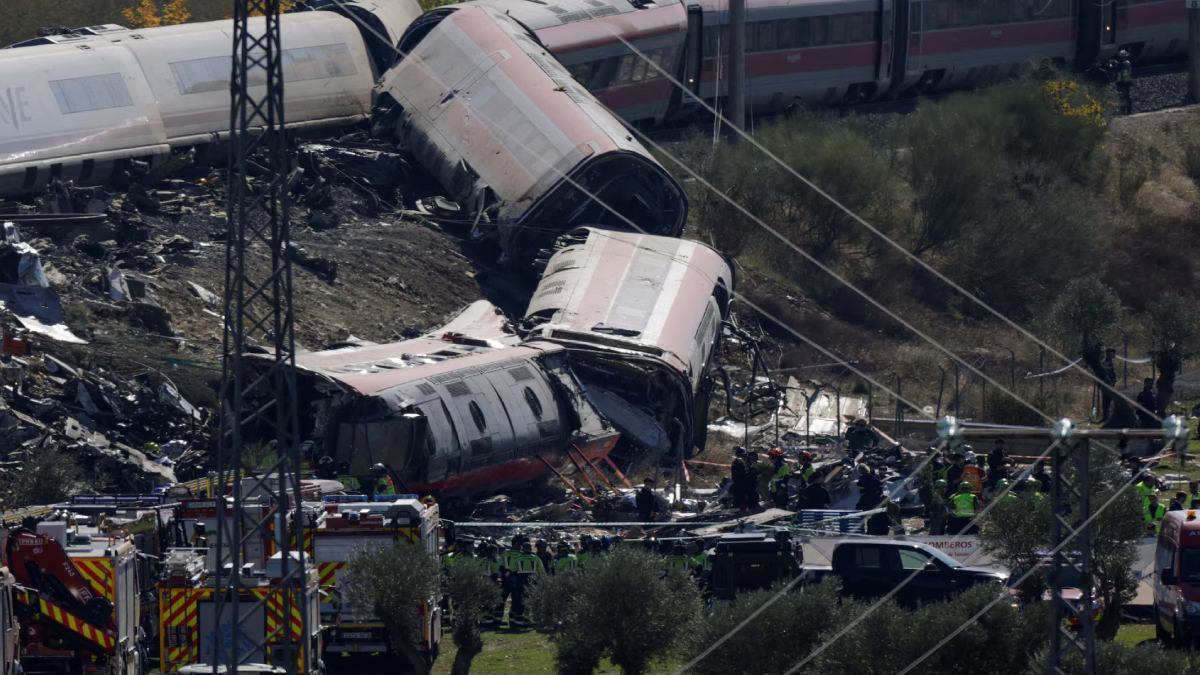
Heavy cranes, search dogs and specialist tools have been set up to reach damaged parts of the wreckage in the central Spanish region of Castilla-La Mancha as the number of deaths rises.
Spain will open three days of national mourning from October 29 to October 31, 2026 to honor those who lost their lives.
The collision occurred on October 28 near Urda in the province of Toledo south of Madrid. Initial reports by sources say a high-speed train operated by Spain’s state-owned Renfe hit the rear of a stationary train operated by private company Iryo.
The damage to carriages and their parts were scattered around the accident site. Emergency services rushed to the site to rescue passengers, give medical care and search for people trapped beneath twisted metal and collapsed carriage parts.
The rescue efforts have been especially hard because some of the wreckage is so difficult to access. Cranes are being used to help lift heavy parts of damaged carriages and trained search dogs and specialist teams are searching for victims.
#SpainTrainAccident | Spanish rescuers search for victims as train crash death toll rises to 69 Rescue teams use cranes, dogs in search for survivors. Spain declares three days of national mourning. #Spain #SpainTrainCrash https://t.co/elMfd5UrnN
— DD News (@DDNewslive) October 29, 2026
Police, military personnel, firefighters and other emergency workers have been working since the first day of the search and rescue operation.
Helicopters, drones and search dogs are going to be operated, and more than 800 military and police were involved, as the search, a government statement said. A safe zone around the crash site has been established where rescue teams can safely work and investigators can assess the evidence.
The tragedy left families desperate for information on their loved ones travelling on trains. There are facilities in Madrid, Toledo, Córdoba and Seville to provide DNA samples to help identify victims.
Support services have been organised to help survivors and their families cope with the emotional toll of the disaster. Local people have provided food, water and other essentials.
Spain’s three-day national mourning period reflects the loss and shock felt across the country. Public buildings have lowered flags, official events and public activities have been cancelled or reduced as a gesture of respect.
The collision has been described as a high-profile collision and the government has announced that, if there was any negligence or safety failures, this would be investigated.
The reasons for the collision are now a central focus of the investigation. Spanish Transport Minister Óscar Puente has said a part of the railway line had a signalling and control system breakdown before the accident.
Some trains were stopped after the system failed but Renfe services continued their journey. The reasons for that decision are being investigated and why the train continued to run even as it was stopped.
The situation is extremely concerning to authorities, but the whole chain of events and any individual responsibility will have to be established through a thorough investigation.
The accident has also raised concerns about railway safety as the second major high-speed rail collision was reported in the country in the past month. In January 2026, there was another crash near Adamuz in southern Andalusia that killed 46 people.
But although both tragedies have put pressure on the country’s railway system and safety system, officials have said there is no immediate evidence of links between them. The latest collision is only going to cause officials to review maintenance, signalling systems, operating decisions and emergency safeguards in the railway system.
As rescue workers continue their search, they are working hard to find each and every victim, find out where the missing people are and give families the right information.
The number of people affected by the disaster might be clarified as the wreckage is examined and official data is reconciled. Technical data, the communications between railway control staff and train operators and physical evidence from the site will be key pieces in the investigation.
For survivors and relatives, getting answers and help is the first thing to see and answer. Psychological assistance, medical treatment and family liaison services are part of the response and recovery process.
The tragedy also has stirred up calls for transparency so that the public can know how the collision occurred and what steps can be taken to prevent a similar collision from happening in the future.
The death toll of 69 is a tragedy not only for Spain but also for the railway system. These three days of national mourning will now be spent on the recovery of the victims, families and the investigation of what happened. And that’s going to be the question people will be asking about, not only in terms of accountability but also how high-speed rail can be trusted.






Comments