Google will launch a small satellite next week as part of its ambitious Project Suncatcher to test space computing in the future. It is the first step in testing whether artificial intelligence data centers could ever be created in space, and it is an area that has picked up momentum in recent years as demand for AI computing power is still high.
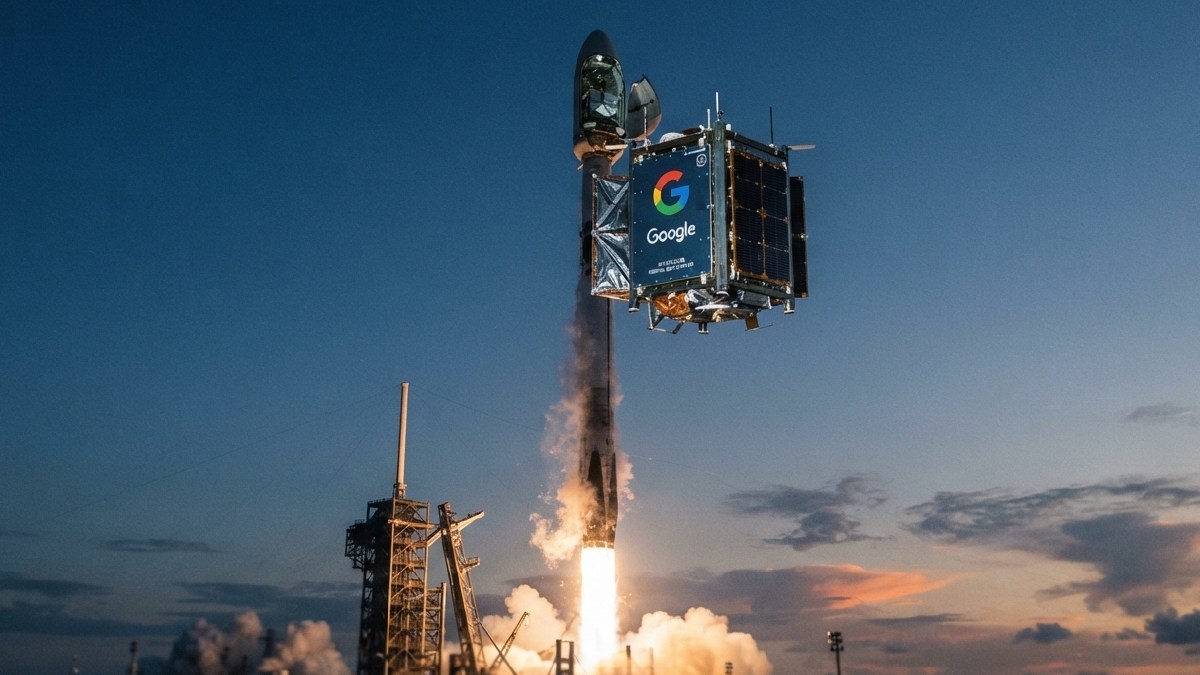
The refrigerator-sized satellite should be able to perform computing as well as a single server. According to The New York Times, the satellite is currently undergoing stress testing at a laboratory and has a plan to launch on October 1 aboard a SpaceX Falcon 9 rocket. The spacecraft is expected to remain in orbit for as long as six years before it will finally re-enter and burn up in Earth's atmosphere.
Google’s Project Suncatcher is based on the idea that space could offer an almost continuous supply of solar energy. Unlike data centres on Earth which depend on electricity generated through conventional grids and renewable infrastructure, satellites in suitable orbits could potentially receive sunlight for much longer periods.
This could provide a new source of energy for the enormous computing requirements associated with artificial intelligence.
The project also places Google alongside other big tech and space companies that are exploring orbital data centres. SpaceX and Blue Origin already have discussed moving computing infrastructure to space in the past. Elon Musk and Jeff Bezos have also dreamed of specialised satellite constellations that could support AI computing and other high-performance algorithms.
But Google's current mission is less about an experiment than a fully operational orbital data center. Google senior vice president for research James Manyika said he does not expect anything useful from the technology to happen in the next few years. And the new satellite will provide valuable information about how effective the concept may work in space.
The growing interest in space-based data centres comes at a time when traditional data centres are increasingly under scrutiny for their environmental impact. AI systems rely on more powerful computing resources and therefore more electricity, cooling systems and other material needs.
Large data centres can also consume a lot of water to cool them and their construction and operation can further exacerbate the environmental issues.
Some computing infrastructure away from Earth could theoretically reduce some resource pressures. Solar power is abundant in space, and orbital facilities would not require the same land-based infrastructure as conventional data centres. However, this does not mean that space-based computing is automatically environmentally friendly or technically practical.
One of the biggest challenges in space is the harsh environment. Low-Earth orbit satellites face the danger of orbital debris that can travel at a very fast speed. A collision with a very small piece of debris can damage sensitive computing equipment. An orbital facility -- unlike a data centre -- cannot easily be repaired or upgraded by a technician.
Radiation is another major concern. Space-based electronics are exposed to radiation that can affect sensitive components over time. Computing equipment also generates heat, which is another engineering problem: cooling systems for terrestrial data centres can’t simply be transported to space without significant changes in the design of cooling systems.
We believe that scaling the idea could be even more difficult. A useful AI data centre would require much more computing capacity than a single experimental satellite can provide. A huge orbital network could be composed of hundreds to thousands of satellites, and there would be another challenge in the form of launch costs, communications, maintenance, orbital traffic and space debris.
There are also questions of the broader environmental consequences of launching and maintaining huge satellites. Rockets produce emissions on the way up and the eventual disposal of a very large number of spacecraft could be difficult. Scientists and environmental experts have also raised questions about the long-term implications of increasing activity in Earth's atmosphere and orbit.
Google’s launch is important not only since it creates a functioning data center in space immediately, but also because it represents a first step in testing whether orbital computing will be a real technology. The experiment could provide valuable information on solar power, computing efficiency, communications, thermal management of satellites and satellite survivability.
If the technology is viable, space-based computing might eventually become part of the infrastructure supporting the next generation of AI. At present, however, Project Suncatcher is still an experiment and many technical, economic and environmental issues need to be addressed before orbital data centres can become the norm.