
OpenAI has unveiled its first hardware device that can be used by software developers the Codex Micro keyboard designed to improve software coding workflows using AI.
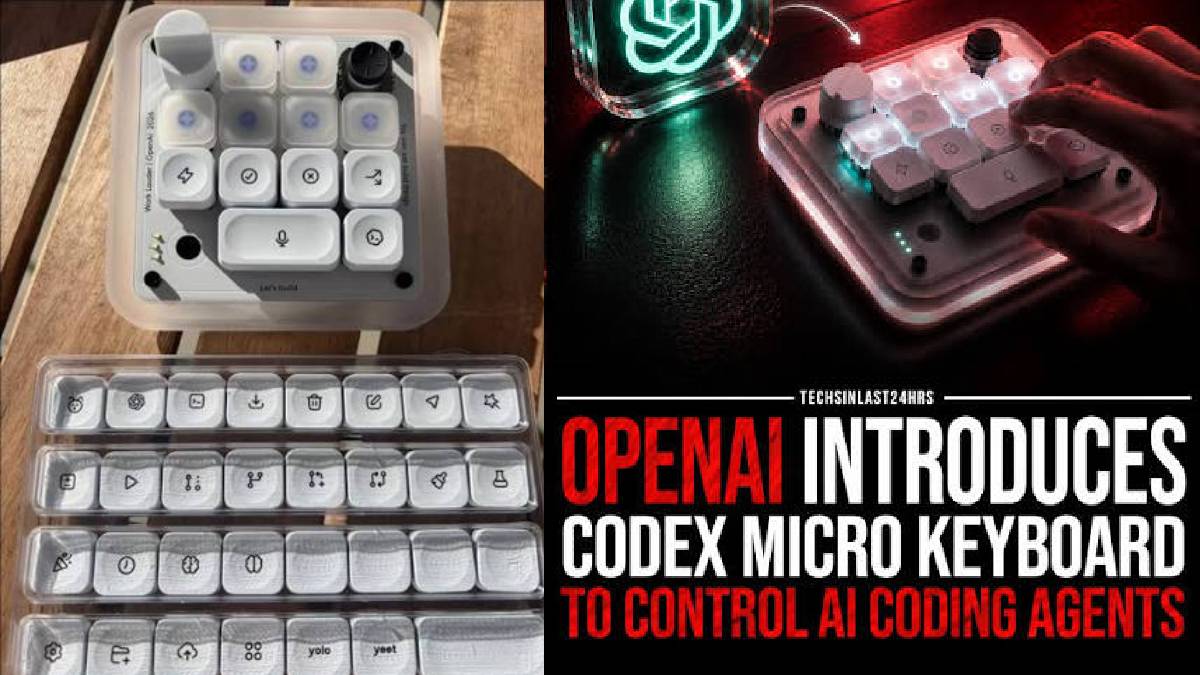
The launch is a watershed move for OpenAI beyond software, bringing artificial intelligence to software developers’ everyday lives through new hardware.
The Codex Micro keyboard is designed for programmers who frequently use AI coding assistants. Instead of being hit by browser tabs, applications, or keyboard shortcuts to access AI-based coding features, the user can use physical keys for coding. The idea is to help coding to be quicker, to prevent interruptions, and to be more productive.
The small keyboard has programmable buttons to trigger AI functions like code generation, explaining complex snippets, debugging errors, writing documentation, and suggesting improvements. Developers can customize these shortcuts based on their own workflows and the device is suitable for different programming languages and development environments.
As AI coding assistants become more popular, software engineers turn to them to automate tasks and speed up software development. The Codex Micro keyboard will reduce any need for programming with one-touch access to AI capabilities without leaving the coding environment.
Moreover, the hardware is part of the trend of AI-first peripherals, which are more physical than computer software, so that physical devices are based on artificial intelligence and not simply computing. The keyboard is not just a source of input but a gateway to AI-powered development tools.


Industry experts believe specialized AI hardware will become much more common in the years to come as companies move to integrate generative AI more naturally into professional workflows. Developers, content creators, designers, and business professionals will eventually see similar dedicated devices tailored to their needs.
For OpenAI, the Codex Micro keyboard is more than new it is an indication of the company’s goal to extend its ecosystem from cloud-based AI services. By marrying hardware and software, OpenAI aims to make AI for developers a more seamless experience.
The announcement also demonstrates how the use of AI in software development continues to develop. Modern AI tools can generate boilerplate code, identify bugs, translate programming languages, and explain unfamiliar codebases in seconds. A dedicated keyboard reduces the friction in accessing these capabilities.
Although the Codex Micro is aimed at professional developers, students, coding enthusiasts, and engineering teams might also benefit from faster access to AI-powered programming help. That is because it is so small and can be used for desktop setups, travel, and as a hybrid work environment.
As the competition for AI software development tools increases, those companies are more concerned with usability than more features. The Codex Micro keyboard is a reflection of this movement in terms of convenience, speed, and workflow efficiency.
Whether this is just the beginning of an AI-powered hardware lineup will be a different breed of hardware we can expect from the future, but the Codex Micro shows how artificial intelligence is slowly moving from software applications into the everyday work that people use every day.
For developers using AI-assisted programming as a future to code faster and more intuitively, this new hardware could be a step forward.









Comments