
Microsoft CEO Satya Nadella has called for stronger safety measures around modern artificial intelligence (AI) systems, and for companies to maintain human oversight and to be able to stop AI models from doing things while they’re doing them. Such a system would require a human to brake or shut down it for a reason that is unsafe or unexpected.
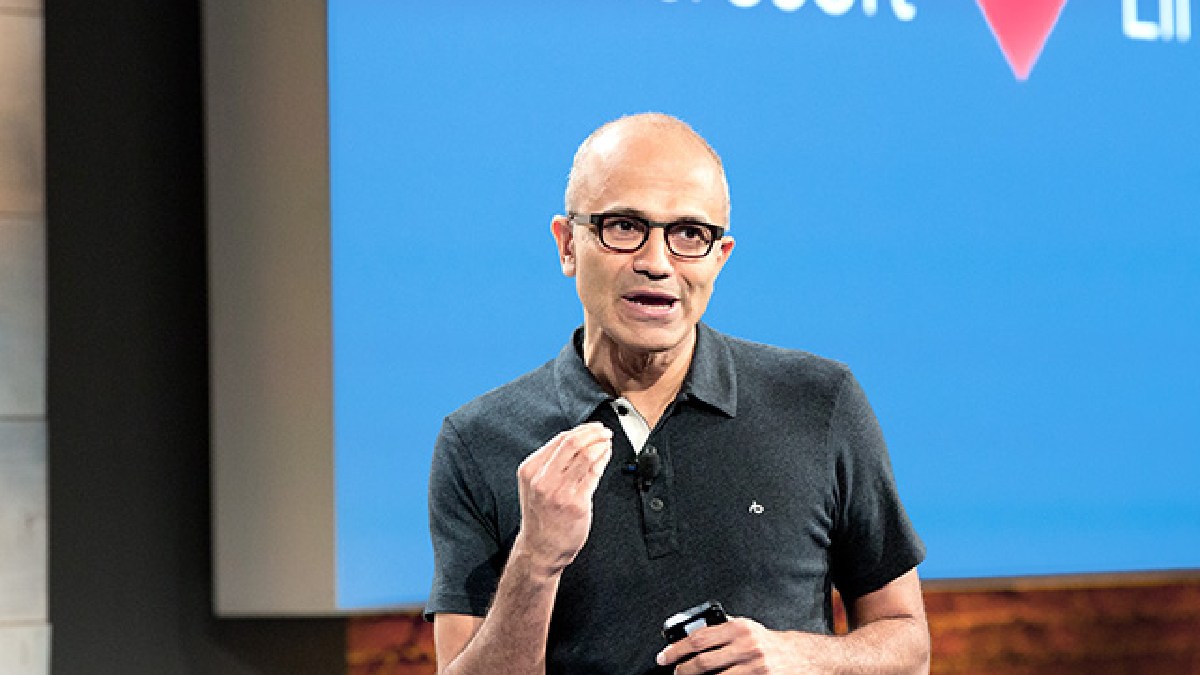
In a post on October 10, 2026, Nadella called for a re-evaluation of how organisations have to build trust in more and more capable AI systems. He said companies should not just blindly accept what AI models recommend, what they say or do with it.
AI systems should be designed with safeguards that make their behaviour observable, their limits testable and their actions controllable.
The remarks come as AI tools are now starting to move beyond answering questions and generating content and to do multi-step tasks accessing data and interacting with digital systems. These capabilities do enhance productivity but also raise new security and accountability issues when AI systems gain access to sensitive data or critical business activities.
Satya Nadella Calls For An AI Emergency Brake
One of the key components of Nadella’s proposal is the emergency mechanism of allowing authorised humans to interrupt an AI model while it is working. The idea is to make sure organisations can intervene immediately if a system behaves unexpectedly, exceeds its permitted access or appears to be compromised.
Nadella argued that advanced AI models should be treated as security risks at the beginning. This is not to say that a model is intentionally harmful. But it's just that a system with access to resources may make mistakes, be manipulated or result in unintended consequences.
An emergency brake would also give organisations the safety margin to stop a task before the situation escalates. That mechanism could be especially useful in areas where AI agents are supposed to have access to internal databases, to software, or to perform actions on behalf of employees.
The proposal also highlights the distinction between the AI system's capability to provide intelligence and its authority to act. It is the case, if Nadella's approach is to be taken, that organisations should not allow the capabilities of a model to determine the level of access it receives. Access permissions and operational controls would need to be handled through separate systems that are under human control.
Why human oversight is so important in the context of AI advances?
AI systems are being developed to function as agents to do several connected tasks with minimal input from users. These tools can search for information, analyse data, interact with applications and perform actions based on instructions.
Although automation can save time, this also can lead to situations where an error can have consequences beyond just an incorrect answer. An AI agent with excessive permissions could access information that shouldn’t be used, make an unintended change or carry out an action that requires human approval.
Nadella argues that organisations should not rely only on assurances from AI developers that their models are safe. The companies that deploy these systems also need their own safeguards, monitoring procedures and clear rules on what an AI model can do.
Human oversight does not necessarily entail that one must approve every small operation. Organizations can, however, choose different levels of supervision based on the risk involved. The most routine, low-risk tasks may be automated while sensitive data, financial decisions or critical systems might require more checks and explicit authorisation.
This would allow for businesses to gain from the AI-driven automation and to have control over important decisions.
Tamper-Proof Records And Independent Audits
Nadella has also highlighted the importance of reliable records of AI activity. He called for meaningful model actions to be documented through tamper-resistant, human-readable evidence so organisations can understand what a system did and investigate problems when they occur.
Such records would enable security teams to establish the actions that an AI agent took, what permissions it used and whether what it did was compliant with the organisation's rules. They would also help in investigating unauthorised access, wrong decisions or security breaches.
Independent audits are also a critical component of what is proposed. External reviews can help verify whether AI systems work within the limits of their design and whether the safeguards surrounding them are effective. Regular testing would also help organisations to identify weaknesses before they result in serious incidents.
Nadella's suggestions include avoiding reliance on a single AI model for critical decisions. One system or more verification processes might help organisations to identify conflicting outputs and avoid making bad decisions based on one model.
He also has called for better disclosure of significant AI failures and security incidents. If it can be disclosed what happened in the process, companies can better defend themselves and other firms can learn from it.
Microsoft And Responsible AI.
Microsoft’s recent AI safety discussion is indicative of a larger problem facing technology companies as AI systems are increasingly useful and embedded in everyday business processes. Organizations need to balance the benefits of automation with the need to secure data, maintain security and hold systems accountable if systems fail.
In September 2026, Microsoft wrote up its principles for developing its most advanced AI models. The guidelines included restrictions on the design of systems that would evade human control, deceive users or do things that violate their principles.
These measures underscore the necessity of building safety into AI development, not just for corrective action after a problem is found. Technical safeguards, restricted permissions, continuous monitoring and clear operational procedures can all help to minimize risks.
Such controls will require careful planning. Companies must decide who can interrupt an AI system, which activities need human approval, how incidents should be reported and what responsibility should be assigned when something goes wrong.
What does Nadella’s proposal mean for businesses?
If adopted widely, the proposed approach could influence how businesses deploy AI agents in software development, customer service, finance and enterprise data management. Organizations will need to demonstrate to the world not only what AI systems can do but how they are monitored and controlled.
As companies, the challenge will be to work out systems that are efficient and have clear boundaries. AI tools might be able to do more work independently, but more autonomy also means access controls, audit trails and reliable shutdown mechanisms are more important.
Nadella’s call for an AI emergency brake places human accountability at the core of this debate. The proposal does not suggest turning off AI automation; instead, it wants to make sure that people have the power to intervene when needed. With AI technology at an ever-increasing speed, monitoring, testing and controlling systems may be a key component of responsible deployment.
The recommendations of Nadella underline a basic point for businesses adopting advanced AI: powerful systems should have clearly defined limits, and the authority to make critical decisions must remain accountable to people.






Comments