
As Saurav Das and Ashutosh Ranka remain in judicial custody in Tihar Jail after protests at Jantar Mantar, their supporters have petitioned the Delhi High Court to challenge their detention. They were arrested for allegedly entering the barricaded protest site, which was recently removed from the list of demonstration sites. With the Delhi High Court on its Dussehra vacation, their lawyers asked for a fast hearing, but no hearing was held on the night of October 20.
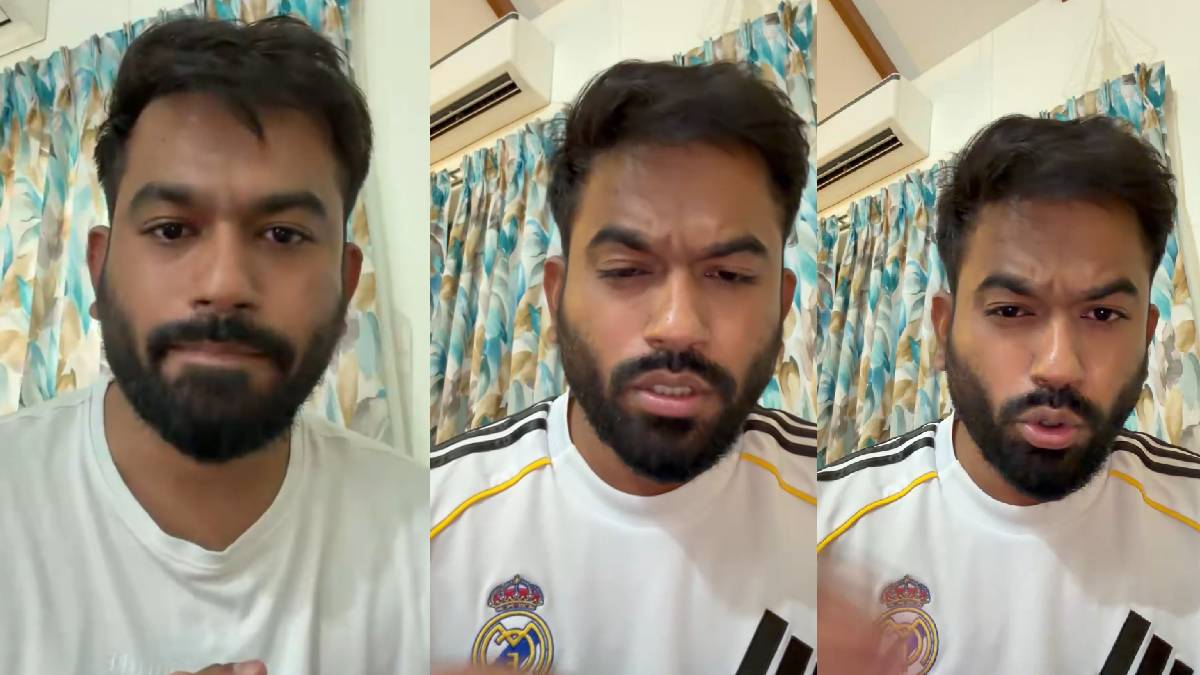
On 20 October, Cockroach Janata Party (CJP) founder Abhijeet Dipke posted a video message lasting around 16 minutes and said he was sorry for the detention of his colleagues and addressed the party’s supporters. Dipke seemed to be missing his fellow leaders and urged his supporters to stay away from protests during the festive season.
Dipke told CJP supporters that they should spend time with their families, reminding them that their loved ones were not responsible for the situation that had led to police action, harassment and detention. He urged them to celebrate the festivals with their families while remembering that Saurav Das and Ashutosh Ranka could not do the same.
He said that he had spoken to their families, and they had told him to stay strong, and that the two leaders would come out smiling.
Dipke asks for peaceful protest.
Dipke also appeared to push back against comparisons between the CJP movement and violent protests elsewhere, including demonstrations in France, Nepal and Bangladesh. Saying his principles were Gandhian-like, which meant CJP supporters would be calm, comply with arrests and continue their voices against the government.
His message seemed to be differentiating between peaceful dissent and violent confrontation. But criticising the manner in which people protest against their governments can be insensitive and idiotic because the circumstances that drive public anger vary considerably. Especially Nepal protest in which the police open fired with lethal weapons on kids, killing around 20 of them, the least we can do is not criticise how the Nepali people reacted to that.
However, Abhijeet Dipke’s call for peaceful resistance may be understandable, especially when protesters could be detained. And yet he has a long-standing struggle to set himself apart from the rest of the world’s protests and is not addressing genuine concerns instead, it often comes across as if he is trying to counter criticism from BJP trolls online or trying to appease a section of people who would never support him.
These supporters of the state seem to hold young protesters to standards of restraint and discipline higher than the ones they keep for political leaders. Peaceful protesters are expected to remain composed under pressure, but the same standards of accountability aren’t being applied to those exercising state power.
When do people go to protest with government permission?
CJP volunteers’ detention has also reopened a wider debate about the right to protest in a democracy. It is also a question of whether protests should be allowed to take place before the government, or even in some of the designated areas as the government has decided where demonstrations should take place and when. These are things that naturally arise about how citizens can effectively protest.
If every protest takes place only in designated areas and with permission from the authorities being challenged, how much pressure can citizens realistically sustain on the government? Would it even remain an effective form of dissent if the very institution being criticised could determine when, where and how that dissent is expressed?
The issue isn’t that all restrictions are illegitimate. Public safety, access and law and order are legitimate considerations. The question is rather whether restrictions are applied fairly and proportionately or whether they can become instruments of political opposition.
Would India have been free if every protest against British rule had required the permission of the Raj? Its comparison is not exact, but it helps understand why the freedom to challenge authority is a necessary pillar of democratic life.




Comments
Leave a Comment