
One rejection can change business history. Nearly five decades ago Infosys co-founder N.R. Narayana Murthy applied to Wipro for a job and was rejected by its chairman Azim Premji.
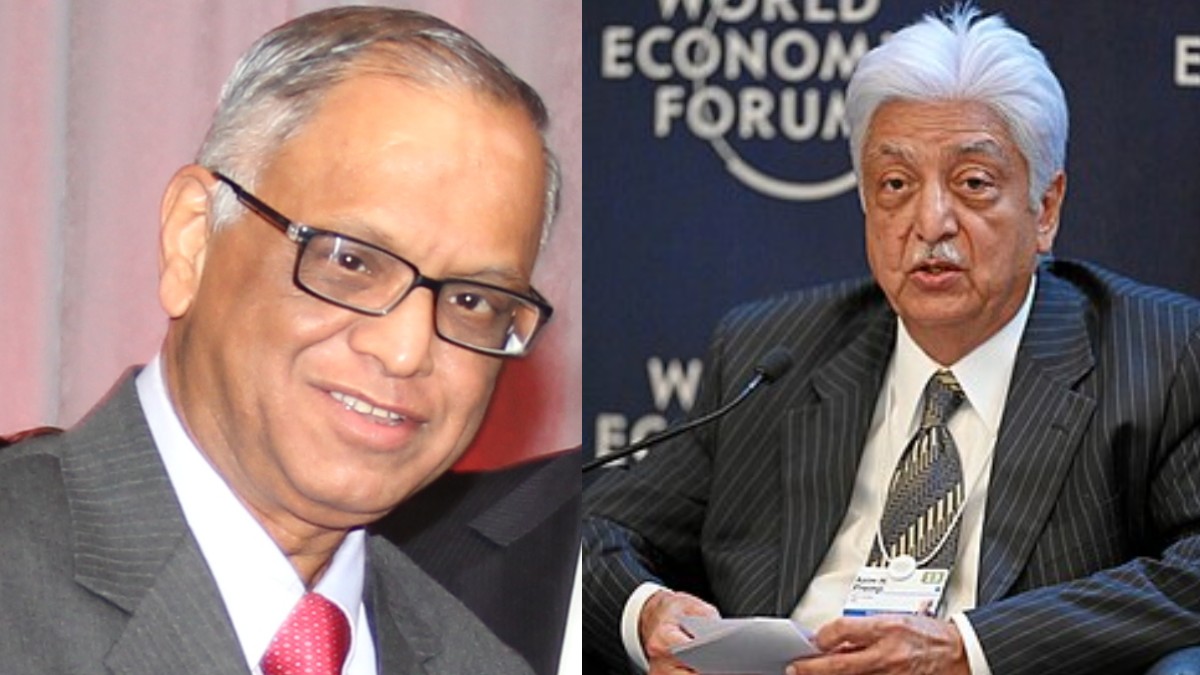
What seemed like an ordinary hiring decision in 1979 turned into one of the most interesting stories in India’s technology industry. Murthy went on to set up Infosys in 1981 with six other engineers and just ₹10,000 of his wife Sudha Murty’s money (initially).
Infosys and Wipro are among India’s best known IT companies today so it’s particularly interesting that one company once refused to hire the founder of its future competitor. It was in 1979 when Murthy was looking for a change in his professional career. His friend Prasanna (who was part of Wipro’s HR team) told him that he should head the software group at company’s proposed technology business.
Prasanna got Murthy and Premji to meet each other at Wellington Club in Mumbai. The meeting didn’t lead to any job offer as Murthy later said “I did not meet Premji’s expectations then and so I wasn’t selected”. It wasn’t just another job application, it was about leadership in Wipro’s technology business (when India’s software industry was still nascent).
The story became well known when Murthy spoke about the rejection in an interview with CNBC-TV18 in January 2024. He said Premji had come back and admitted he had made that decision but added it was one of the biggest mistakes he had ever made.
Murthy remembered Premji’s words with humour and said “the future could have been very different if I had joined Wipro.” In a joint conversation earlier with The Economic Times Premji also talked about the meeting saying Wipro didn’t think Murthy was high powered enough for them at that stage. This exchange between two business leaders is one of the few times they got to see what the decision meant long term. Neither could have known at the time.
Two years after the Wipro rejection Murthy took his first big step towards entrepreneurship. In 1981 he joined hands with six other engineers to start Infosys (Nandan Nilekani, Kris Gopalakrishnan, S.D. Shibulal, K. Dinesh, N.S. Raghavan and Ashok Arora).
The seed capital of ₹10,000 was provided by Sudha Murty who financially backed early venture. It was difficult to start a technology company in India then as computers were not easily available; funding wasn’t easy; infrastructure wasn’t there and international business opportunities were very limited. But founders had ambition they wanted to build professional software services company that could serve clients outside India.
Infosys grew gradually into one of India’s most influential technology companies. Software services, global client relationships, technology consulting and expansion of India’s IT outsourcing industry fuelled its growth. Narayana Murthy was the company’s CEO from 1981 to 2002 and later held several leadership positions.
The company became an important symbol of India emerging as a global technology services destination. Its journey from a small startup (with ₹10k) to a major multinational business is often cited as an example of entrepreneurship persistence and long-term institution building.
Wipro would go on to make its own transformation under Azim Premji. Originally a vegetable oil business it moved into information technology and became a major player in software services and consulting. It was Premji who turned Wipro into one of India’s most recognised technology companies.
The two companies eventually competed against each other in the Indian and international IT markets so that earlier meeting between their founders is an especially memorable chapter in corporate history.
Interestingly Murthy has also said that he was glad for the rejection because joining Wipro would have put him off his entrepreneurial plans. In an article about his relationship with Premji, he wrote that the rejection “allowed me to go on towards my own business ambitions”.
So this is not just a missed hiring opportunity or one that Premji later regretted. It’s also how unexpected setbacks can lead people in different directions job rejection in 1979 became part of the backstory of a company founded in 1981 while two business leaders shaped India’s technology sector in their own ways.
The story is still in the news today because it links two big names in Indian corporate history. If Murthy had joined Wipro, history of both companies would have been very different; instead a rejected application was followed by Infosys one of India’s biggest IT companies.
What started out as a career opportunity that didn’t work turned into an extraordinary example of how one decision can have consequences far beyond hiring.





Comments