
Cancer treatment can be more affordable for patients in India following a drastic revision in the maximum retail price (MRP) of hundreds of anti-cancer medicine brands. The National Pharmaceutical Pricing Authority (NPPA) has released revised prices for 543 brands and formulations with a reduction of over 90 percent for some medicines.
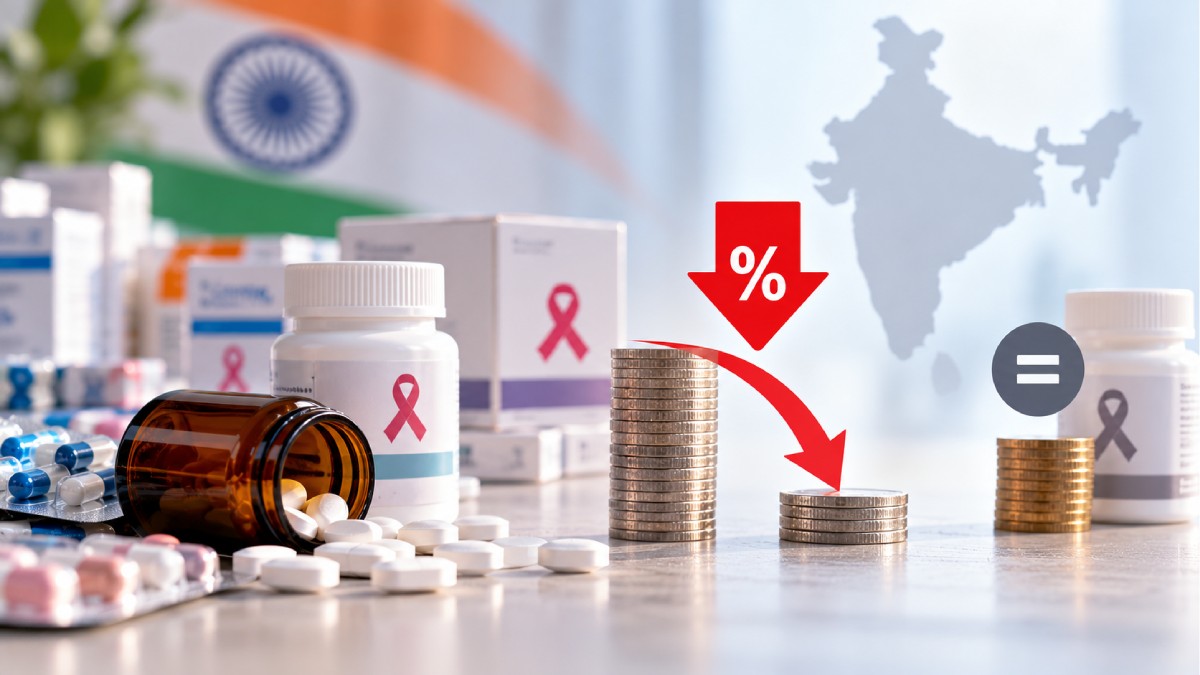
One of the most noticeable changes is Palbopro, a brand of palbociclib used for treating some forms of breast cancer. The list price of 21 capsules of 125 mg has been reduced from ₹40,421 to ₹2,720, a reduction of about 93.3%.
But price cuts are not uniform to all cancer medicines. Some very expensive drugs like Keytruda have the same listed price even after the new pricing changes. Some patients may be able to cope with the price but other treatments could still cost much more.
The revised prices are expected to take effect on November 9, 2026.
Cancer Drug prices: What has changed?
The recent price revision follows the NPPA's decision on October 17 to introduce trade margin rationalisation for 137 identified non-scheduled anti-cancer drugs.
Under this measure, trade margins on the identified medicines are capped at 30% of the maximum retail price. Trade margins are the mark-ups added by distributors, stockists and other intermediaries as medicines move through the supply chain.
The objective is to limit margins and to make selected cancer medicines more affordable. Manufacturers were required to submit revised prices, leading to publication of updated MRPs for 543 brands and formulations.
The number of brands is higher than the number of drugs covered by the policy because the same medicine may be sold under different brand names, strengths and pack sizes.
The government had predicted that the measure could reduce prices by up to 70 percent and in this new list you can see that some products have even been reduced by more than 90%.
Which cancer medicines have become cheaper?
For several generic and biosimilar cancer medicines there have been substantial price reductions in the revised list.
Palbopro, which contains palbociclib, has seen the price of its 125 mg pack of 21 capsules fall from ₹40,421.33 to ₹2,720. Palbociclib is used to treat certain hormone receptor-positive breast cancers in appropriate patients.
Another example is Samtepa, a brand of thiotepa injection. The price of a 100 mg vial has fallen from approximately ₹80,072 to ₹7,150.33.
Other medicines have also shown significant reductions:
- Anarzole: The price of a pack of 10 tablets of anastrozole 1 mg has fallen from ₹695.76 to ₹73.
- Azacytin: The price of a 100 mg azacitidine injection has dropped from ₹6,337 to ₹1,495.04.
- Bevacizab: The price of a 100 mg/4 ml bevacizumab injection has fallen from ₹21,767.70 to ₹5,930.13 per vial.
- Enuta: The price of a pack of 28 enzalutamide 40 mg capsules has decreased from ₹6,578.20 to ₹2,232.
These examples show how the new pricing structure may drastically reduce the listed cost of selected medicines. The actual savings for an individual patient will depend on the prescribed drug, brand, dosage, treatment schedule and number of packs or doses required.
Why have some expensive cancer medicines remained unchanged?
Despite the reductions, some high-cost cancer medicines have not become cheaper under the revised list.
Keytruda, an immunotherapy medication containing pembrolizumab, is now listed at ₹2,16,500 for a 100 mg vial. Other expensive medicines like Tagrisso, Tecentriq, Darzalex and Imfinzi have also been reported to be unchanged in the revised data.
At least 65 high-cost single-source cancer medicines have not shown price reductions. Single-source medicines have relatively little competition from alternative suppliers, making it more difficult for price reductions to occur through competition alone.
The reason is the way the current intervention works. It limits trade margins in the supply chain but does not necessarily reduce the manufacturer’s original selling price. If a medicine’s current listed price is already close to the level allowed under the new margin rules, the revised measure may do little or no change.
That means that the policy can have a significant effect on some generic and biosimilar brands while leaving the prices of certain patented or originator medicines largely unchanged.
What Does the Price Reduction Mean for Cancer Patients?
Cancer treatment can involve repeated medicines, diagnostic tests, hospital visits, procedures and other expenses. Lower prices for medicines that patients need regularly may reduce part of this financial burden.
For patients who need medicines affected by the new prices, the savings could be substantial over a course of treatment. Not every patient will benefit equally because the medicines covered and the reductions available vary.
The MRP listed is also not the same as the total cost of cancer care. Hospital charges, administration fees, diagnostic tests and other treatment expenses may still apply. Patients need to look at the revised medicine price and their final bill to get a clear picture of the financial impact.
The new rates will be effective on November 9. Patients and caregivers can check the NPPA's price list or use the government's Pharma Sahi Daam app to verify the relevant MRP.
How do you check the revised price of a cancer medicine?
Patients and caregivers can take the following steps to check whether their prescribed medicine is covered by the revision:
- Check the exact brand name, active ingredient, strength and pack size on the prescription or medicine packaging.
- Look for the corresponding medicine in the NPPA's revised price list.
- Compare the old and revised MRPs for the same formulation and pack size.
- Ask the pharmacy or hospital to confirm the price from November 9, 2026 onwards.
- Before considering any alternative brand or formulation, consult the treating oncologist.
A medicine should not be changed, stopped or substituted merely because another brand has become cheaper. The treating doctor or pharmacist should confirm that any alternative is appropriate for the patient's treatment.
Will cancer treatment become more affordable in India?
The NPPA's decision is a significant pricing intervention for selected cancer medicines, especially where large trade margins had contributed to high listed prices. More than 90% reductions in some products show the potential of regulating margins in the medicine supply chain.
At the same time, unchanged prices for some of the expensive treatments show the limits of this approach. Wider affordability may also depend on manufacturer pricing, competition, availability of generic alternatives and costs charged by healthcare providers.
The revised prices could provide meaningful relief to patients using the affected medicines, but they will not reduce every cancer treatment bill by the same amount. The impact will become clearer once the new rates are in place and patients start getting medicines under the new pricing structure.







Comments