
Cancer treatment in India will be made cheaper under a new policy to limit trade margins on non-scheduled anti-cancer drugs. The move aims to lower mark-ups in the medicine supply chain and patients’ costs for treatment.
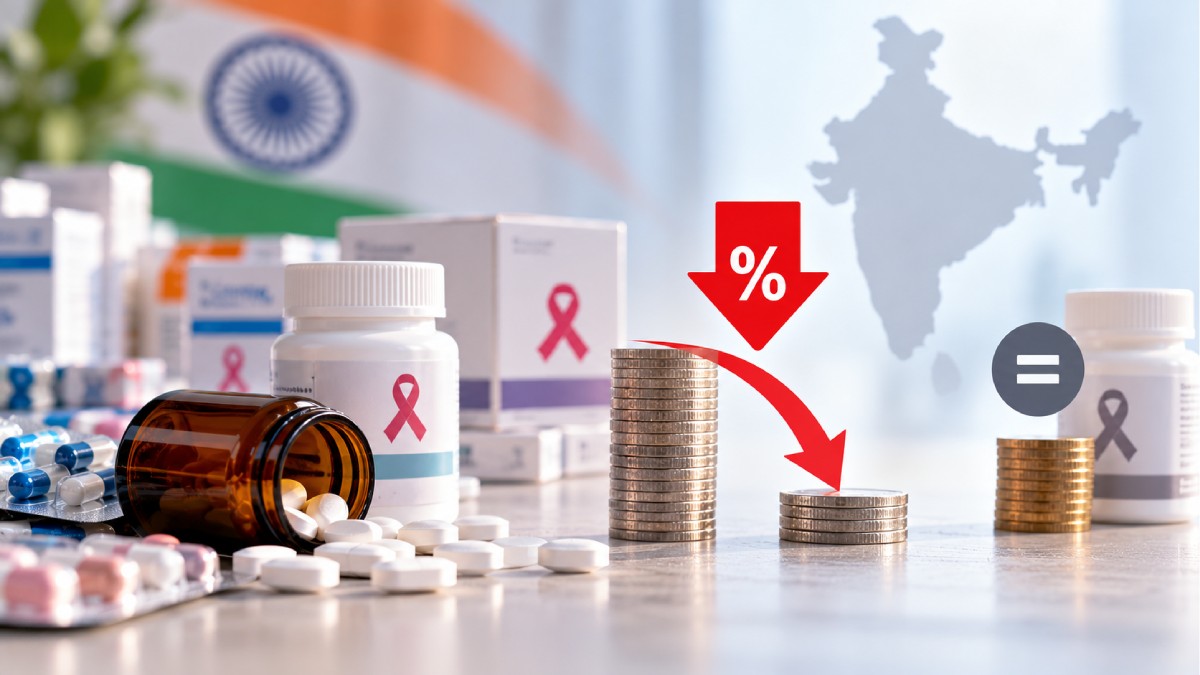
The government has also approved a cap on the trade margin of covered non-scheduled cancer medicines at 30% of the maximum retail price (MRP). The National Pharmaceutical Pricing Authority (NPPA) expects it to reduce prices by around 20% to 70% according to the existing pricing structure of individual medicines.
But price reductions will not be the same for every medicine. The final list of drugs covered by the measure still has to be completed before the NPPA issues the relevant notification.
Why is the government now targeting cancer drug prices?
Cancer treatment is a financial burden for patients and their families. It can include hospitalisation, diagnostic tests and other medical expenses to cost medicines much more.
The NPPA demonstrated that non-scheduled anti-cancer medicines carry an average price mark-up of about 170%, with mark-ups over 700% or more in some cases. Prices also vary depending on patients buying drugs from retail pharmacies, hospital pharmacies, and online pharmacies.
This new intervention will also help to control the high trade margins and increase the transparency of medicine pricing.
The measure is constructed around Paragraph 19 of the Drugs (Prices Control) Order, 2013, which allows the government to intervene in drug pricing under extraordinary circumstances and in the public interest.
The decision extends price protection for non-scheduled cancer medicines that are not already covered by the existing ceiling-price system in the government.
Which cancer medicines could become cheaper?
The proposed measure would cover non-scheduled anti-cancer medicines in several categories including branded and generic drugs, domestic and imported drugs, and patented and non-patented drugs.
According to reports, the government is looking at around 110 non-scheduled cancer medicines, including 35 patented drugs. The final list will determine exactly which medicines are covered and how the new pricing rules apply.
An expert committee at the Directorate General of Health Services is responsible for finalising the list of medicines. The NPPA will then take the right decision and issue the notification.
The manufacturers of medicines covered by the intervention will also be required to maintain their current production levels to help prevent supply disruptions.
This will be good because lower prices would provide only limited relief if patients could no longer get the medicines they need.
How much could patients save?
The government estimates that a combination of these measures will reduce the maximum retail prices of affected medicines by 20% to 70% depending on their existing trade structures and mark-ups. The intervention will save patients an annual sum of around Rs 2,500 crore.
The actual savings for an individual patient will depend on the medicine prescribed, whether it is included in the final list, its current price, and how the new margin cap affects its retail price.
The government has also pointed to an earlier intervention in February 2019, when the NPPA capped trade margins on 42 selected non-scheduled anti-cancer medicines. The government reported that this reduced maximum retail prices by up to 91% and generated annual savings of around Rs 984 crore across 526 brands.
That approach is now expanded by price protection to other medicines.
But a lower retail price does not automatically make every cancer treatment affordable. Patients may still face substantial costs for medicines, tests, hospital care, and other parts of treatment.
What is next?
The next step is to finalize the medicines covered under the new rules and then the NPPA’s notification. But until that process is complete, patients should not assume that every non-scheduled cancer medicine has already become cheaper.
When the rules are in place for the covered medicines, the manufacturers and sellers need to comply with the applicable pricing requirements.
The measure is a step forward towards addressing high trade margins in India’s cancer medicine market. What will be the impact on the market if the final prices are revised and the covered medicines are available?
With medical care costs lower for patients and their families, the reduction of the cost will help in treatment. The price change will also need to be made by an arm of the government to lower the bills but to make cancer medicine available to the patients.
Note: Patients should continue following their oncologist's prescription. They should confirm current medicine prices with a licensed pharmacy and should not change or stop prescribed treatment without medical advice.






Comments