
A man has sought advice online after claiming that he ended up paying nearly ₹4,000 for a Rapido ride that was supposed to cost just ₹58. The incident has brought attention to the importance of knowing one-time passwords (OTPs) and checking payment requests carefully while using ride-hailing services.
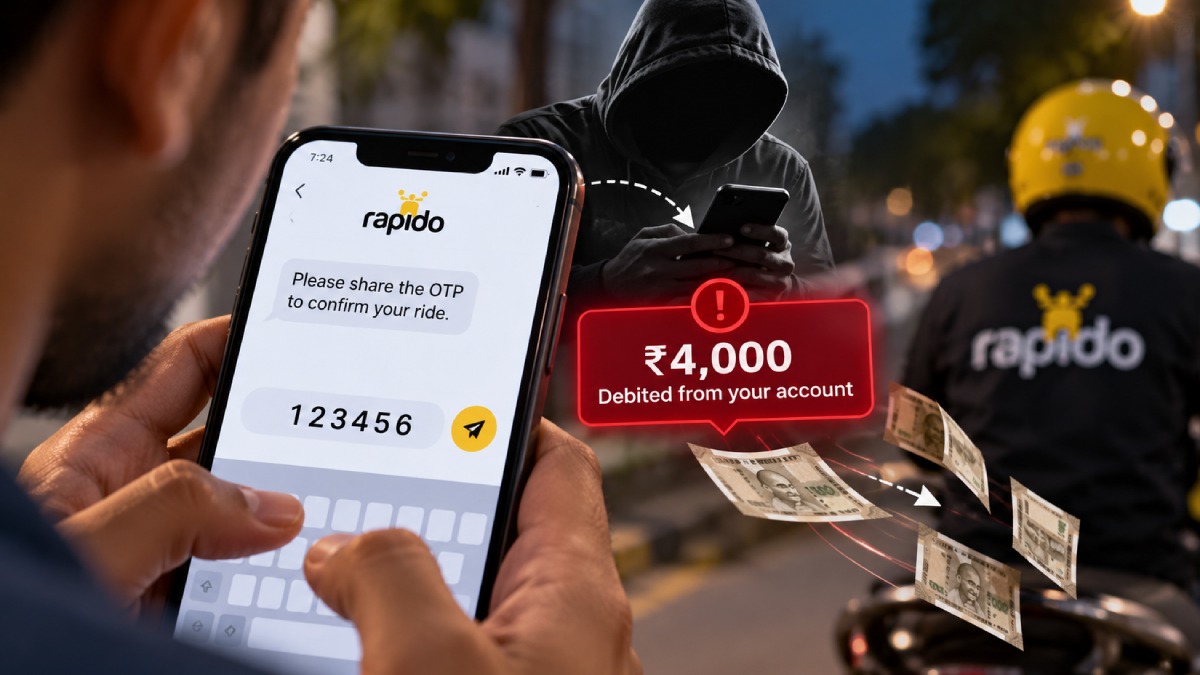
The incident was reported by News18’s viral news section. The headline describes the man’s experience as accidentally paying his OTP to Rapido, although the exact sequence of events and payment mechanism should be confirmed from the original report.
What happened in the Rapido ride incident?
The report’s headline stated that the man paid close to ₹4,000 for a ride which was supposed to cost ₹58. The difference between the two was worrying and he went online to seek advice.
The headline does not indicate that the amount was deducted through digital payment, whether or not another payment was made from the OTP, or if the OTP was used. These details matter whether the matter was a misunderstanding, an unauthorised transaction or a scam.
Users who have a similar situation should check their ride details, payment history and bank or UPI transaction records first. They should also save screenshots and transaction references before contacting the relevant support teams.
Why you should never share an OTP without checking?
An OTP is a temporary security code to verify an action, identity or transaction. It is service and message dependent.
Not every OTP is a payment authorisation code. For example, a ride-related OTP can be used to verify the booking or confirm a trip. But a code sent by a bank, payment provider or other service could be associated with a sensitive action.
Before you share or enter any OTP, read the accompanying message carefully. Never share a bank or payment OTP with someone who asks for it over a call or message. If the code is not clear, do not respond until you have verified the request through the official app or service.
What to do if you notice an unexpected payment?
If a ride-hailing transaction is much higher than the displayed fare, take these steps as soon as possible:
Check the transaction: Review the amount, date, merchant name and transaction reference in your bank or UPI app.
Save the evidence: Keep screenshots of the fare, booking details, payment confirmation and any messages related to the incident.
Contact the platform: Raise a complaint through the official app and ask about how the charge was made.
Contact your bank or payment provider: Report the transaction if you believe it was unauthorised. Ask whether it can be disputed or if future transactions of this kind can be blocked.
Report suspected cyber fraud: In India, you can call the national cybercrime helpline at 1930 or report the incident through the official National Cyber Crime Reporting Portal at cybercrime.gov.in.
Secure your accounts: If you shared a banking or payment OTP, contact your bank immediately and follow its security instructions.
A complaint does not guarantee that money will be recovered, so timely reporting and keeping the relevant evidence are important.
How to stay safe while using ride-hailing apps?
Before making a payment, check that it is the fare or an expense you understand. Follow the payment process in the app and avoid accepting payment orders from unverified calls, messages or links.
If someone asks for an OTP, read the message that came with it and confirm what the code is intended to authorise. Never share a bank OTP, UPI PIN or other payment security credential with a driver or an unknown caller.
Unexpected charges should be reported to the platform and the payment provider. Users should rely on verified transaction records and official responses to establish what happened rather than assuming that every unusual payment is automatically fraud.






Comments