
The Supreme Court has upheld a Madras High Court judgment that conversion to Islam does not automatically allow for a person to benefit from reservation under Tamil Nadu’s Muslim reservation category. The decision is a blow for the Tamil Nadu government which had issued an administrative order to people from some existing reserved communities to apply for benefits under the Muslim reservation category when converting to Islam.
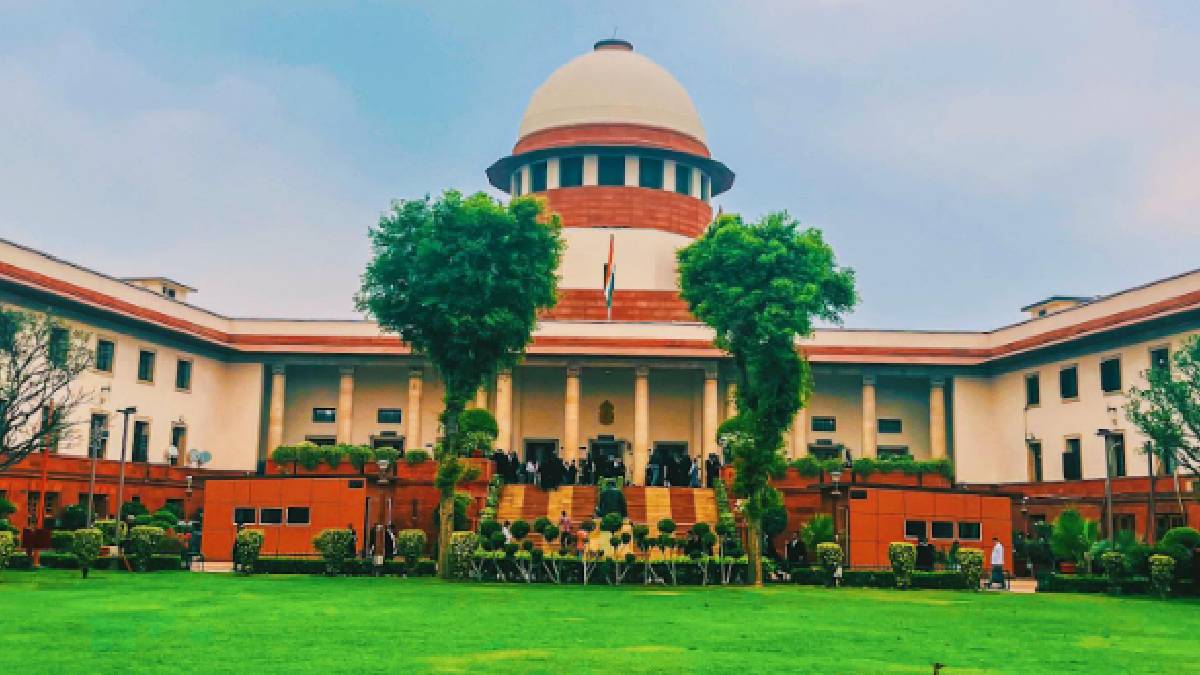
The verdict is on the issue of religious conversion and community membership recognised under caste based reservation. The Supreme Court held that a person cannot be admitted to one of the so-called backward-class Muslim communities just because he/she has undergone the conversion from a caste/community in India which was eligible for reservation.
The court held that conversion negates the legal basis of an entitlement that is restricted to those belonging to the Hindu social order. The ruling means that reservation should be made according to the applicable legal and community classification criteria and not religious conversion alone.
The decision upholds the Madras High Court’s June 25, 2026 judgment which struck down a Tamil Nadu government order issued on March 9, 2024. The order had sought to allow people belonging to Backward Classes (BC), Most Backward Classes (MBC), Denotified Communities (DNC) and Scheduled Castes (SC) who converted to Islam to receive community certificates under the Backward Class Muslim category.
Understanding Tamil Nadu’s 3.5% Muslim Reservation
Tamil Nadu has a separate 3.5% sub-quota of Backward Class Muslims in its reservation framework. The benefit is available to seven Muslim communities: Ansar, Dekkani Muslims, Dubekula, Labbais, Rowthar and Marakayar, Mapilla, Sheik and Syed.
The central question before the courts was whether people who converted to Islam from Hindu backward-class or Scheduled Caste communities could automatically be recognised as members of one of these seven notified Muslim communities.
The state government had argued that the 2024 order was made in order to prevent people from losing access to reservation benefits after a change of religion. The plan provided that eligible converts could apply for community certificates for the Muslim category that was notified.
But the legal dispute was whether an executive order could establish such eligibility without satisfying the requirements governing membership of the relevant communities. The Madras High Court ruled against the government’s approach, finding that the order could not override established judicial principles governing community status and reservation eligibility.
By upholding that judgment, the Supreme Court has kept the distinction between belonging to a previously recognised caste and establishing membership in a separately notified Muslim backward-class community.
How the Legal Dispute Began
The case started with the petition filed by Sameer Ahamed, formerly known as Paramasivam, who converted to Islam in 2015. He asked for a community certificate which would identify him as a Muslim Lebbai so that he could claim reservation benefits under the state’s Backward Class Muslim category.
His application was rejected by the revenue authorities and he went to the Madras High Court. This conflict brought Tamil Nadu government’s 2024 order into focus, which was meant to provide a pathway for eligible converts to seek recognition under the notified Muslim reservation category.
The High Court eventually invalidated the government order on June 25, 2026. It said that conversion to Islam, in itself, could not lead to membership in a specific notified Muslim community simply on the basis of a person’s previous caste classification.
The Tamil Nadu government challenged the decision in the Supreme Court and sought to defend their decision to extend access to the Muslim reservation category to eligible converts. The Supreme Court struck down the High Court ruling, and rejected the government’s approach.
What the Supreme Court Verdict Means
The ruling emphasizes that religious conversion and reservation eligibility are separate legal questions. A person’s conversion to Islam does not automatically establish that he/she belongs to one of Tamil Nadu’s seven notified Backward Class Muslim communities. Eligibility should instead be assessed under the applicable rules and legal requirements governing the specific category.
For those who want reservation after conversion, the judgment highlights the importance of community classification and the legal basis for the issuance of a certificate. A previous caste identity alone is not sufficient proof of membership in a separate Muslim community.
The verdict also limits the extent to which a state government can use an executive order to alter or extend the operation of an existing reservation framework. Administrative measures should be consistent with the applicable legal principles and judicial precedents.
At the same time, the ruling concerns automatic eligibility under the particular notified Backward Class Muslim category in Tamil Nadu. It should not be interpreted as a blanket statement about every reservation category or every legal question on religious conversion.
A Significant Development in Tamil Nadu’s Reservation Policy
The Supreme Court’s decision is significant for the very real situation on reservation eligibility, community identity and religious conversion. By upholding the Madras High Court’s judgment, the court has rejected the automatic transfer of reservation eligibility from a former caste classification to one of the notified Muslim communities in the state.
The verdict is a blow for Tamil Nadu government policy in the wake of the 2024 policy. For applicants seeking benefits under the 3.5% Backward Class Muslim sub-quota, it says that conversion alone is not enough to prove eligibility.
Finally, the ruling reinforces the legal criteria governing notified communities and community certificates. And it also demonstrates the limitations of executive action to alter the conditions under which reservation benefits can be claimed.
As reservation policy and social classification is discussed on a continuing basis, the judgment will continue to play a decisive role in the way religious identity, community membership and eligibility for affirmative-action benefits are treated under the law.






Comments
Leave a Comment