
Violent clashes erupted in Albania’s capital, Tirana, on October 13, 2026, as hundreds of students and other demonstrators marched to the streets demanding better education, the restoration of university facilities and the resignation of Prime Minister Edi Rama.
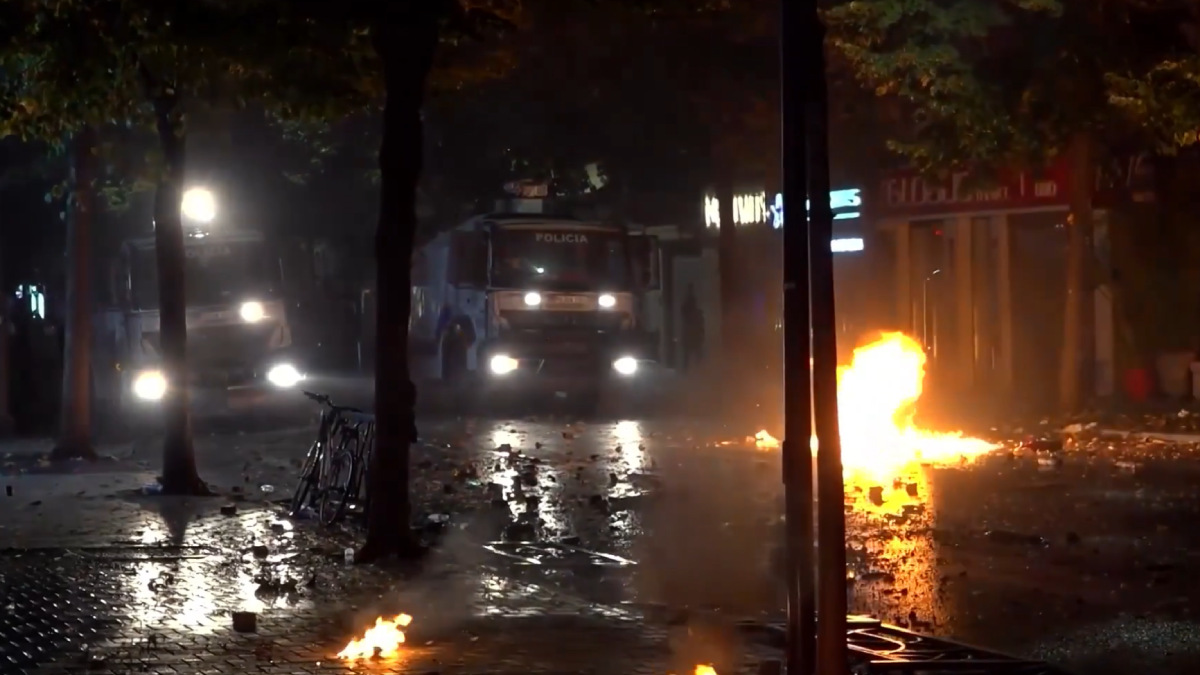
What began as a protest in relation to education turned into a scuffle between students and riot police outside the Ministry of Education. There was tear gas, water cannons, stones and Molotov cocktails thrown on the ground; windows and areas of the ministry’s exterior were destroyed.
The uprising was part of a growing anger among young people against the cost of higher education, the poor conditions of universities that young people face in Albania, the lack of financial support and job prospects after a degree. According to police, 23 people were arrested, and several officers and a journalist were injured in the clashes.
The demonstration was initially focused on the problems students face in Albania’s higher education system. Organisers and participants talked about university conditions, high education costs, lack of financial assistance, and job prospects for graduates. For many young people, these are linked to broader concerns about inequality and how to build a solid future in their own country.
As the gathering continued to grow, the protesters began to call for the resignation of Rama. Demonstrators said that the authorities should do better to meet the concerns of students and young people. The protest also reflected more general frustration with the economy and the perceived division between the wealthy and ordinary people. "And that is a lot of frustration," activist Luljeta Kola said.
A few students started throwing bricks, concrete blocks and other objects at the Ministry of Education building. Reports also indicated damage to windows and that some attempted to break open a door. Some protestors struck back at police with Molotov cocktails, stones and firecrackers, riot police said.
Six police officers and one female journalist were injured, but no life-threatening injuries were reported, according to a police statement. They also confirmed that 23 people were arrested. The incident showed how quickly a demonstration focused on public policy can turn into a serious public-order clash when violence and property damage occur.
The unrest was harshly criticised by Albania’s Deputy Prime Minister Albana Koçiu, who argued that the violence against public places and police officers did not seem to be justified. But protesters were still calling for better job opportunities for young people and a say in the decisions that affect them.
The protests illustrated the difficulty in maintaining public order when faced with legitimate public concern. But the immediate response of the government was that Rama should go, and the demands for him to resign were to bring in students from outside universities. The competing positions have aggravated political tension in Tirana, and the government is being pressured to respond to public anger and denounce the violent incidents.
The student demonstration came amid a growing wave of anti-government protests in Albania in recent months. Earlier protests were fuelled by anger over alleged corruption, questions about government accountability and opposition to a luxury tourism development that has been proposed by Jared Kushner, the son-in-law of President Donald Trump.
What began as a few political and environmental concerns has become a broad movement against the government, and people have raised questions about transparency, inequality and the distribution of economic opportunities. The latest student-led rally added education and youth employment to the list of issues driving public anger.
While the different protest movements have overlapping concerns, the immediate demands of the October 13 demonstration were better university conditions, financial support for students and better job opportunities for graduates. Continued unrest presents a political challenge for Rama’s government, as it tries to manage public dissatisfaction and maintain stability.
In Albania, the immediate concern is for the injuries of those hurt, the legal proceedings of detained protesters, and the prospect of future protests. The arrests and damage to the Ministry of Education have brought the confrontation to the forefront, but the underlying grievances of students remain at the heart of the conflict.
Protesting to improve universities, make higher education more affordable, increase financial support and improve employment prospects are among the issues protesters want to have addressed. The violence has raised the question of the limits of protest and the responsibility of both demonstrators and the government to prevent harm in the long run.
The next few days could reveal whether the government takes any action against protesters and whether there are more rallies. For now, the clashes in Tirana underline the frustration of Albania’s younger generation and the growing pressure on political leaders to respond to demands for educational reform and broader social change.

Comments