
In Bangladesh, a controversy has broken out after Chinese content creators have been filming low-income neighbourhoods in Dhaka and broadcasting the footage online as scenes from New Delhi. The livestreams reportedly contain derogatory comments about housing, sanitation and everyday life; is online content accurate? Who are the residents being recorded?
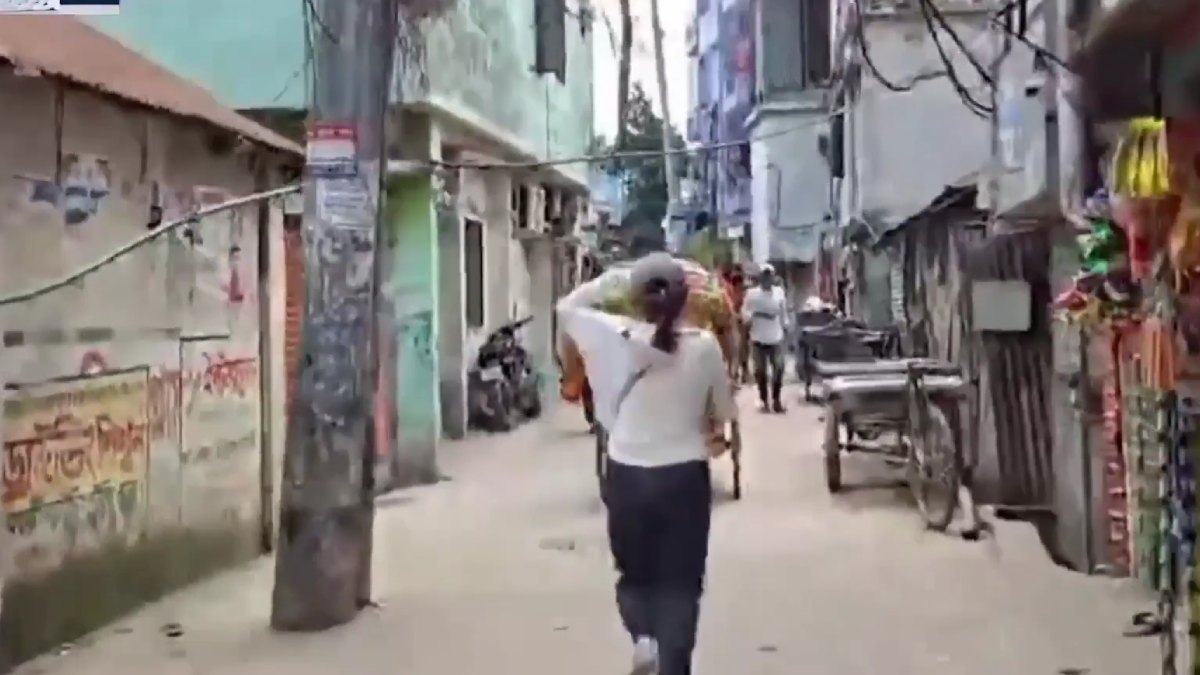
Prothom Alo Bangladeshi newspaper investigated on November 6, 2026 how Chinese nationals were filming in Sector 12 of Uttara and the adjoining Tekpara neighbourhood in Dhaka. Some streamers introduced these locations as parts of India’s capital while describing surroundings as dirty, underdeveloped and unhygienic.
🚨 SHOCKING from Bangladesh! Hundreds of Chinese WeChat streamers in Dhaka are filming its SLUMS & allegedly passing them off as scenes from INDIA 🤯 Local reports, not Indian outlets, tell they are reportedly even ENTERING people's homes. These videos are then circulated across the world, projecting India in a deliberately misleading light and SHAMING THE COUNTRY. => But you know what's even more pathetic? Some Indians themselves will eagerly share these videos, laugh at their own country and keep lecturing everyone about how CHINA IS THIS, CHINA IS THAT 🤡 And when India actually tries to build roads, dams and infrastructure projects on a CHINA-LIKE SCALE? Suddenly, these very people discover their love for trees, land and the environment. "TREES! OH, MY TREES!" "OH, MY LAND!" "OH, MY ENVIRONMENT!" THE HYPOCRISY IS UNBELIEVABLE. https://t.co/9C9JoX84rV
— The Analyzer (News Updates🗞️) (@Indian_Analyzer) November 9, 2026
The investigation also touched on the issue of foreign content creators entering people’s homes to film them without their knowledge. Residents told the newspaper more than 150 Chinese nationals had been filmed but an accurate count was not available.
The reports have gotten attention in India because the footage allegedly misrepresents places in Bangladesh as Indian neighbourhoods. But there is no evidence of what purpose the activity has wider nor that the streamers are part of a coordinated campaign against India.
Chinese Streamers Reportedly Film in Uttara and Tekpara
Prothom Alo said Chinese nationals have been livestreaming from different parts of Uttara (Sector 12 and Tekpara area) lately.
The neighbourhood consists of narrow lanes, modest homes and local businesses. Residents told the newspaper that filming had been going on for several months; some streamers reportedly were active from morning until late at night.
The content creators carried two mobile phones one was used for livestreaming and the other seemed to be used for information access or following scripts.
On visits to the area on October 27 and November 3 Prothom Alo tried to speak with local people as well as 17 Chinese nationals but most of those approached allegedly did not answer questions or avoided communicating with journalists.
Residents estimated that more than 150 Chinese nationals were involved but this figure has not been independently verified.
Livestreams Allegedly Identify Dhaka Locations as New Delhi
One of the most important findings from the investigation was how the locations were supposedly described in live streams.
The newspaper reviewed Chinese commentary and translated some of it with Google Translate. It then checked the translations with four Bangladeshis who spoke Chinese.
The streamers were filming in Dhaka but telling viewers that they were broadcasting from New Delhi, the report said.
A Chinese woman named Mianmian was seen livestreaming beside a canal in Sector 12 of Uttara on November 1. She introduced New Delhi as the place where she was live streaming and said homes and living conditions in the neighbourhood are bad.
Another streamer Wang Wei was filming near tea stalls in Tekpara. Prothom Alo’s translated commentary said he told viewers that the tea local people drink is made from cow urine and dirty river water.
The remarks were presented as descriptions of conditions in India although the footage had been shot in Bangladesh.
The report also mentioned instances when Chinese women livestreaming from the neighbourhood claimed to live there with their husbands and families after marrying in India.
These accounts have brought attention to how inaccurate location descriptions and derogatory commentary could influence audiences unfamiliar with the actual filming locations.
Residents Complain About Filming Inside Homes
Apart from the alleged misrepresentation, filming has also caused serious privacy issues among residents.
Chinese nationals were recording footage in narrow streets, shops and residential areas according to Prothom Alo. Some residents said streamers had entered their homes while they were recording (sometimes without permission).
A resident named Rozina Khatun told the newspaper that sometimes people would enter homes and start filming without checking whether residents were dressed properly or comfortable being recorded.
Another resident, Papia Begum alleged that some streamers had even gone into bathrooms while filming. She said residents sometimes objected and the visitors apologised and left but similar incidents continued.
Complaints like these raise questions about consent and the right to privacy (footage of people inside their homes can be broadcast to large audiences online).
Residents also reportedly complained about repeated filming and the inability to communicate with them because of language barriers.
What platforms are being used to broadcast the videos?
The investigators found that Chinese social media sites such as WeChat and Douyin were outlets used by the streamers.
A Chinese national Fangyou spoke to Prothom Alo through Google Translate. He reportedly said that the livestreams were part of product-promotion activities on WeChat.
But he wouldn’t say why the particular neighbourhoods had been chosen or why the broadcasts lasted so long.
A local Bangladeshi guide Ritu Akhter told the newspaper she had been helping Chinese nationals in the area for several months. She said she earned Tk 700 to Tk 800 a day for her work.
She also said streamers made money by publishing videos on WeChat and Douyin (and other online platforms) as well.
The product-promotion explanation provides one possible account of the activity but it does not explain why the streamers allegedly made Dhaka locations parts of New Delhi.
Chinese Vloggers Had Been Filming in Dhaka Earlier Too
The November investigation was not the first report of Chinese content creators filming in low-income neighbourhoods of Dhaka.
In May 2026 Bangladeshi publication The Business Standard also documented Chinese vloggers recording footage in areas like Tekpara.
The report looked at videos on Chinese platforms (Bilibili and Youku). It found that poor neighbourhoods, slum conditions and the daily lives of economically disadvantaged people were common themes.
A separate report by Bangladeshi publication Kaler Kantho in July also mentioned Chinese nationals in Uttara’s Sector 12. Residents were said to have told the reporter that filming had been going on in the neighbourhood for several months already.
These earlier reports do suggest that the activity predates the latest controversy but they don’t independently establish who were the organisers or what was going on behind the livestreams.
Is this part of a coordinated disinformation campaign against India?
The alleged misrepresentation of Dhaka neighbourhoods as New Delhi has raised questions about whether the videos are designed to shape perceptions of India among Chinese viewers.
The repeated use of Indian location descriptions along with derogatory comments about sanitation and living conditions has led some to speculate that this was deliberate misinformation.
However, we need to be careful not to conflate documented misrepresentation with an unproven claim as to who is behind it.
Prothom Alo found that streamers were filming in Dhaka and some locations (translated commentary said) were New Delhi; that they used Chinese social media sites; a streamer explained the broadcasts were related to product promotion.
It didn’t say whether they were working on their own, under a company’s instructions or part of an organised campaign against India.
How many people are involved is also unclear. More than 150 people was only a guess from local residents; not an independently counted number.
So while the activity reported raises legitimate concerns about misleading online content, privacy and exploitation of vulnerable communities a centrally organised anti-India operation should not be treated as fact.
The Bigger Issue: Misleading Content and Consent on Social Media
The controversy exposes two wider problems with livestreaming and online content creation.
The first is misleading descriptions used to shape viewers’ understanding of a place. If footage from one country is shown as if it were from another country then audiences form impressions based on false context.
The second is about the rights of people who are in online videos. People living in low-income neighbourhoods shouldn’t have to tolerate strangers entering their home or recording private spaces just because they are making digital content.
The allegations from Dhaka also show why we need to check viral videos before sharing them. Footage of poverty or poor living conditions should not be taken as proof that those conditions exist in the location claimed by its creator.
For now, nobody knows exactly what the Chinese streamers were doing. What Bangladesh has reported is a pattern of filming in Dhaka’s low-income neighbourhoods; alleged misrepresentation of locations; complaints from residents about intrusive recording.
People involved and authorities would need to be clarified as to full scope and organisation of the activity.
Comments